Consumo di corrente in condizioni di normale funzionamento
≤15mA
Corrente consumata durante il funzionamento in modalità sospensione
≤150uA
Tensione di bilanciamento per singola cella
3,6±0,05V
4,2±0,05V
tensione di rilevamento della sovraccarica
3,65±0,05V
4,25±0,05V
Corrente di rilevamento della sovracorrente di carica
110±3A
Corrente di rilevamento della sovracorrente di scarica 1
180±3A
Corrente di rilevamento della sovracorrente di scarica 2
280±3A
Protezione corta
SÌ
SOC
5%~8%
Specifiche tecniche
Misurare
L150 * W76 * T17 mm
NTC
10.000
Interruttore della temperatura
/ °C (temperatura delle batterie)
Interruttore di corrente debole
SÌ
equilibrio attivo
/
Stufa
/
Resistori di frenatura
/
Altro parametro
Protezione dalle basse temperature durante la ricarica
0℃
Temperatura di rilascio (protezione dalle basse temperature)
5℃
Protezione contro il surriscaldamento durante la ricarica
60℃
Temperatura di rilascio (protezione contro il surriscaldamento)
55℃
Protezione dalle basse temperature durante la scarica
-15℃
Temperatura di rilascio (protezione dalle basse temperature)
-10℃
Protezione contro il surriscaldamento durante la scarica
65℃
Temperatura di rilascio (protezione contro il surriscaldamento)
55℃
Intervallo di temperatura di funzionamento
-40~+85℃
Intervallo di temperatura di conservazione
-40~+125℃
Parametro di temperatura
schermo LCD
SÌ
pannello luminoso a LED
/
Modalità Bluetooth
/
4G
/
GPS
/
Configurazione opzionale
16S–20S 90A Smart BMS for Energy Storage Systems
Precision Control | Stable Output | All-Round Protection
Designed specifically for residential and commercial energy storage systems (ESS), the 16S–20S 90A Smart BMS offers smart battery management, strong protection, and excellent dependability.
It is perfect for uses requiring lithium battery packs with mid-to-high voltages, guaranteeing effective and safe power delivery throughout each cycle.
Key Features: Wide Compatibility Offers versatility for a range of ESS designs and supports 16S to 20S lithium battery combinations. It is compatible with chemistries like LiFePO4 (LFP), NMC, and LTO.
High Current Handling This BMS is ideal for medium-to-high power energy storage requirements in residences, telecom towers, solar systems, and industrial backup because it is rated for 90A continuous current.
Full Safety Protection Suite • Protection against overcharge and overdischarge to preserve battery health • Protection against short circuits and overcurrents for increased system security • Temperature monitoring to guarantee low-temperature startup safety and avoid overheating • Cell balancing to keep voltage constant and prolong battery life
Advanced Communication RS485 and CAN connections are included for easy interaction with remote monitoring platforms, EMS systems, and inverters.
Smart Control For remote diagnostics, parameter change, and real-time data visualization, it integrates with PC monitoring software and an optional Bluetooth mobile application.
Built-In Thermal Management Longer system lifespan is increased by the BMS’s effective thermal design, which uses aluminum heat-dissipation components to keep it cool during high-load operation.
Typical Applications: • Residential and commercial solar ESS • Off-grid backup battery systems • Telecom base station power supply • Industrial UPS battery banks • Microgrid and hybrid energy systems
Perché scegliere noi?? Oltre 20 anni di esperienza nel settore. With over 20 years of experience in battery management and power solutions, we are the most qualified to comprehend the needs of the evolving electric vehicle and energy storage markets.
Capacità innovative di ricerca e sviluppo From integrated software platforms to ingenious BMS design, our dedicated R&D team never stops pushing the boundaries of technology to provide smarter, safer, and more effective products to the market.
Affidabilità del prodotto comprovata Our BMS and power solutions undergo extensive testing in challenging conditions to ensure longevity, stability, and optimal performance in real-world applications such as motorbikes, golf carts, forklifts, and energy storage systems.
Servizi di personalizzazione e OEM/ODM To meet your specific needs, we offer a wide range of customization choices that include form factors, wireless modules, communication protocols, and battery types.
Supporto tecnico completo From pre-sales advice to after-sales servicing, our technical expertise is available 24/7 to help you with setup, integration, and troubleshooting.
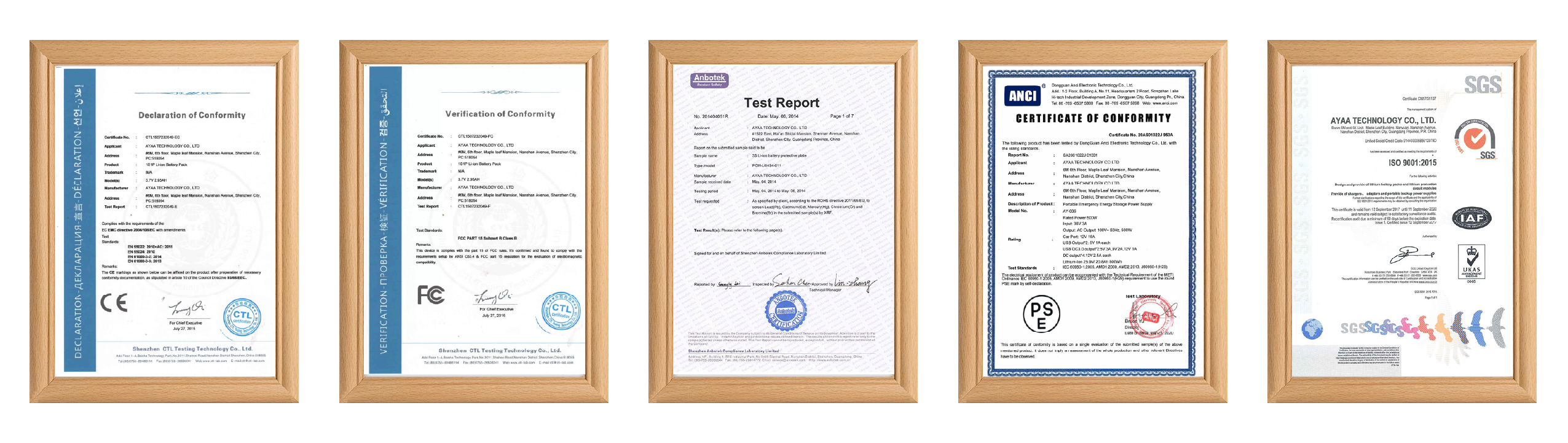
Certificazioni e conformità Because we fully adhere to international standards such as CE, IEC62109, VDE, and CQC, every product we sell is of the highest quality and safety.
Whether your business is a system integrator, an electric car manufacturer, or a supplier of battery packs, we are your trustworthy partner for scalable, intelligent, high-current BMS systems. We can power your next breakthrough.
I nostri certificati Domande frequenti: Q: What is a smart BMS? A: A smart Battery Management System (BMS) is responsible for keeping track of and reporting on the condition, functionality, and upkeep of the related battery. Data centers, hospitals, banks, telecommunications towers, energy storage stations, and more are just a few of the many locations where smart BMS are used.
Q: What is the BMS for energy storage systems? UN: It optimizes the battery’s performance and lifespan by keeping an eye on and controlling its operation to make sure it stays within safe bounds. For electric cars, renewable energy storage systems, and portable gadgets to function securely, dependably, and effectively, the BMS is essential.
Q: What are the three types of BMS? UN: In total, there are three common types of BMS architectures • Small, single-board BMS. • Distributed BMS. • Large, centralized BMS.
Q: What is the difference between smart BMS and dumb BMS? UN: Because dumb BMS is simple and dependable, it might be better suited for severe or distant locations. Integration and Communication: Determine if your application needs the ability to integrate and communicate. A Smart BMS is the best option if you require data exchange or remote monitoring.
Q: What is the difference between smart BMS and standard BMS? UN: Compared to a regular BMS, a smart or intelligent BMS provides additional monitoring and analytical capabilities and connects with the bicycle. The bike determines which battery is best. Does it have everything it needs to communicate with the battery?