Ultimate Guide to Lithium Golf Cart Batteries 2026
99
Golf courses, commercial facilities, and personal cart owners are quickly moving away from old, heavy battery technologies. If you are currently looking into lithium golf cart batteries, you probably already know that upgrades rely almost entirely on Lithium Iron Phosphate (LiFePO4) chemistry. This shift is happening because these power systems are exceptionally lightweight, last for years, and require zero daily maintenance.
However, selecting a specific golf cart lithium battery can feel overwhelming when you start comparing data sheets. Buyers frequently get stuck deciding on the right voltage, matching capacity to actual driving range, and understanding why Battery Management System (BMS) performance varies so much between brands. At AYAA TECH, we see these configuration challenges daily when helping procurement managers and engineers optimize fleet power. This guide will break down selection, performance, lifespan, maintenance, and replacement so you can maximize your investment.
1. What Are Lithium Golf Cart Batteries?
When industry professionals discuss lithium batteries for golf carts, they are referring to specialized deep-cycle systems. These industrial-grade packs are entirely different from the volatile lithium-ion cells found in laptops or cell phones. For utility and passenger vehicles, LiFePO4 is the undisputed standard because it offers high thermal stability and will not catch fire even under extreme mechanical or electrical stress.
Replacing your old setup with a dedicated lithium battery for golf cart use changes how the vehicle handles. A lithium pack delivers consistent voltage throughout its entire discharge cycle and cuts overall battery weight by up to 70%. This drastic weight reduction minimizes wear on your cart’s suspension, brakes, and tires. If you are still weighing your options, [Are lead-acid golf cart batteries Still Worth It?] can help you.
2. Why Lithium Is Replacing Lead-Acid in Golf Carts
The transition toward a premium lithium golf cart battery setup isn’t a passing trend; it is driven by clear operational advantages. Traditional electric golf cart batteries made of lead-acid simply cannot match the efficiency demands of commercial or recreational applications.
2.1 Performance improvements
Drivers notice an immediate boost in acceleration because lithium packs maintain a flat voltage curve under load. Lead-acid batteries suffer from a voltage drop as they drain, causing the vehicle to slow down significantly on hills or rough terrain. A lithium system provides the same punch at 10% capacity as it does when fully charged, keeping your vehicle moving at peak performance all day.
2.2 Maintenance advantage
With a lithium setup, you can eliminate messy acid spills, terminal corrosion, and the tedious chore of checking distilled water levels. These packs are completely sealed, plug-and-play units that save maintenance crews hundreds of labor hours over their lifespan.
2.3 Total cost of ownership (TCO)
While the upfront cost of lithium golf cart batteries is higher than traditional options, the long-term economics tell a different story. A standard lead-acid pack typically lasts between 2 and 4 years before requiring replacement. In contrast, a quality lithium upgrade delivers a service life of 5 to 10 years, drastically reducing replacement labor, downtime, and long-term procurement costs. For a detailed breakdown of these long-term savings, you can read our guide on why it is time to [how long do golf cart batteries last].
3. Voltage System Explained (36V / 48V / 72V)
Understanding voltage configurations is the vital first step before purchasing a lithium battery golf cart upgrade. Your vehicle’s motor and controller are engineered for a specific nominal voltage, and your new battery pack must match those parameters perfectly.
3.1 How golf cart voltage systems work
Traditional electric carts achieve their operating voltage by linking multiple 6V, 8V, or 12V lead-acid batteries together in a series connection. When upgrading to a LiFePO4 golf cart battery system, you typically replace that entire bulky network with a single, integrated battery pack or a few smart modules linked together.
3.2 36V vs 48V vs 72V comparison
To simplify the evaluation process for your fleet or project, we have structured a direct comparison of how common voltage levels handle real-world operations.
System Voltage
Best Usage Scenario
Speed & Torque Profile
Standard Application
36V
Flat courses, light recreational use
Moderate speed, basic torque
Older carts, standard 2-seaters
48V
Hilly terrain, lifted carts, fleet use
High speed, strong acceleration
Industry standard, 4-6 seaters
72V
Heavy-duty, off-road, high-performance
Maximum top speed, extreme torque
Commercial utility vehicles, custom builds
The data points listed above show that higher voltage architectures directly correlate with better energy efficiency and stronger torque when dealing with challenging terrains.
3.3 Which voltage should you choose?
Always check the rating on your existing motor or controller data plate before ordering components. If you are refurbishing an older model, look into specialized options for [36V golf cart batteries]. For fleet standards, a dedicated look at [48V golf cart batteries] is highly recommended. If you are removing an old multi-battery setup, our [6V / 8V / 12V lead-acid replacement guide] provides clear transition steps.
When comparing golf cart lithium batteries, looking at basic dimensions and voltage isn’t enough to guarantee a successful deployment. Engineers and fleet operators must look more closely at capacity metrics and Battery Management System capabilities.
4.1 Capacity (Ah) and real range
Amp-hours (Ah) indicate the total energy storage capacity of your battery pack. Evaluating amp-hours requires looking at your daily operational schedule, which is why we mapped out how different capacity options perform during standard driving routines.
Pack Capacity (Ah)
Estimated Daily Range
Ideal Vehicle Configuration
Primary Use Case
60Ah
15 – 20 miles
Standard 2-seater, stock tires
18 holes of golf, short neighborhood trips
100Ah
30 – 40 miles
4-seater passenger carts, light utility
Full-day fleet management, resort transport
160Ah or Higher
50+ miles
6-seater lifted carts, heavy utility
Multi-shift commercial logistics, off-road
Selecting the appropriate amp-hour capacity using the criteria above ensures your vehicle completes its daily shifts without needing a midday recharge.
4.2 Discharge current (BMS rating)
The BMS acts as the brain of the battery pack, regulating how much continuous current can safely flow to your motor. The continuous discharge rating determines how much power your motor can pull under heavy loads, so we outlined common BMS sizes below to help you map out your power requirements.
Continuous BMS Rating
Peak Current Capacity
Terrain Suitability
Vehicle Modification Level
100A
200A – 300A (short bursts)
Flat paved paths, manicured turf
Stock vehicles with no modifications
200A
400A – 600A (short bursts)
Moderate hills, sandy trails
Lifted setups, cargo beds, upgraded controllers
300A
600A+ (short bursts)
Steep inclines, rugged off-road
Heavy utility builds, high-horsepower motors
Choosing a BMS that matches your driving environment prevents the safety circuits from shutting down the vehicle on steep inclines.
4.3 Efficiency under load
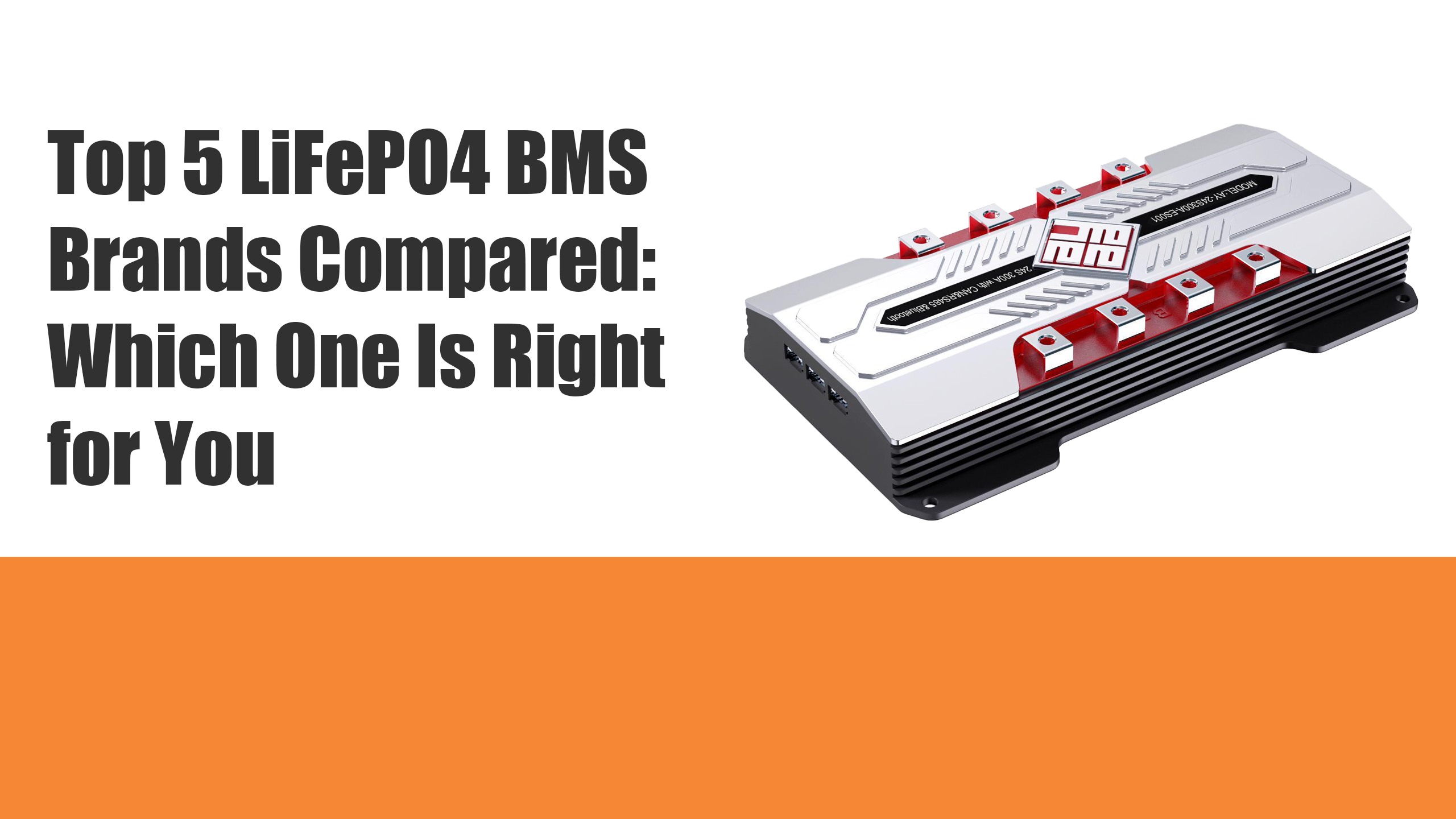
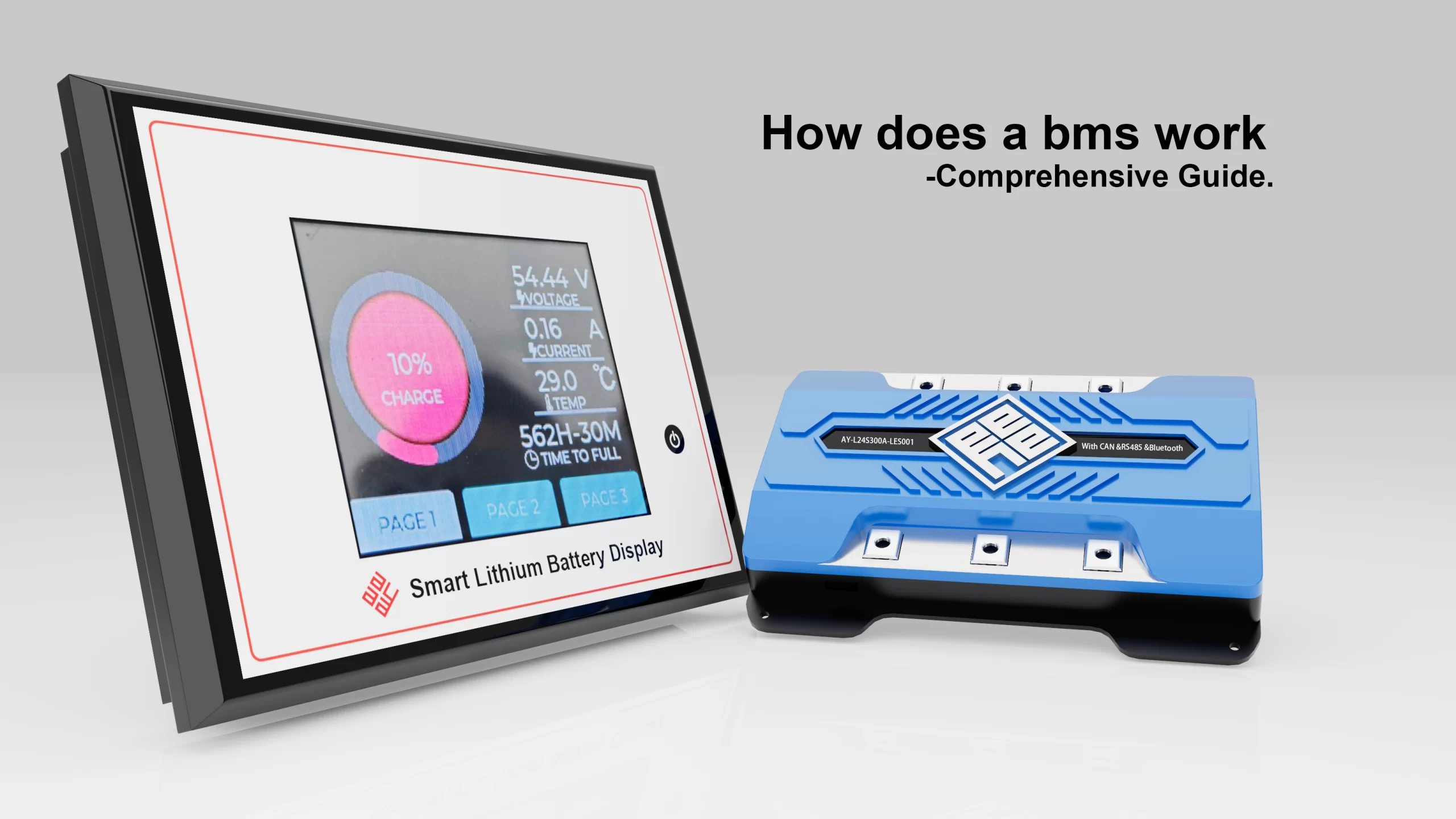
Hardware integration plays a massive role in how efficiently your cart handles heavy workloads. For instance, the smart BMS developed by AYAA TECH utilizes robust communication options like CANBUS and RS485 to monitor individual cells in real time. A major technical advantage of the AYAA TECH system is its high-precision state-of-charge calculation, achieving an SOC accuracy of ≤ 3%, whereas most standard industry alternatives only manage an accuracy of ≤ 5%. This high precision prevents unexpected power drops on steep inclines because your dashboard display always reflects the true remaining capacity.
Technical Note: While a highly advanced smart BMS optimizes safety, balancing, and calculation precision, it cannot alter the physical energy density of the underlying lithium cells.
Investing in lithium technology means you are purchasing a power source built to perform reliably for thousands of operating cycles. Understanding how these packs degrade helps protect your investment over the long haul.
5.1 Expected lifespan (LiFePO4 vs lead-acid)
A premium LiFePO4 pack easily handles between 3,000 to 5,000 charge-discharge cycles before its capacity drops to 80% of its original rating. Traditional lead-acid batteries, under identical commercial workloads, rarely survive past 500 to 800 cycles before failing.
5.2 What reduces battery life
Operating or charging your pack in extreme heat remains the leading cause of premature lithium cell degradation. Consistently draining the battery down to absolute zero or using unauthorized chargers that force incorrect charging profiles will also shorten the lifespan of the cells.
5.3 Early signs of degradation
When a lithium pack begins to wear out, the most common symptom is a noticeable drop in driving range or a sluggish throttle response on hills. If you suspect your current pack is losing its efficiency, you can browse our diagnostic resources covering the [golf cart battery maintenance Guide].
6. Maintenance & Charging Best Practices
Even though lithium packs are categorized as low-maintenance hardware, they are not completely hands-off. Establishing a few basic operational protocols will keep your electrical system running smoothly for years.
6.1 Charging rules for lithium batteries
Always utilize a dedicated smart charger configured specifically with a LiFePO4 algorithm. Avoid leaving your vehicle connected to primitive, non-smart chargers for weeks at a time during the off-season, and try to charge the vehicle before the capacity drops below 20% rather than micro-charging it after every minor two-minute trip.
6.2 Storage guidelines
If you store your cart for the winter season, do not leave the battery empty or charged to 100%. Keeping the battery at roughly 50% to 60% SOC in a temperature-controlled environment prevents unnecessary stress on the internal chemistry.
6.3 Safety basics
A quality BMS handles safety management by instantly cutting off power during over-voltage, under-voltage, or over-temperature events.
7. Common Problems & Troubleshooting
Even high-end electrical components can experience performance issues due to loose wiring, worn-out connectors, or setting mismatches. Here is how to diagnose common problems.
7.1 Range suddenly drops
This issue is frequently tied to cell imbalance or an inaccurate SOC reading from a low-grade BMS. Running your battery through a few full, uninterrupted charge cycles often allows the BMS to balance the cells and recalibrate its tracking.
7.2 Battery not charging
First, confirm that your charger’s output voltage matches the nominal rating of your battery pack. Many smart chargers feature a safety lock and will not initiate a charge cycle if the battery voltage has dropped below a specific threshold due to an accidental deep discharge.
7.3 Power loss on hills
If your golf cart cuts out completely while climbing an incline, your motor is likely drawing more current than your BMS can safely handle. This triggers the built-in over-current protection circuit to prevent damage to the lithium cells.
7.4 System mismatch issues
Installing a high-performance battery pack while keeping an old, worn-out motor controller can cause communication errors or erratic throttle behavior. If you run into persistent electrical glitches, you can learn more about finding the root cause through our specialized troubleshooting guides on [How to test golf cart batteries] E [How & When to replace best golf cart batteries].
8. Choosing the Right Lithium Battery (Buying Checklist)
To ensure you secure the best value for your commercial fleet or personal project, keep this practical buying checklist in mind during evaluation:
Verify Voltage: Confirm the exact nominal voltage required by your vehicle’s motor and controller.
Evaluate the BMS: Match the continuous discharge current of the BMS to your terrain (choose ≥ 200A if you handle steep hills or heavy loads).
Check Communication: Look for smart communication protocols like CANBUS or RS485 for streamlined system diagnostics.
Review the Warranty: Confirm that the manufacturer stands behind their build quality with a clear warranty of at least 5 years.
Bundle the Charger: Ensure the battery kit includes a matching lithium charger to prevent configuration conflicts.
9. Installation Overview
Most lithium upgrades are engineered as drop-in replacements. This design means the physical dimensions of the battery case are built to fit directly into standard lead-acid battery trays without requiring major structural adjustments to the cart chassis.
When conducting the installation, you will disconnect the old, heavy series wiring cables and connect your new single-pack solution using high-quality, properly scaled battery leads. Always turn off the cart’s main run/tow switch and use insulated tools before touching any terminals to prevent short circuits.
Conclusione
Upgrading to lithium power systems is the most effective way to improve a golf cart fleet or a personal utility vehicle. By choosing the correct nominal voltage and matching your BMS capabilities to your actual driving conditions, you ensure long-term operational efficiency. While the initial procurement costs require a higher upfront investment, the complete elimination of daily maintenance and the extended cycle life offer clear financial returns over time. Investing in precise tracking infrastructure, such as the smart power solutions built by AYAA TECH, guarantees your equipment remains reliable, safe, and highly efficient through every shift.
Domande frequenti
Can I upgrade from lead-acid to lithium directly?
Yes. Most premium lithium battery kits are designed as drop-in replacements. You simply need to remove the old lead-acid batteries, mount the new lithium pack, connect the main power leads, and ensure your charger matches the new LiFePO4 chemistry requirements.
How long do lithium golf cart batteries last?
Under normal operating conditions and proper care, a high-quality LiFePO4 battery pack lasts between 5 to 10 years. This service life easily outlasts traditional lead-acid options by three to four times.
Do I need a special charger?
Yes, you must use a dedicated charger configured specifically for LiFePO4 chemistry. Using an old lead-acid charger can damage the lithium cells, trigger safety faults, and will not charge the new battery pack to its full capacity.
Is 48V better than 36V?
A 48V configuration is generally superior because it operates with higher electrical efficiency, delivers faster top speeds, and provides stronger torque for climbing hills compared to older 36V setups.
PRODUTTORE CERTIFICATO OEM/ODM
Il Potere che Vuoi, L'integrità di cui hai bisogno.
BMS personalizzato per batterie al litio
Soluzioni BMS intelligenti ad alte prestazioni per accumulo di energia, veicoli elettrici, robotica e droni.
✔ Alta Efficienza e Bilanciamento Attivo
✔ Monitoraggio e protezione intelligenti
Certificazioni globali
✔ Personalizzabile per qualsiasi applicazione
1500+
Clienti
30.000+
Unità/Mese
20+
Anni di esperienza.
Ottieni la tua soluzione BMS personalizzata
⚡ Gli ingegneri rispondono entro 12 ore
✔ Consulenza gratuita sulla progettazione del BMS
✔ Risposta rapida e prezzi competitivi