




Smart BMS for Stacker Battery: How to Improve Runtime, Charging, and Safety
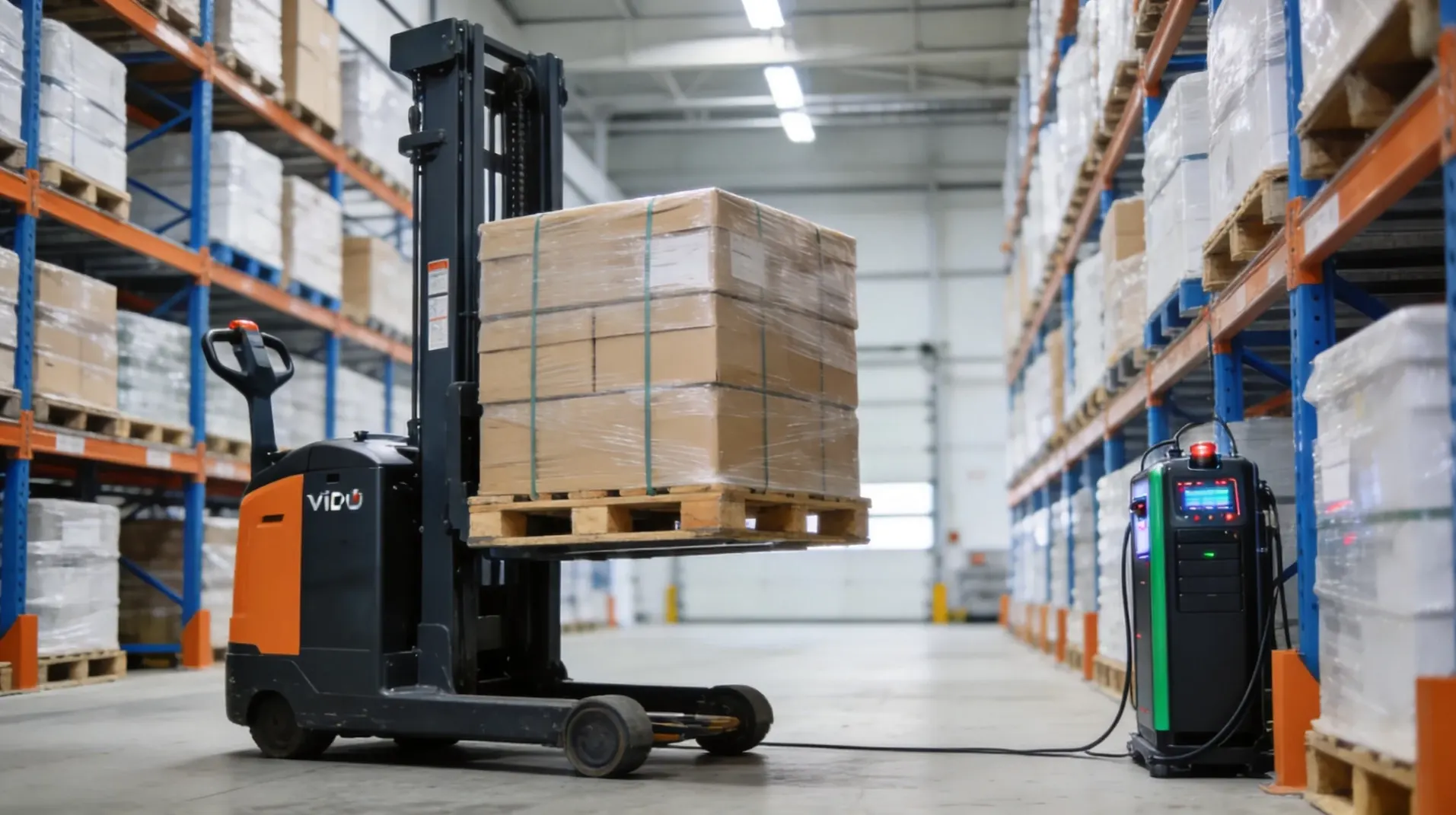
A stacker, also called a stacker truck or pallet stacker, is a compact material handling machine used for pallet lifting, short-distance transport, and warehouse stacking. Compared with a large forklift, it is easier to use in narrow aisles, retail storage areas, workshops, and logistics centers.
As more electric stackers move from simple lead-acid batteries to lithium battery packs, battery performance becomes more important. Runtime, charging speed, lifting stability, and safety all depend on how well the battery is managed.
That is why a smart BMS is becoming a key part of modern stacker battery design. A good battery management system does more than protect the battery. It also helps users understand remaining power, reduce downtime, improve charging control, and extend battery service life.
1. What Is a Stacker and What Kind of BMS Does a Stacker Battery Need?
1.1 What Is a Stacker Truck or Pallet Stacker?
A stacker is designed to lift and move palletized goods. Common names include stacker truck, pallet stacker, electric stacker, pedestrian stacker, walkie stacker, ride-on stacker, straddle stacker, and counterbalance stacker.
In daily use, a stacker often works in a stop-and-go pattern. It starts, stops, lifts, lowers, turns, and charges repeatedly. This operating style puts pressure on the battery, especially during lifting or when the pack is already at a low state of charge.
1.2 What Kind of Smart BMS Does a Stacker Battery Need?
A stacker battery needs a smart BMS that can handle both power output and safety control. Basic protection is not enough for many lithium battery projects, especially when the stacker works across long shifts or carries heavier loads.
A suitable battery management system should support accurate SOC estimation, SOH monitoring, overcharge and over-discharge protection, overcurrent protection, short-circuit protection, temperature protection, cell balancing, smart charging control, and fault data logging. Communication with the charger, controller, or fleet system is also valuable for B2B users who manage multiple machines.
2. Stacker Industry Trends
2.1 From Manual Stackers to Electric Stackers
Warehouses are under pressure to move goods faster with fewer manual steps. This is one reason electric stackers are becoming more common in storage, manufacturing, and logistics environments.
Manual stackers may still work for low-frequency lifting, but electric stackers reduce operator fatigue and improve handling efficiency. As work frequency increases, battery reliability becomes a more serious purchasing factor.
2.2 Lithium Battery Adoption in Electric Pallet Stackers
Lead-acid batteries are still used in many stacker applications, but lithium batteries are gaining attention. The reasons are simple: lower maintenance, faster charging, lighter operation in some designs, and better support for opportunity charging.
However, lithium battery performance depends heavily on the BMS. A smart BMS cannot directly change cell energy density, but it can help the battery use available energy more safely and more predictably.
2.3 Smarter Battery Management for Warehouse Fleets
Fleet managers no longer want only a basic power display. They want battery data that helps them understand SOC, SOH, cycle history, fault records, and charging behavior.
This trend makes smart BMS technology more useful for stacker battery systems. When battery data becomes visible, maintenance can move from guesswork to planned action.
3. Stacker Battery Pain Points and Smart BMS Optimization
Stacker battery problems often appear as short runtime, weak lifting power, slow charging, or sudden shutdown. The table below connects common user pain points with BMS optimization directions.
| Stacker Battery Pain Point | Smart BMS Optimization |
|---|---|
| Unstable runtime | Accurate SOC/SOH estimation and runtime prediction |
| Sudden power loss | Under-voltage protection, current control, and early warning |
| Slow charging | Smart charging control and charger communication |
| Short battery lifespan | Overcharge/over-discharge protection and cycle tracking |
| squilibrio cellulare | Cell balancing to improve pack consistency |
| High temperature during charging or lifting | Temperature monitoring and thermal protection |
| Poor lead-acid maintenance experience | Lithium battery plus smart BMS reduces manual maintenance |
| Lack of battery data | Data logging, fault codes, and remote diagnosis |
3.1 Unstable Stacker Battery Runtime and Inaccurate SOC
Runtime instability is one of the most common complaints in electric stackers. The battery may show remaining power, but the machine still slows down or stops earlier than expected.
This often happens because simple indicators rely too much on voltage. During lifting or acceleration, voltage can drop quickly under load. Battery aging and temperature changes can make the reading even less reliable.
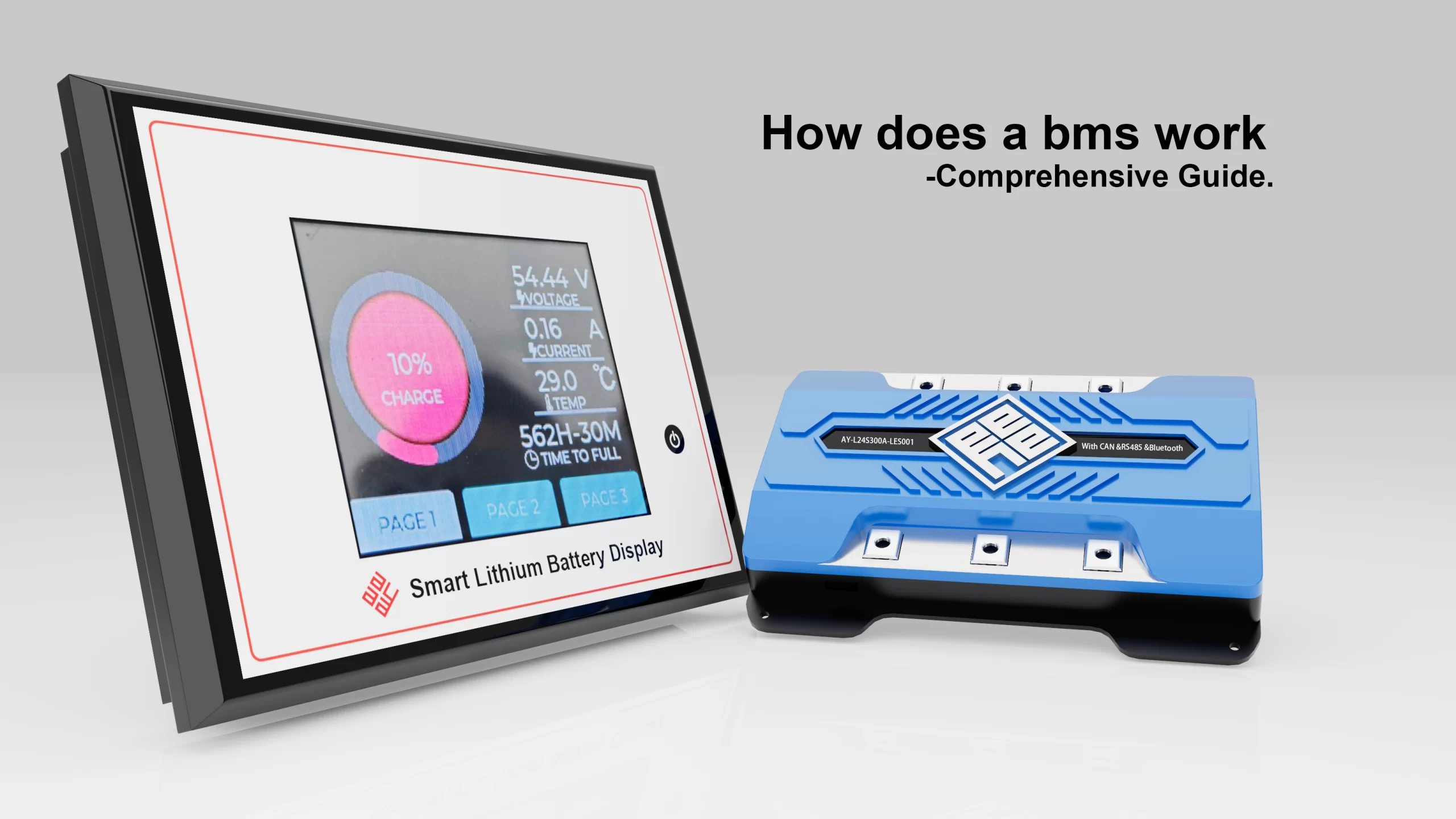
A smart BMS improves SOC accuracy by combining voltage, current, temperature, usage history, and battery aging data. Many common BMS suppliers may only control SOC accuracy around 5%. AYAA Technology can achieve ultra-precise SOC accuracy within ±3% after proper calibration, giving users a clearer view of remaining power.
3.2 Sudden Power Loss During Stacker Operation
Sudden power loss is risky when a stacker is lifting goods or moving pallets in a narrow aisle. The cause may be deep discharge, weak cells, high current demand, or low pack voltage.
A smart battery management system can monitor cell voltage, total voltage, current, and temperature in real time. When the battery approaches an unsafe range, it can send warnings, limit current, or trigger protection before serious damage happens.
3.3 Slow Charging and Poor Charging Efficiency
Charging time directly affects warehouse productivity. If a stacker spends too much time waiting for a charge, the whole workflow can slow down.
A smart BMS supports safer charging by controlling charging current, monitoring temperature, balancing cells, and communicating with the charger. For lithium stacker batteries, this is especially important when users want faster charging or opportunity charging during breaks.

3.4 Short Stacker Battery Lifespan
Battery replacement is a major cost for stacker users. Overcharge, over-discharge, overheating, poor charging habits, and cell imbalance can all shorten battery life.
A smart BMS helps reduce these risks through voltage protection, current protection, thermal control, SOH monitoring, and cycle records. It cannot make low-quality cells perform like premium cells, but it can reduce harmful operating conditions and help users maintain the pack better.
3.5 Cell Imbalance in Lithium Stacker Battery Packs
A lithium battery pack is only as strong as its weakest cell group. When one cell group reaches its limit early, the whole pack may stop charging or discharging even if other cells still have capacity.
Cell balancing helps reduce this problem. A smart BMS can improve pack consistency, support more stable usable capacity, and slow down the impact of cell differences over time.
3.6 Battery Safety Risks in Indoor Warehouse Use
Stackers usually work indoors, close to operators, goods, shelves, and chargers. Battery overheating, short circuit, wrong charging, or abnormal current can create safety concerns.
A smart BMS provides voltage, current, and temperature protection. It also records faults, making it easier for maintenance teams to find abnormal battery behavior before it becomes a larger issue.
4. Common Types of Stackers, Use Scenarios, and Battery Specifications
Different stacker types need different battery platforms. Light-duty machines may use lower voltage and smaller capacity, while heavy-duty or high-frequency stackers may need stronger current output and better monitoring.
| Stacker Type | Common Use Scenario | Typical Load Range | Common Battery Voltage |
|---|---|---|---|
| Walkie Stacker | Small warehouses, retail storage, light pallet stacking | 1.0–1.5 tons | 24V / 48V |
| Electric Pallet Stacker | General pallet handling and short-distance transport | 1.0–2.0 tons | 24V / 48V |
| Straddle Stacker | Pallet stacking with better load stability | 1.0–2.0 tons | 24V / 48V |
| Ride-On Stacker | Higher-frequency warehouse operation | 1.2–2.0 tons | 24V / 48V |
| Counterbalance Stacker | Closed-bottom pallets and heavier loads | 1.0–2.0 tons | 24V / 48V / 80V |
| Semi-Electric Stacker | Low-frequency lifting and budget-sensitive use | 0.5–1.5 tons | 12V / 24V |
| Mini Electric Stacker | Small aisles, light pallets, compact warehouse use | 0.5–1.2 tons | 24V class |
This table is a general reference. The final BMS choice should always match the real battery voltage, current, cell chemistry, charger, controller, and working environment.

5. AYAA EF-001 Smart BMS for Stacker Battery Applications
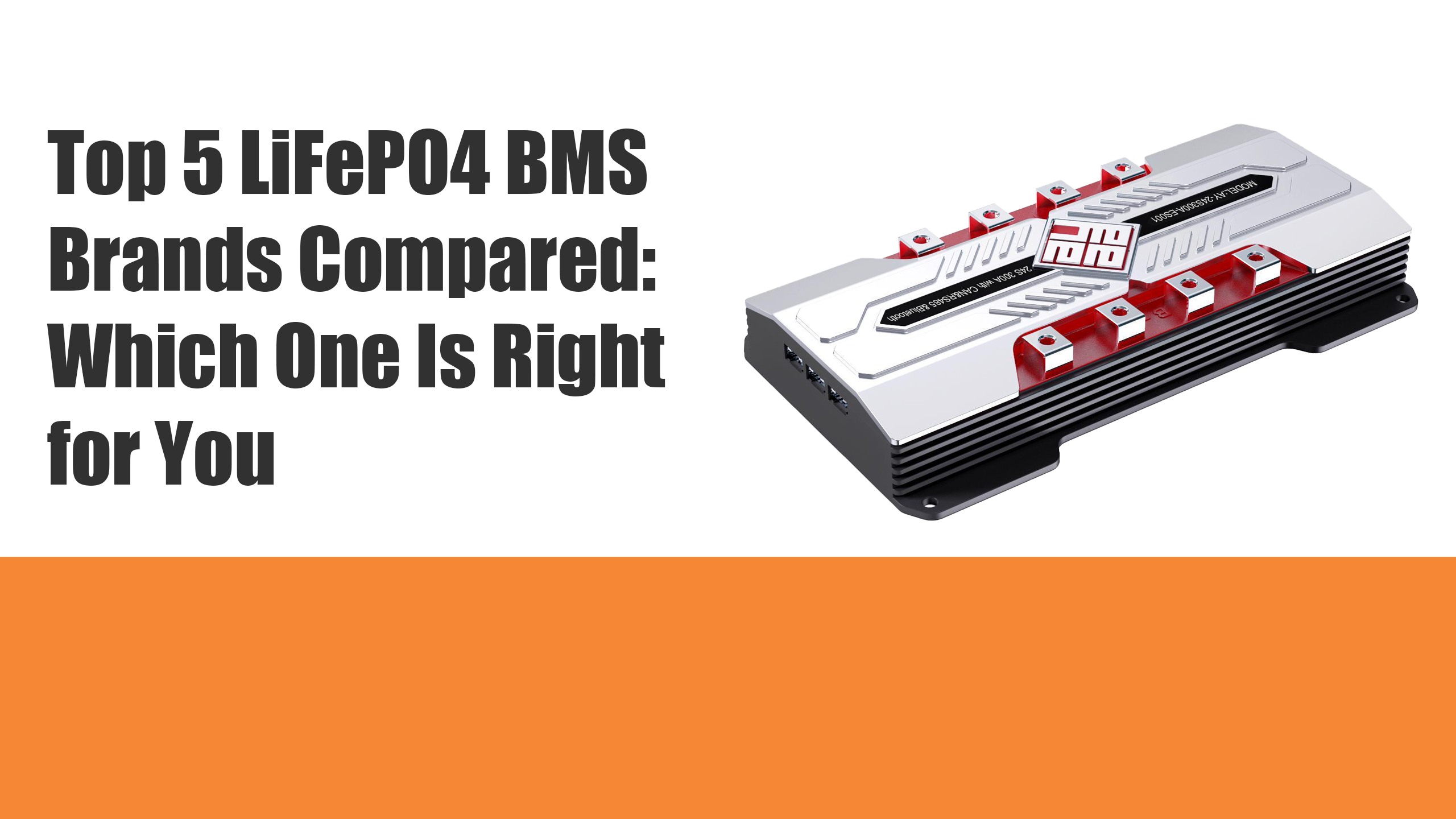
AYAA EF-001 is suitable for many high-power electric stacker battery systems, especially stacker trucks that need stable discharge, accurate SOC, strong current protection, and smart communication. It can be used in electric pallet stackers, ride-on stackers, straddle stackers, counterbalance stackers, and customized lithium stacker battery projects when the battery voltage and current platform match the system design.
EF-001 supports 24S–32S lithium battery packs, 88.8V–118.4V rated voltage, 400A continuous discharge current, and 600A peak output. It also supports CAN 2.0B, isolated UART, MODBUS, smart charger communication, up to 8 parallel battery packs, and SOC accuracy up to ±3%. These features help stacker batteries improve runtime stability, charging safety, high-load lifting performance, and fleet battery management.
For common high-power stacker battery systems, AYAA EF-001 can be a strong smart BMS choice. If your stacker uses a different voltage, current, cell chemistry, charger, or communication protocol, AYAA Technology can also provide customized smart BMS services. Contact AYAA now to get your stacker power solution.
6. Conclusion
Stacker battery performance directly affects runtime, lifting stability, charging efficiency, safety, and maintenance cost. A smart BMS helps solve common stacker battery problems such as inaccurate SOC, sudden power loss, slow charging, short battery life, cell imbalance, and overheating.
AYAA EF-001 is suitable for many common high-power stacker applications, including electric pallet stackers, ride-on stackers, straddle stackers, counterbalance stackers, and customized lithium stacker battery systems. If EF-001 cannot fully meet your project requirements, AYAA Technology also provides customized smart BMS services.
Do not hesitate. Contact AYAA now to get your stacker power solution.
FAQ About Stacker Battery and Smart BMS
What type of battery is commonly used in electric stackers?
Electric stackers commonly use lead-acid, gel, and lithium batteries. Lithium batteries are becoming more popular because they support lower maintenance and faster charging.
Why does a stacker battery lose power quickly?
Common reasons include battery aging, poor SOC accuracy, frequent lifting, cell imbalance, low temperature, and poor charging habits. A smart BMS can help detect several of these problems.
Is a lithium battery better than a lead-acid battery for stackers?
Lithium batteries usually offer lower maintenance, faster charging, and better opportunity charging. Lead-acid batteries may still be used when cost is the main concern.