How to Choose the Right 48v bms lifepo4 for Your Application
753
How to Choose the Right 48v bms lifepo4 for Your Application
Choosing the appropriate battery management system is now a fundamental system-level decision that directly affects long-term return on investment, efficiency, and safety.
Knowing how to select the best 48v bms lifepo4 is crucial for anybody designing or constructing a dependable battery system, as LiFePO4 batteries are increasingly used in accumulo di energia, mobility, and industrial equipment.
What Is a 48V LiFePO4 Battery System and How Does a BMS Fit In?
Usually built with 15 or 16 cells connected in series, a 48V LiFePO4 battery system provides a nominal voltage appropriate for industrial power equipment, energy storage systems, and mobilità elettrica platforms.
Although the battery cells store energy, they are unable to control system-level communication, safety, or balancing on their own.
A battery management system is essential in this situation.
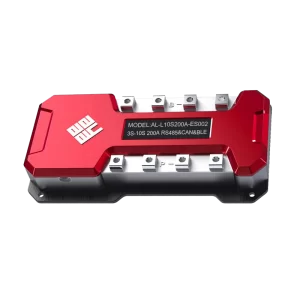
As the battery pack’s control center, a 48v bms lifepo4 continuously monitors temperature, voltage, current, and cell balance to guarantee steady and predictable functioning.
Why Do LiFePO4 Batteries Require a Battery Management System?
LiFePO4 cells have a solid reputation for safety, although they are susceptible to deterioration.
Even high-quality cells may experience thermal stress, deep discharge, or overcharging if they are not properly controlled.
A BMS is required to:
Enforce safe voltage limits at the cell and pack level
Prevent thermal runaway caused by abnormal operating conditions
Balance individual cells to avoid uneven aging
Protect downstream equipment from unstable power delivery
A BMS is essential for compliance, dependability, and warranty protection in commercial and industrial systems; it is not optional.
What Is the Real Value of a 48V Battery Management System?
The capacity of a 48V BMS to integrate separate battery cells into a unified, intelligent energy system is what really makes it valuable.
A well-designed 48v BMS lifepo4 enhances system predictability, operating efficiency, and safety.
From a business perspective, this translates into:
Reduced downtime
Lower maintenance costs
Improved usable capacity
Longer system service life
Over time, these benefits significantly outweigh the initial cost of the BMS itself.
How Is a 48V BMS Configuration Defined?
Understanding configuration is critical when selecting the right BMS.
How Are Cells Arranged in a 48V LiFePO4 Pack?
Each cell in the 16S design used in the majority of 48V systems contributes roughly 3.2V of nominal voltage.
For each cell to be carefully monitored and protected, the BMS must match the series count.
What Voltage and Capacity Options Should Be Considered?
Operating windows vary depending on the application.
In order to accommodate the necessary battery capacity without restricting performance, a properly configured 48v BMS lifepo4 supports the appropriate charge and discharge voltage levels.
Why Do Wiring and Connections Matter?
Inaccurate measurements or delayed protective responses may result from improper wiring or badly built harnesses.
Robust connectors, unambiguous labeling, and communication routes resistant to noise are the top priorities of high-quality BMS designs.
What Happens If a LiFePO4 Battery Operates Without a BMS?
Operating a battery system without a BMS exposes it to multiple failure modes.
How Does Overcharging Damage the Battery?
Cells may beyond their safe voltage limitations in the absence of a BMS, which could result in accelerated deterioration and possible safety risks.
Why Is Overheating a Serious Risk?
Unbalanced temperatures are frequently overlooked until irreversible harm is done.
A 48V BMS lifepo4 continuously monitors temperature and, when required, takes preventative measures.
How Does Cell Imbalance Shorten Battery Life?
Over time, even tiny voltage variations between cells add up to reduce useful capacity and diminish total lifespan.
Where Are 48V LiFePO4 BMS Solutions Commonly Used?
Numerous sectors have embraced 48V LiFePO4 battery solutions, including:
Energy storage systems (ESS)
Telecom backup power
Electric mobility platforms
Industrial automation equipment
Marine and off-grid power solutions
The 48v bms lifepo4 guarantees steady performance in all of these applications under various load and environmental circumstances.
How Do You Choose the Right BMS for Your Specific Application?
What Voltage Rating Is Required?
The battery pack’s whole working voltage range, including brief circumstances during charging and discharging, must be supported by the BMS.
How Important Is Current Rating?
Ratings for peak and continuous current must match the actual load requirements of the system.
Thermal stress or needless shutdowns result from underspecifying present capability.
How Does Capacity Influence BMS Selection?
BMS solutions that can manage continuous energy flow without signal distortion or heat buildup are necessary for higher-capacity systems.
Why Does C-Rate Matter?
Stronger protective measures and quicker reaction times are necessary for applications with high discharge rates.
Even with high load patterns, steady operation is ensured by a carefully chosen 48v bms lifepo4.
How Does a BMS Extend the Service Life of LiFePO4 Batteries?
By maintaining regulated operating conditions during each cycle of charging and discharging, a BMS increases battery life. This includes:
Maintaining balanced cell voltages
Preventing deep discharge
Limiting stress during high-current events
These safeguards maintain internal resistance and capacity over thousands of cycles, providing quantifiable long-term benefit.
How Can You Maximize the Value of Your 48V BMS System?
How Can Efficiency and Battery Life Be Optimized?
System-level adjustments, such as proper load management and charge parameters, enable a 48v bms lifepo4 to function at its best.
Why Should Alerts and Faults Be Addressed Immediately?
Cascade failures frequently result from ignoring warning indications.
Proactive action guarantees that minor faults don’t spread to the entire system.
What Role Does Regular Inspection Play?
Long-term system stability is maintained through routine firmware updates, connection inspections, and thermal state monitoring.
What Makes a 48V LiFePO4 BMS a Strategic Advantage for Long-Term Energy Systems?
A contemporary 48v BMS lifepo4 is a strategic asset that maximizes overall lifespan value, improves efficiency, and optimizes performance rather than being a passive safety component.
It enables scalable, future-ready energy solutions, stabilizes system operation, and safeguards the battery investment when chosen and integrated correctly.
With a focus on BMS sofisticato design and production, Ayaa Technology offers solutions that promote long-term performance, intelligent protection, and high reliability in a variety of LiFePO4 applications.
Domande frequenti
Q1:How many LiFePO4 cells are in a 48V battery?
A1:To provide useable power for high-demand applications, a 48V LiFePO4 battery pack comprises 15–16 cells in series (for voltage) and extra cells in parallel (for capacity).
Q2:Do LiFePO4 batteries need BMS?
A2:Any LiFePO4 battery system must have a Battery Management System (BMS).
By keeping an eye on important parameters, guarding against overcharging, overdischarging, and overheating, and balancing the cells to maintain peak performance, it guarantees the battery’s safe and effective operation.
Q3:How many LiFePO4 cells do I need for 48V?
A3:Typically, 16 cells connected in series are needed to construct a 48V LiFePO4 battery pack.
A 16-cell series (16S) design is typically utilized in real industrial standards for energy storage and solar systems, even though logically a 15-cell series (15S) has a nominal voltage of precisely 15*3.2v=48.0v.
Q4:Is it better to have 2 100Ah batteries or 1 200Ah battery?
A4:A single 200Ah battery offers simplicity, fewer connections, less balancing, and possibly higher efficiency/discharge rates, while two 100Ah batteries offer flexibility, redundancy (backup), and possibly better load sharing.
The optimal option will depend on your priorities for dependability vs. ease of use, space, and particular power requirements.
Q5:What is the 40-80 rule for lithium batteries?
A5:To lessen stress and increase longevity, the “40–80 rule” recommends maintaining the state-of-charge (SoC) of lithium-ion batteries between around 40% and about 80%.
The chemical and thermal stress inside the battery cells is greatly reduced by avoiding full charges (100%) and deep discharges (0% or close to).