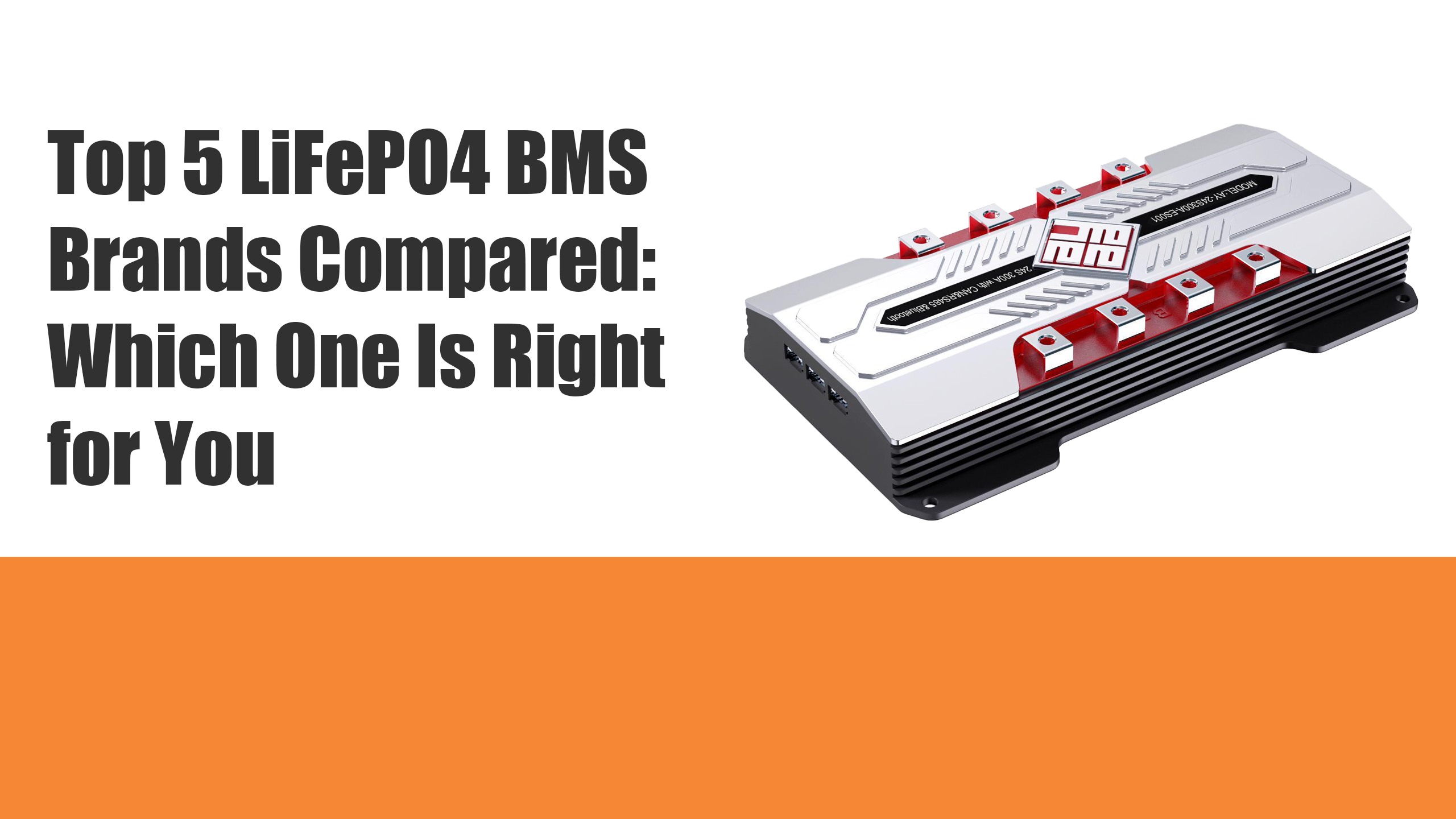
A BMS 16S 48V 300A is crucial when your system requires high voltage and high current for extended heavy-duty operation.
In addition to monitoring, this clever device safeguards, balances, communicates, and prolongs the life of pricey lithium battery cells.
We’ll look at the importance of a BMS 16S 48V 300A for high-performance energy systems.
In order to maximize the return on your investment, we will go over its design, operation, applications, essential features, safety concerns, upkeep, and best practices.
Understanding the Role of a BMS 16S 48V 300A
Fundamentally, an advanced electronic controller called a BMS 16S 48V 300A is made to control a battery pack made up of 16 cells connected in series (16S) to provide a nominal voltage of about 48V and manage up to 300A of continuous or peak current.
Electric cars, industrial robots, AGVs, golf carts, energy storage systems (ESS), and backup power sources frequently use these high-power setups.
The BMS guards against hazardous situations such as thermal runaway, short circuits, cell imbalance, overcurrent, deep discharge, and overcharging.
Even the best lithium-ion or LiFePO4 cells deteriorate more quickly, lose capacity, or present safety hazards in the absence of an appropriate BMS.
Inside the Architecture of a BMS 16S 48V 300A
A well-designed BMS 16S 48V 300A has several interconnected modules, each of which serves a distinct purpose:
Master Control Board: Acts as the main processor, running algorithms to monitor voltage, current, and temperature in real time.
Cell Monitoring Units: Connected to each cell in the series to measure individual voltages.
Balancing Circuits: Passive or active balancing units equalize cells to prevent weaker cells from dragging down the entire pack.
Temperature Sensors: Placed near or on cells to detect overheating.
Current Shunt or Hall Sensors: Measure charge/discharge currents.
Interfaces de comunicación: CANBUS, SMBUS, RS485, or Bluetooth modules relay status to users or fleet management systems.
Protection Relays: High-current relays or MOSFET arrays open circuits during fault conditions.
This design guarantees that every cell functions within safe bounds and that the pack as a whole functions as a cohesive, dependable entity.
How a BMS 16S 48V 300A Operates
A BMS 16S 48V 300A requires a complex series of monitoring, controlling, balancing, and communicating on a daily basis.
Monitoring:
The BMS continuously tracks real-time data—voltage of each cell, total pack voltage, incoming/outgoing current, and cell temperatures.
Equilibrio
Over time, cells in a series configuration drift apart in capacity.
The BMS balances them during charging, either passively (shunting excess energy) or actively (redistributing energy).
Protecting:
The BMS cuts off charging if a cell exceeds its safe voltage or stops discharging if voltage drops too low.
It prevents overcurrent spikes and isolates the battery during short circuits.
Communicating:
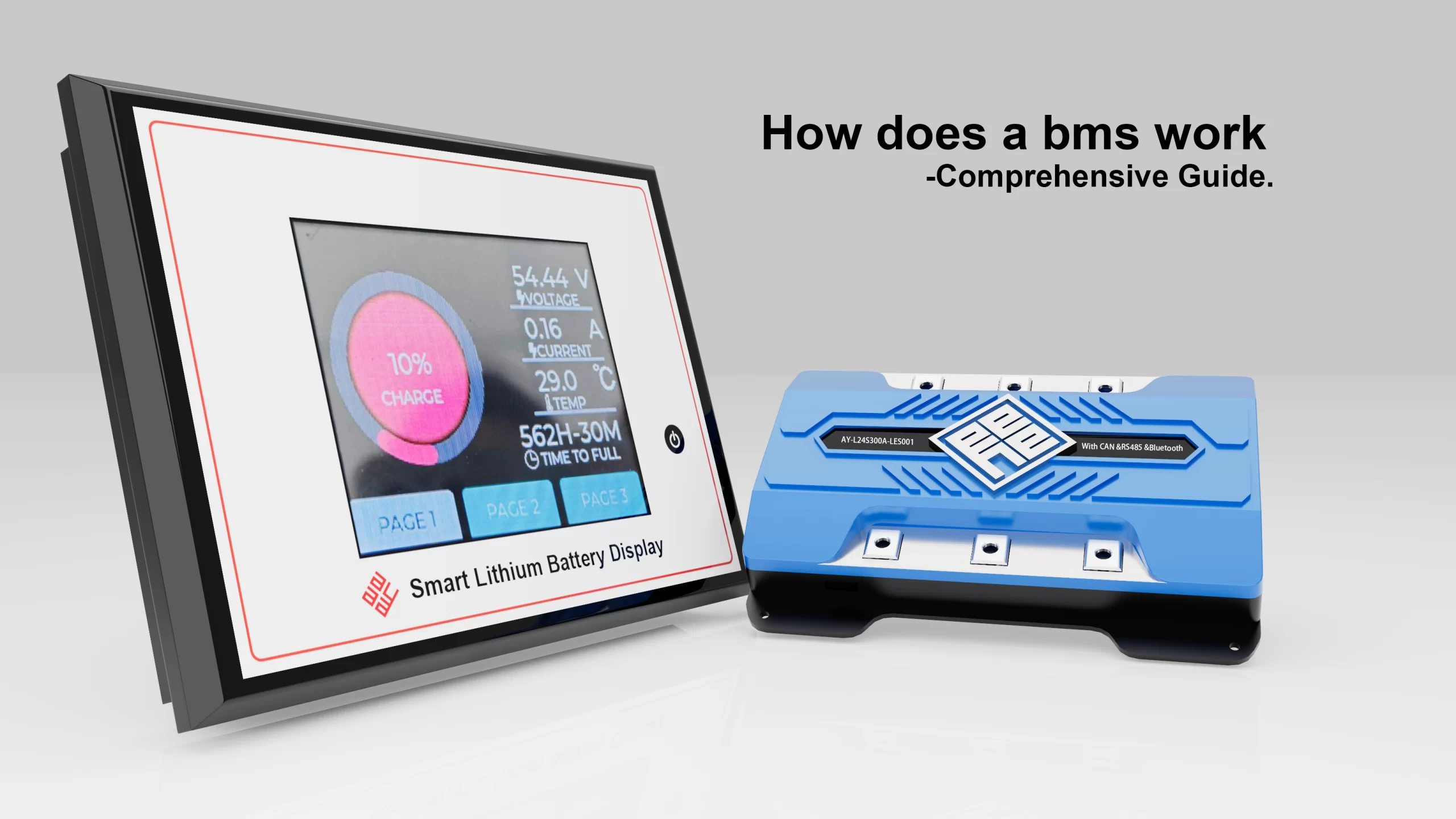
Modern systems push data to dashboards or apps, so users always know the pack’s State of Charge (SOC) and State of Health (SOH).
Longer pack life, safety, and high energy output are guaranteed by this synergy.
Where a BMS 16S 48V 300A Excels
Applications where compact, strong battery packs meet heavy loads use a BMS 16S 48V 300A. Common usage cases consist of:
Electric Vehicles (EVs): Provides high torque and acceleration with stable energy flow.
Material Handling: Powers forklifts, AGVs, and warehouse robots.
Energy Storage Systems (ESS): Stores renewable energy for residential or commercial backup.
Recreational Vehicles & Marine: Runs electric boats, RVs, or off-grid cabins.
Industrial Equipment: Supports drones, power tools, and backup power banks.
The protective layers and intelligent control logic of the BMS are advantageous to each of these applications.
These are the main characteristics that make a difference:
High Current Handling:
Rated up to 300A, it can deliver large bursts of power for acceleration or heavy equipment.
Advanced Balancing:
Intelligent active balancing preserves capacity and extends pack life.
Multiple Protection Layers:
Short circuit, overcurrent, overcharge, deep discharge, temperature cutoffs.
Smart Communication:
CANBUS or SMBUS enables seamless integration with chargers, controllers, or fleet monitoring software.
Low Standby Consumption:
Efficient circuitry minimizes drain when idle.
Thermal Management Support:
Some versions support fans or liquid cooling integration.
Quality and Safety Best Practices
Prior to purchasing a BMS 16S 48V 300A, make sure:
It is produced using premium PCB materials and parts that are approved for use in industrial settings.
It has undergone extensive testing, including vibration, humidity, and temperature cycling.
Relevant certifications (CE, UN38.3, RoHS) are met.
Qualified experts install it while adhering to the correct connector and insulation standards.
Regular logging and inspection are essential.
To prevent pack failure, early indications of cell drift or imbalance must be addressed right away.
Maintaining a BMS 16S 48V 300A
The lifespan of your battery pack and BMS are both increased by proper maintenance:
Check Connections:
Ensure cables, terminals, and balance leads are tight and corrosion-free.
Monitor Logs:
Use the BMS’s data interface to download usage logs and inspect trends.
Balance Cycles:
Regularly run full charge-discharge cycles to help the BMS calibrate SOC readings accurately.
Environmental Care:
Store packs within recommended temperature ranges (-20°C to 60°C). Avoid water or dust ingress.
By following these steps, your BMS remains reliable through thousands of cycles.
Preguntas frecuentes
Q:How to check if BMS is working?
A:Throughout the test, make sure the ground is always securely connected.
Set your voltage source to the same voltage as the first cell and permanently connect the multimeter to it.
Never let the voltage get above 4V.
To determine if the BMS is on or off, place a lightbulb or other object as a load on the BMS output.
Q:What is the cut off voltage for the 16S BMS?
A:Configuration of the Series: 16S (16 cells in series) 51.2V is the nominal voltage (3.2V per cell x 16).
57.6V is the maximum voltage (3.6V per cell x 16).
48V is the cut-off voltage (3.0V per cell x 16).
Q:Can you use a lithium battery without a BMS?
A:Batteries’ chemical makeup makes them susceptible to temperature fluctuations and overcharging or discharging.
With one notable exception, all battery types generally cannot operate safely without a BMS and rapidly deteriorate after a few full charging cycles.
Q:Which is better PCM or BMS battery?
A:Similar to PCMs, battery management systems (BMS) provide more extensive functions for tracking a battery’s condition.
It has a clever software-integrated microprocessor that can compute and interpret various battery measurements, such as SOC (State of Charge) and SOH (State of Health).
Q:What is 16S in BMS?
A:With a nominal voltage of 60V, the 16S configuration may accommodate up to 10 cells in series.
Rated Discharge Current: Capable of handling a 40A (1C) continuous discharge.
Over-Discharge Protection: Prevents battery damage by cutting off at 44V.
Charging Voltage: 67.2 V is the maximum charging voltage for best results.
Q:Do you need a BMS for LiFePO4?
A:These batteries are susceptible to problems including overcharging, overdischarging, and temperature extremes without a BMS, which can reduce their lifespan or even result in damage.
A BMS guards against potentially dangerous circumstances by ensuring that every cell in a LiFePO4 battery runs within safe bounds.
Conclusión
A robust, intelligent BMS 16S 48V 300A serves as the foundation for any high-performance energy storage system.
It provides dependable power, enhanced safety, and a longer battery life by integrating communication, protection, balancing, and monitoring into a single small module.
Purchasing a high-quality BMS is the best approach to safeguard your batteries and optimize return on investment as the need for clean energy storage increases, whether for EVs, AGVs, or off-grid solutions.
Shenzhen Ayaa Technology Co., Ltd. is committed to providing dependable BMS solutions to clients worldwide who demand the greatest levels of sustainability, performance, and safety.