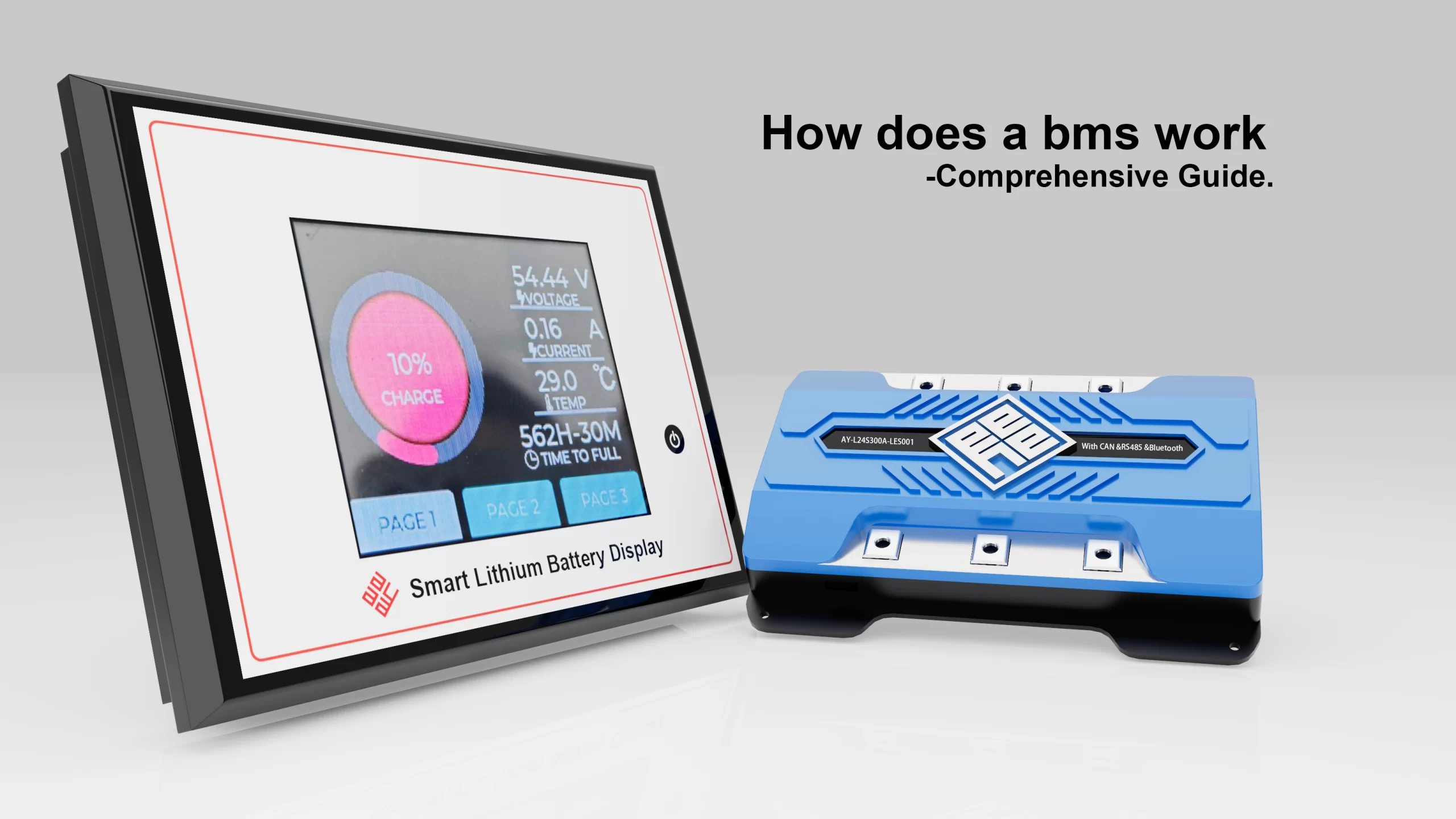
Top Advantages of Using a Smart BMS LiFePO4 in Modern Applications
3687
Top Advantages of Using a Smart BMS LiFePO4 in Modern Applications
Smart BMS LiFePO4 solutions have rapidly become the foundation of safe, effective, and intelligent lithium battery management in today’s rapidly changing energy industry.
Whether for solar systems, electric cars, portable electronics, or home energy storage, a smart BMS LiFePO4 offers the degree of safety and monitoring that contemporary applications require.
What is a Smart BMS LiFePO4?
An intelligent electronic system called a smart BMS LiFePO4 (Battery Management System for Lithium Iron Phosphate batteries) is made to continuously monitor, manage, and safeguard LiFePO4 batteries.
A smart BMS LiFePO4 incorporates cutting-edge technologies including Bluetooth or CAN connection, remote diagnostics, real-time cell balancing, and cloud connectivity for data logging and optimization, in contrast to a standard BMS.
Key Advantages of Smart BMS LiFePO4
There are several benefits to Smart BMS LiFePO4 that conventional battery management just cannot match:
Enhanced Safety
Ensuring battery safety is the main goal of a smart BMS LiFePO4.
It actively avoids dangers including overcharging, deep discharging, overcurrent, short circuit, and thermal runaway by continuously monitoring cell voltage, current, and temperature.
Mayor duración de la batería
Your battery pack’s lifespan can be considerably increased with a smart BMS LiFePO4 that is well-designed.
It eliminates cell imbalances, maintains ideal charge and discharge conditions, and offers precise estimates of the State of Charge (SOC) and State of Health (SOH).
Higher Efficiency & Better Performance
A smart BMS LiFePO4 enables the battery pack provide maximum usable capacity and reliable output even under high load or temperature fluctuations with intelligent balancing and active regulation.
Remote Monitoring & Control
These days, smart BMS LiFePO4 systems frequently have RS485 communication, Bluetooth, or CAN.
Through a mobile app or cloud platform, users may monitor battery data, configure parameters, and get alerts at any time and from any location.
Cost-Effective & Sustainable
A smart BMS LiFePO4 decreases battery waste and lowers maintenance costs by preventing early battery failure and maximizing the performance of each cell, hence promoting sustainable energy solutions.
The Growing Market Trend of Smart BMS LiFePO4
Global demand for smart BMS LiFePO4 systems has increased due to the move toward electrification and renewable energy.
Reliable management is necessary for industries that depend on strong, scalable battery systems, such as commercial backup power, solar storage, and electric vehicles.
The next-generation smart BMS LiFePO4 will incorporate machine learning to forecast battery behavior and self-optimize in real time as IoT and AI technologies develop.
How Does a Smart BMS LiFePO4 Work?
Intelligent software and advanced hardware are combined in the LiFePO4 smart BMS’s operating principle:
Data Acquisition: High-precision sensors continuously gather voltage, current, and temperature data from each cell.
Real-Time Analysis: The microcontroller processes the data using SOC, SOH, and SOP (State of Power) algorithms.
Control & Protection: If the smart BMS LiFePO4 detects anomalies like overvoltage or overtemperature, it automatically isolates the affected cells or shuts down the system to avoid damage.
Equilibrio Active or passive balancing ensures all cells maintain uniform voltage levels, preventing premature aging.
Comunicación: The system communicates with external devices (chargers, motor controllers, or monitoring apps) using secure protocols like CAN or Bluetooth.
Essential Product Features of Smart BMS LiFePO4
A top-notch smart BMS LiFePO4 ought to have:
High-accuracy voltage and current sensing
Multi-point temperature monitoring
Adaptive balancing (active/passive)
Overcharge, overdischarge, and short circuit protection
Low standby power consumption
Robust communication interfaces (CAN, RS485, Bluetooth)
OTA firmware updates for future upgrades
Latest Innovations in Smart BMS LiFePO4
AI-powered and adaptable systems are becoming the norm for the newest smart BMS LiFePO4 solutions. Several innovative enhancements include:
AI Predictive Algorithms: Using machine learning to forecast battery aging and performance trends.
Cloud Integration: Remote diagnostics, data storage, and energy optimization via IoT.
Advanced Materials: More durable PCBs, enhanced thermal pathways, and fire-retardant casings.
Wireless BMS (wBMS): Emerging solutions that replace wired sensor connections with secure wireless nodes, saving space and weight.
Applications of Smart BMS LiFePO4
A smart BMS LiFePO4’s versatility makes it perfect for a variety of uses:
Residential & Commercial Energy Storage: Store excess solar power safely and efficiently.
Electric Vehicles & E-Bikes: Deliver high energy density, long cycles, and real-time protection.
Marine & RV Systems: Reliable off-grid power where space and safety are crucial.
Portable Backup Power: Maintain safety and longevity in mobile power stations and UPS units.
Key Considerations When Choosing the Best BMS LiFePO4
Choosing the finest BMS LiFePO4 is a crucial choice that has an immediate impact on the longevity, safety, dependability, and general performance of your battery system.
These are the most crucial considerations to make when weighing your alternatives, whether they are for industrial purposes, electric cars, or home energy storage:
1. Understand Your Energy Requirements
You must specify your system’s requirements precisely before selecting a BMS LiFePO4:
System Scale: Will your battery system power a huge commercial energy storage solution, a tiny portable device, or a home solar storage system?
Daily and Peak Power Demand: To make sure the BMS can safely handle anticipated currents, estimate your system’s peak load requirements as well as your normal daily energy use.
Expected Run Time: Recognize your charging and discharging cycles, including the depth of discharge, runtime, and daily cycle count, as these have a direct impact on the protection and balancing capabilities of the BMS.
2. Verify Battery Pack Specifications
Your battery pack design must technically work with the BMS:
Series/Parallel Configuration: Find out how many cells there are in parallel (which determines capacity) and series (which determines system voltage).
This setup must be supported by your BMS.
Maximum Charge/Discharge Current: Make that the BMS can manage both peak and continuous currents without overheating or causing needless shutdowns.
Operating Temperature Range: Whether you use the BMS indoors or outdoors or in extremely hot or cold temperatures, it must be compatible with your actual environment.
3. Required Features and Safety Protections
Strong core functions should be provided by the top smart BMS LiFePO4:
High-Precision Monitoring: Continuous measurement of voltage, current, temperature, State of Charge (SOC), and State of Health (SOH).
Balancing Function: Active or passive balancing to keep all cells at consistent voltage levels, which extends the battery pack’s lifespan and performance.
Multiple Protection Layers: Overvoltage, undervoltage, overcurrent, short circuit, overtemperature, and low-temperature protections — with fast response times to prevent damage.
Programmability: The ability to adjust settings through software makes it easier to fine-tune the BMS for different battery chemistries or usage needs.
To put it briefly, the best BMS LiFePO4 combines rigorous safety measures, flexible communication, dependable software, and intelligent hardware.
Whether you’re powering your home, car, or industrial energy system, you can be sure your investment offers the most efficiency, longevity, and peace of mind by carefully weighing these aspects.
Partner with Ayaa Technology for BMS LiFePO4 Solutions
At Shenzhen Ayaa Technology, we provide cutting-edge BMS LiFePO4 solutions for EVs, solar, and industrial applications to clients worldwide. Our product lines include:
Modular designs from 3S to 35S configurations.
CAN, RS485, and Bluetooth communication.
Active/passive balancing and advanced thermal control.
Comprehensive R&D, manufacturing, and after-sales support.
Ayaa Technology has more than 20 years of experience with batteries and can help you get the most out of your LiFePO4 batteries in a sustainable, intelligent, and safe manner.
Preguntas frecuentes
Q:Can I charge LiFePO4 with BMS?
A:To limit the current, a DC to DC converter would be required.
Furthermore, the BMS will cut the circuit and produce a high voltage spike when a LiFePO4 battery hits charge protection voltage.
Q:How do I choose the right BMS?
A:Selecting a BMS with an amp rating that can manage your battery system’s maximum current input and output is essential.
Exceeding this rating may cause the BMS to malfunction or sustain harm.
Future expansion is frequently overlooked while sizing a BMS.
Q:Does BMS protect battery from overcharging?
A:To ensure peak performance, it keeps an eye on vital variables like voltage, current, temperature, and charge level.
Overcharging, deep discharging, overheating, and other conditions that might cause battery deterioration or failure are prevented by the BMS.
Selecting a dependable BMS LiFePO4 is crucial for optimizing safety, performance, and long-term return on investment, regardless of whether you’re creating a portable power station, an EV fleet, or a solar storage project.
To future-proof your energy storage, invest in a reputable partner like Ayaa Technologies right now!