Lifepo4 Battery 12V 200Ah Buyer’s Guide: How BMS Design Safety and ROI
1066
Lifepo4 Battery 12V 200Ah Buyer’s Guide: How BMS Design Safety and ROI
As almacenamiento de energía systems get better at saving energy, lasting longer, and keeping people safe, the lifepo4 battery 12v 200ah has become the best choice for solar, off-grid, industrial, marine, and autocaravana uses.
Buyers now consider long-term operational safety, system dependability, and total return on investment (ROI) in addition to capacity and pricing.
One frequently disregarded element is at the core of this change: the Battery Management System (BMS).
Beyond only safeguarding cells, a well-designed smart BMS assesses the amount of useful energy, lifespan, and economic value that a lithium battery can actually provide.
What Is a Lifepo4 Battery 12V 200Ah?
A lifepo4 battery 12v 200ah is a lithium iron phosphate energy storage device that has a 200 amp-hour capacity and a nominal voltage of 12.8V.
It is intended to replace conventional lead-acid and AGM batteries in demanding applications and provides about 2.56 kWh of useable energy.
In contrast to lead-acid or traditional marine battery systems, LiFePO4 chemistry provides:
Stable crystal structure
High thermal tolerance
Deep discharge capability
Vida útil de ciclo largo
LiFePO4 technology offers a larger useful capacity and constant voltage output throughout the discharge cycle as compared to a 12v marine battery based on lead-acid chemistry.
What Makes Lifepo4 Battery 12V 200Ah Different From Other Lithium Batteries?
Lithium batteries are not all made equal. Lifepo4 lithium battery technology places a higher priority on safety, longevity, and thermal stability than lithium-ion chemistries like NMC.
Key differences include:
Lower risk of thermal runaway
Higher chemical stability
Longer service life
Better tolerance for harsh operating environments
The lifepo4 battery 12v 200ah stands out as a safer and more reliable energy option for applications that demand dependability rather than maximum compactness.
What Are the Key Advantages of a Lifepo4 Battery 12V 200Ah?
Longer Cycle Life and Lower Lifetime Cost
At 80% depth of drain, a high-quality 12-volt, 200-ah Lifepo4 battery can normally provide 4,000–6,000 cycles.
Lead-acid batteries, on the other hand, frequently die after 500–800 cycles.
From an ROI perspective, fewer replacements mean:
Lower maintenance costs
Reduced downtime
Improved total cost of ownership
High Usable Energy Efficiency
A 12v 200ah lifepo4 battery may safely use 80–90% of its rated capacity without experiencing performance degradation, in contrast to lead-acid systems, which frequently only permit 50% usable capacity.
Consistent Voltage Output
For sensitive electronics, motors, and inverters, stable voltage guarantees dependable operation.
This benefit is particularly important for off-grid power systems and marine batteries.
Why Does the Lifepo4 Battery 12V 200Ah Play a Critical Role in Modern Energy Systems?
The 12v 200ah Lifepo4 battery is a system enabler as well as a power source.
Because of its features, designers can:
Reduce battery bank size
Simplify system architecture
Increase energy density per installation
Improve system scalability
This battery architecture offers versatility without sacrificing safety in solar storage, maritime battery systems, industrial backup power, and mobile energy platforms.
How Does a Lifepo4 Battery 12V 200Ah Work—and What Role Does the BMS Play?
Core Operating Principle
During charging and discharging, lithium ions travel between the cathode (LiFePO4) and anode of a lifepo4 battery 12v 200ah.
Even if the chemistry is naturally steady, there are still concerns from cell-level imbalance and environmental stress.
Even the finest lifepo4 lithium battery cannot reach its intended lifespan or safety potential without a strong BMS.
Where Is the Lifepo4 Battery 12V 200Ah Commonly Used?
The lifepo4 battery 12v 200ah’s adaptability makes it appropriate for a variety of uses:
Marine battery systems (trolling motors, onboard electronics)
RV and camper power systems
Solar and off-grid energy storage
Industrial backup power
Telecom and data infrastructure
Portable energy storage solutions
It has a distinct advantage over conventional 12v marine battery alternatives in maritime conditions due to its resistance to vibration and corrosion.
Is the Lifepo4 Battery 12V 200Ah Economically and Environmentally Sustainable?
Economic Benefits
Despite having a greater initial cost than lead-acid batteries, the lifepo4 battery 12v 200ah offers a better return on investment because:
Mayor esperanza de vida
Higher usable capacity
Reduced maintenance
Lower replacement frequency
Environmental Impact
LiFePO4 chemistry has a smaller environmental impact and doesn’t contain cobalt.
In addition to lowering battery waste, longer service life promotes sustainability objectives.
How Do You Choose the Best BMS for a Lifepo4 Battery 12V 200Ah?
To fully utilize a lifepo4 battery 12v 200ah capacity, choosing the appropriate BMS is essential.
Important evaluation standards consist of:
Voltage range compatibility
Current handling capability
Cell balancing accuracy
Communication protocols
Scalability and system integration
Below are three BMS solutions designed for demanding lithium battery systems.
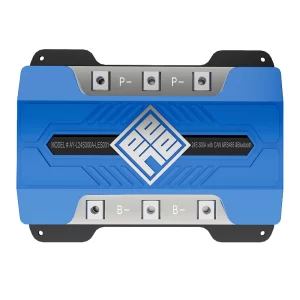
AY-L24S300A-ES001 (7S–24S): High-Power and Intelligent Monitoring
This BMS is designed for applications requiring:
Wide voltage adaptability (7S–24S)
High current support up to 300A
Real-time monitoring and diagnostics
Large lifepo4 lithium battery systems in energy storage and industrial settings can benefit from its clever protective logic.
AY-L24S300A-LES001 (7S–24S): Robust Materials and Advanced Communication
Key strengths include:
High-reliability BMS materials for long-term durability
Support for CAN and SMBus communication
Wide voltage compatibility
For systems that need reliable communication between battery packs and external controllers, this type is perfect.
AY-LS20S90A-H150 (16S–20S): Parallel Capability and System Flexibility
Designed for scalable systems, this BMS offers:
Parallel connection support
Strong protocol compatibility
Stable performance in multi-battery architectures
It is well suited for modular lifepo4 battery 12v 200ah installations.
Smart BMS Options for Lifepo4 Battery Systems
BMS Model
Rango de voltaje
Max Current
Comunicación
Key Strength
AY-L24S300A-ES001
7S–24S
300A
CAN / SMBus
High power, intelligent monitoring
AY-L24S300A-LES001
7S–24S
300A
CAN / SMBus
Durable materials, stable communication
AY-LS20S90A-H150
16S–20S
90A
Multiple protocols
Parallel support, system compatibility
Why Smart BMS Design Maximizes Safety and ROI
A well-engineered BMS directly impacts:
Battery lifespan
System uptime
Safety compliance
Energy efficiency
The BMS is not an accessory for consumers assessing a lifepo4 battery 12v 200ah.
Rather, it is a strategic investment that establishes if the battery achieves its maximum operational and commercial potential.
A Smarter Way to Unlock the Full Value of Lifepo4 Battery 12V 200Ah Systems
A lifepo4 battery 12v 200ah is a forward-thinking choice, but the best way to maximize safety, performance, and ROI is to combine it with the appropriate smart BMS.
Lithium batteries are transformed from basic energy storage devices into dependable, long-term power solutions by sophisticated BMS design, which includes cell protection, intelligent monitoring, and system integration.
Through cutting-edge BMS innovation and engineering know-how, Ayaa Technology continues to provide high-performance lifepo4 battery systems for purchasers and system integrators looking for reliable lithium battery management solutions.
Preguntas frecuentes
P1: ¿Cuál es la vida útil de una batería LiFePO4 de 12 V y 200 Ah?
A1:Depending on usage and upkeep, a 200Ah lithium battery can last anywhere from five to ten years.
Compared to lead-acid batteries, which typically last three to five years, this lifespan is greater.
Lithium batteries, such lithium iron phosphate (LiFePO4), are renowned for their longevity and robustness.
P2: ¿Es mejor tener 2 baterías de 100 Ah o 1 batería de 200 Ah?
A2:Priorities determine whether to use two 100Ah or one 200Ah batteries: While 1x 200Ah offers simplicity, fewer connections, possibly lower cost, and better space economy for bigger, single-unit configurations, a single failure takes you offline.
In contrast, 2x 100Ah gives redundancy, flexibility in space, easier handling, and potential for higher combined current.
The ideal option will depend on your unique power requirements and setup limitations.
Both typically offer comparable total capacity (200Ah) and voltage (e.g., 12V), but differ in installation, maintenance, and failure resilience.
Q3:Is it bad to keep LiFePO4 batteries fully charged?
A3:LiFePO4 batteries can withstand frequent full cycles better than other lithium types, so charging them to 100% is acceptable for daily use or when needed soon, but avoid keeping them at 100% for months.
Instead, store them around 50% State of Charge (SOC) to slow capacity fade.
While charging to 100% and using them on a daily basis is acceptable, store them in a cool environment at 40–60% SOC and inspect them every few months.
Q4:How many solar panels do I need to charge a 200Ah battery in 5 hours?
A4:If you get five hours of peak sunlight each day, you would need at least three 200W solar panels to charge a 12V 200Ah battery.
Five panels of the same wattage would be needed for a 24V battery, which needs 4800 watt-hours.
Q5:How long will a 200Ah battery run a 100W fridge?
A5:Similarly, a 200Ah battery can run a 100W item for 17.28 hours under the same circumstances.
A 200Ah battery’s runtime is equal to (200Ah × 12V × 0.80 × 0.9) / 100W = 17.28 hours.