Lithium iron phosphate (LiFePO4) is at the forefront of the market due to the shift toward high-density power storage and renewable energy.
But in order to control these cells’ potential, a highly developed “brain” is needed.
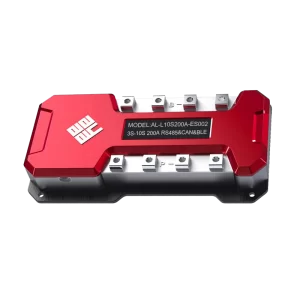
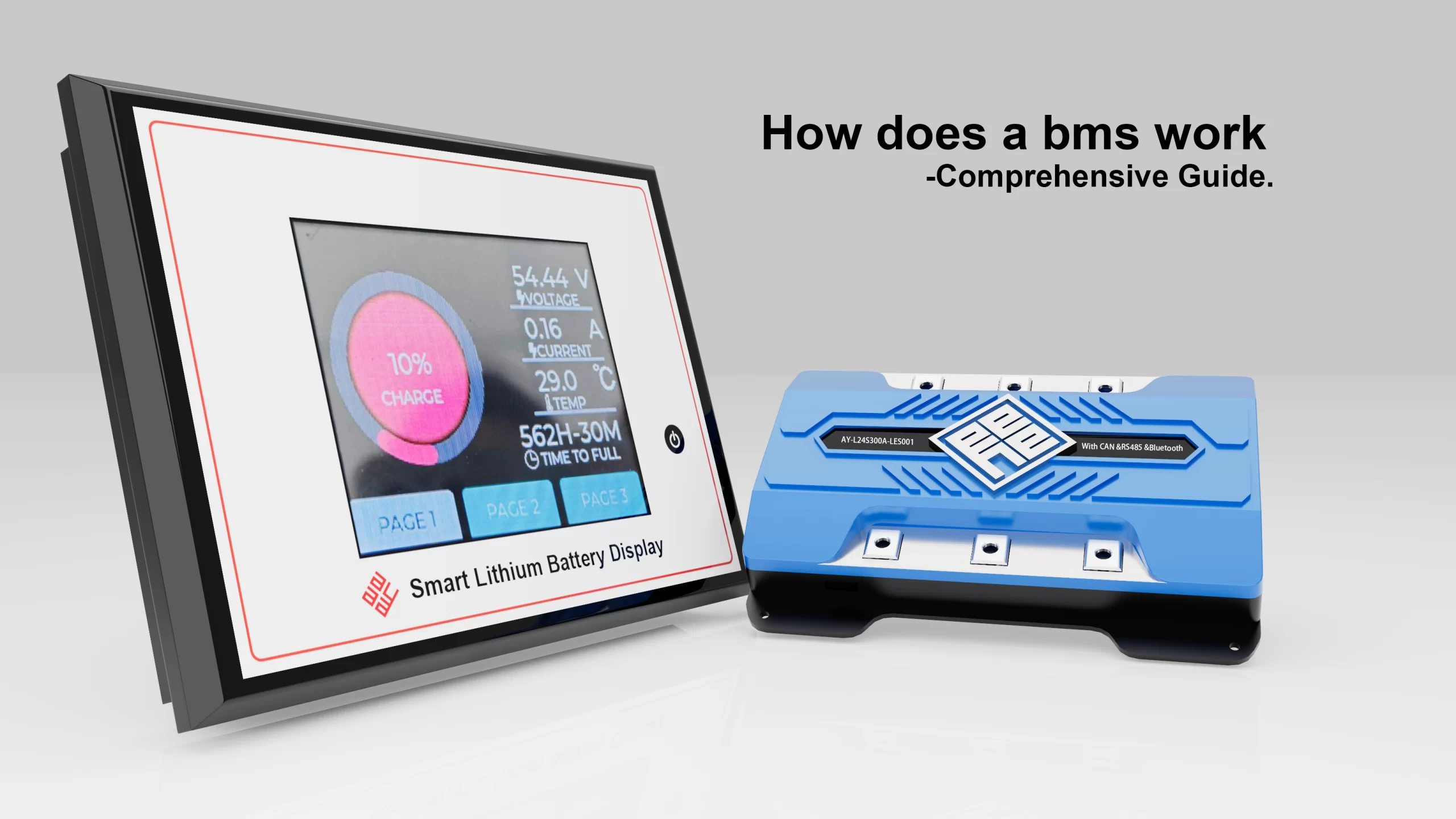
The 48v bms lifepo4 becomes the most important part of any energy system at this point.
Upgrading to a high-performance management system is essential for operational excellence, regardless of whether you are in charge of a fleet of light electric vehicles, an off-grid solar array, or a telecoms base station.
Why is a Dedicated Battery Management System Necessary?
Your energy investment is protected by a battery management system (BMS).
Lithium chemistries are extremely sensitive to voltage changes, in contrast to lead-acid batteries, which are comparatively “dumb” and resistant to straightforward charging schemes.
A battery pack is basically a group of separate cells operating independently in the absence of a 48v bms lifepo4.
Every cell is guaranteed to operate within its safe operating area (SOA) by the BMS.
As a high-speed switch that can cut off the load or charger in milliseconds if a problem is found, it keeps an eye on the voltage, temperature, and charge levels.
The BMS offers the data transparency required in industrial applications to forecast maintenance cycles and prevent catastrophic power outages.
How to Understand the 48v BMS LiFePO4 Configuration?
A thorough understanding of electrical logic and hardware is necessary for configuring a 48v BMS lifepo4.
15 or 16 cells connected in series make up a common 48V LiFePO4 pack (15S or 16S).
1.Cell Arrangement: Because it offers a nominal voltage of 51.2V, which is ideal for the majority of off-grid inverters and telecom equipment, the 16S arrangement is the industry standard for “48V” systems.
2.Voltage and Capacity Options: Modular scalability is possible with high-performance systems.
Depending on the parallel string design, the capacity (Ah) can range from 50Ah to 200Ah or more while the voltage stays at a nominal 48V.
3.Wiring and Connection: Accuracy is crucial.
Each cell junction requires the precise order in which the balancing wires are linked.
Robust sampling connectors that withstand vibration and corrosion are a feature of a high-quality 48v BMS lifepo4, guaranteeing that the voltage data transmitted to the processor is accurate to within millivolts.
What Happens if You Do Not Use a BMS?
Without a 48v bms lifepo4, using a high-capacity lithium pack increases the chance of hardware failure and serious safety hazards.
The following are the effects of “blind” operation:
1.Overcharging: Without a regulator, a charger might continue to push current into a full cell, leading to electrolyte decomposition and potential fire.
2.Over-heating: Heat is produced by high-current draws.
The battery may reach temperatures that permanently harm the cells’ structural integrity if thermal sensors are not connected to a BMS.
3.Battery Imbalance: Every cell is unique. One cell will unavoidably have a larger voltage than the others over time.
The “weakest link” will eventually fail and leave the entire 48V pack unusable if there isn’t a 48v bms lifepo4 to balance them.
4.Shortened Life Cycles: Copper shunts will develop inside the cell as a result of frequent deep discharges above the safe lower limit (under-voltage), which will result in a permanent loss of capacity and a significantly shorter lifespan.
What is the Application Range for a 48v BMS LiFePO4?
The “sweet spot” for medium-scale power requirements is the 48V design.
It provides a compromise between efficiency (reduced current losses compared to 12V or 24V systems) and safety (low voltage).
1.Renewable Energy Storage: The 48v bms lifepo4 is used by home solar systems and energy storage systems (ESS) to control the daily cycling of energy from panels to batteries.
2.Telecommunications: 48V is the global standard for telecom towers, providing backup power that must remain 100% reliable for years.
3.Electric Mobility: 48V systems are used by golf carts, electric forklifts, and low-speed electric vehicles (LSEVs) due to their strong torque and effective power delivery.
4.Industrial Robotics: AGVs (Automated Guided Vehicles) in warehouses need a high-end 48v BMS lifepo4 for intelligent communication and quick charging.
How Can You Choose the Right BMS for Your Application?
Selecting the correct 48v bms lifepo4 involves more than just matching the voltage.
You must evaluate the specific electrical demands of your load.
1. Voltage Matching: Ensure the BMS is specifically rated for LiFePO4 (3.2V nominal per cell) and matches your series count (15S vs 16S).
2. Amperage Requirements: Calculate your continuous discharge current and peak.
A BMS rated for at least 200A is required if your motor draws 150A in order to offer a safety margin and lower heat.
3. Capacity Compatibility: Although a BMS is voltage-dependent, be sure its balancing current is adequate for your pack’s entire Amp-hour (Ah) capacity.
Higher balancing currents are needed for larger packs.
4. C-Rating Understanding: How quickly a battery may be charged or drained is determined by its C-rating.
The C-rate required by your application must be handled by your 48v BMS lifepo4 without prematurely tripping safety limitations.
How Does a BMS Extend the Lifespan of LiFePO4 Batteries?
LiFePO4’s lifespan, which is frequently reported to be ten years or longer, depends solely on how well it is managed.
An clever 48v BMS lifepo4 prolongs life via accurate “Boundary Management.”
The stress on the chemical electrodes is greatly decreased by keeping the cells within a 10%–90% window and preventing them from ever reaching 0% or 100% real state of charge.
The balancing function also makes sure that no cell is “overworked.”
One cell in a pack lacking a 48v bms lifepo4 may be working 20% harder than the others; this cell will die early, and as they are connected in series, the pack as a whole will also die.
By ensuring a “socialist” division of labor across cells, the BMS maximizes the system’s overall cycle count.
How to Maximize Your 48v BMS LiFePO4 Efficiency?
Users need to get above the “set it and forget it” approach in order to get the most out of their 48v BMS lifepo4.
Proactive management is made possible by high-performance systems.
1.Maximize Efficiency and Battery Life: To connect the BMS to your inverter, use the RS485/CAN communication interfaces.
This enables the inverter to modify its charging rate in response to the 48v bms lifepo4’s real-time cell temperatures and voltages.
2.Respond to Alarms and Faults: A BMS warning should never be disregarded.
Instead of just restarting the system, look into the underlying cause as soon as the system sounds a “Under-Voltage” or “High-Temperature” alarm.
3.Regular Maintenance and Inspection: Despite LiFePO4’s low maintenance requirements, periodically inspecting the 48v bms lifepo4’s physical connections guarantees that vibration hasn’t loosened the balance leads, which could result in erroneous readings and incorrect balancing.
The Synergy of Intelligence and Power
The fundamental technology that makes contemporary lithium energy storage feasible is the 48v bms lifepo4, as we have examined.
It turns a volatile chemical reaction into a reliable, long-lasting power source.
The BMS lets organizations concentrate on their operations instead of worrying about power outages by handling the complex complexities of cell balance, thermal management, and communication.
The efficiency obtained by a high-performance management system becomes a major competitive advantage as energy costs continue to vary, guaranteeing that every watt-hour of energy is used to its utmost capacity.
Driving Innovation with Ayaa Technology
Ayaa Technology offers the engineering expertise your project deserves when performance and dependability are unavoidable.
We specialize in high-performance bms lifepo4 solutions made for the most demanding situations, and we have over 18 years of industry-leading experience.
A PhD-led research and development team supports our goods, which are produced in accordance with the highest quality standards, including FMEA and SPC procedures.
Ayaa Technology provides the intelligent battery management solutions that drive the future, whether you’re building a fleet of industrial robots, a solar micro-grid, or customized electric automobiles.
Experience the difference that professional-grade engineering makes by exploring our selection of off-the-shelf and custom solutions.
Preguntas frecuentes
Q1:How to choose a BMS for LiFePO4 cells?
A1:Present Rating: This is your power route.
Cell Count (e.g., 4S, 8S): Your series setup (4S for 12V, 8S for 24V) must match your BMS.
Balancing Current: This is the rate at which your cells are balanced.
LiFePO4 cells detest extremes in temperature.
Your safety net is a low-voltage cutoff.
Q2:What is the difference between active and passive balancing in BMS?
A2:Although passive cell balancing is more popular and easier, it loses some energy.
While active cell balancing is more effective, it necessitates more intricate circuitry and is best suited for applications requiring high energy efficiency.
Q3:How many LiFePO4 cells for 48V?
A3:There are two types of LiFePO4 batteries: 51.2V with 16 cells and 48V with 15 3.2V cells.
Q4:What is the best BMS for LiFePO4?
A4:Your requirements will determine which battery management system (BMS) is suitable for lithium iron phosphate batteries:
AYAA BMS offers the most cost-effective option, while premium choices typically feature high-current support, Bluetooth monitoring capabilities, and critical low-temperature protection mechanisms.
Q5:What are common LiFePO4 charging mistakes?
A5:One of the most frequent errors made when charging LiFePO4 batteries is the use of incompatible chargers.
Over time, the battery cells may deteriorate due to improper voltage or high current supplied by these chargers.
Overcharging brought on by mismatched chargers raises the possibility of internal cell damage and overheating.