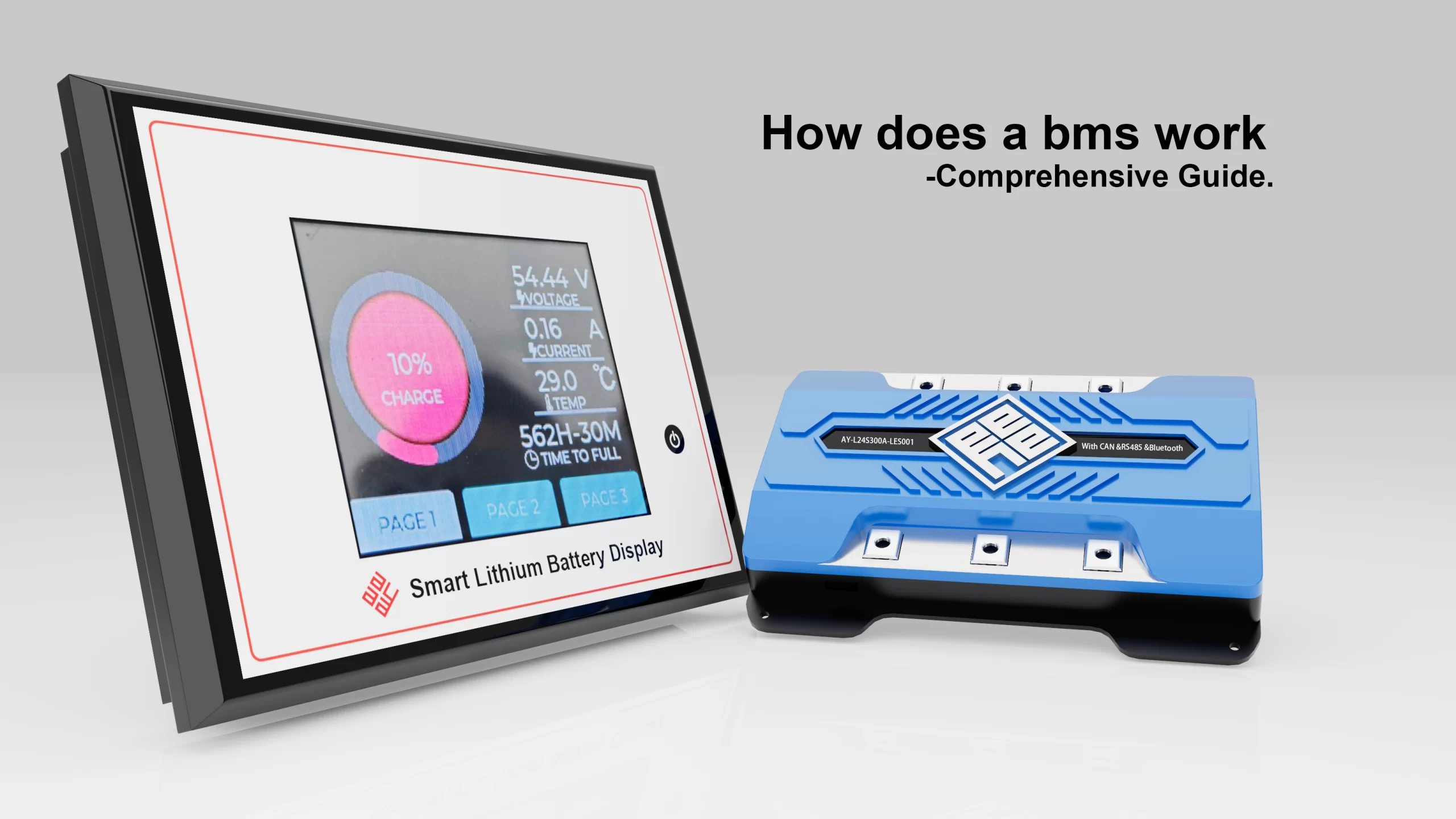
24 Volt LiFePO4 Battery BMS Insights: How Smart Management Enhances Longevity
993
24 Volt LiFePO4 Battery BMS Insights: How Smart Management Enhances Longevity
The 24 volt lifepo4 battery bms has become crucial as lithium iron phosphate (LiFePO4) batteries gain popularity for solar almacenamiento de energía, electric vehicles, and marina or industrial applications.
The BMS is the intelligence layer that guarantees safe operation, optimizes efficiency, and prolongs battery longevity, especially for 24 volt LiFePO4 battery systems.
A 24 volt LiFePO4 battery BMS continuously monitors voltage, current, temperature, and cell balance, safeguarding the battery from typical risks like overcharging, overdischarging, and thermal stress, in contrast to conventional batteries that rely only on chemistry for performance.
What Is a LiFePO4 BMS?
What does a LiFePO4 BMS actually do?
An electronic system called a LiFePO4 Battery Management System is made to keep an eye on, safeguard, and improve lithium iron phosphate battery packs.
Among its main purposes are:
Voltage and current monitoring
Protection against overcharge, over-discharge, and short circuits
Control de temperatura
Equilibrio celular
Communication with chargers, inverters, or monitoring systems
The BMS makes sure that every cell in a 24 volt LiFePO4 battery system—which consists of eight cells connected in series—operates within safe voltage limits.
Even premium LiFePO4 batteries may lose capacity, deteriorate too quickly, or, in rare circumstances, become dangerous without a BMS.
Key Components and Functions of a LiFePO4 Battery BMS
How does voltage and current monitoring protect the battery?
Two important factors that determine the health of a battery are voltage and current.
The BMS keeps an eye on:
Voltaje de la celda to prevent overcharging or deep discharge
Pack current to ensure loads and chargers operate within safe limits
When cells hit 3.65V, for instance, a 24 volt LiFePO4 battery bms can cut off charge, preventing irreversible damage.
In a similar vein, it can restrict discharge current to prevent overheating when operating at a high load.
Why is temperature monitoring essential?
Chemical processes within LiFePO4 cells are influenced by temperature.
While very low temperatures decrease available capacity, excessive heat can hasten depreciation.
The BMS makes use of sensors to:
Limit charge or discharge current under temperature extremes
Trigger alarms or shutdowns if thresholds are exceeded
What is the role of cell balancing?
Certain cells in multi-cell packs may naturally become weaker or stronger.
Uneven aging, decreased useful capacity, and possible safety hazards result from cell imbalance.
The BMS guarantees:
Uniform voltage across cells
Optimal energy extraction from the pack
Extended overall lifespan
Advantages Over Other Lithium Battery BMS
Why is a LiFePO4 BMS particularly effective?
LiFePO4 BMS units are more suited to the flat voltage curve, long cycle life, and thermal stability of LiFePO4 chemistry than ordinary lithium-ion battery BMS systems.
This implies:
Mayor esperanza de vida due to conservative voltage limits
Safer operation under high charge/discharge conditions
Better performance in temperature extremes
These benefits are increased in a 24 volt LiFePO4 battery since additional cells are connected in series, which raises the voltage and complicates the system.
Functions of a LiFePO4 Battery Management System
How does the BMS prevent overcharging and over-discharging?
While deep discharge can significantly reduce lifespan, overcharging might cause permanent harm to cells. The BMS steps in by:
Disconnecting the load or charger when voltage limits are reached
Managing current flow to ensure safe charge/discharge rates
How does the BMS protect against short circuits?
Excessive current from a short circuit can cause heat and possible safety risks.
In order to prevent harm, the BMS immediately identifies irregularities and switches off electricity.
How does temperature monitoring improve safety and efficiency?
Temperature sensors feed real-time data to the BMS, which can:
Why is communication important in modern applications?
Many BMS units use RS485, Bluetooth, or the CAN bus to connect to external devices. This allows:
Remote monitoring of voltage, current, and temperature
Real-time alerts for alarms or faults
Integration with solar controllers, inverters, or energy management systems
Do You Need a LiFePO4 Battery BMS?
What happens if you operate a LiFePO4 battery without a BMS?
Even though LiFePO4 cells are chemically stable, operating without a BMS can result in:
Uneven cell aging
Reduced usable capacity
Premature failure
Safety hazards under high load or temperature extremes
A BMS is necessary for 24 volt LiFePO4 battery systems in order to ensure durability, safety, and consistent performance.
Importance of Using a LiFePO4 BMS
How does a BMS extend lifespan?
The BMS keeps cells from being overworked or underutilized by controlling temperature, voltage, and current.
In LiFePO4 systems, this can raise cycles from hundreds to thousands of lead-acid equivalents.
Why does a BMS enable high energy density?
The battery can reliably supply its full capacity thanks to cell balancing and efficient charging, guaranteeing that the pack’s high energy density is completely achieved.
How does a BMS improve safety?
In high-capacity systems, overheating, short circuits, and thermal runaway are uncommon but can occur.
The BMS actively prevents these situations.
How does a BMS support fast charging?
A major benefit over conventional batteries is that the BMS properly regulates current and voltage to enable quicker charging without sacrificing longevity or safety.
Why is environmental friendliness enhanced?
Waste is decreased since batteries have a longer lifespan and experience fewer failures.
Efficiency is further increased by smart management, which guarantees little energy loss.
Choosing the Right LiFePO4 BMS for Your Application
What voltage should your BMS support?
The BMS must manage the pack’s entire series voltage (typically 8 cells x 3.2V) for a 24 volt LiFePO4 battery.
Make sure the item is built to operate within the designated nominal and peak voltage range.
How do ampere ratings affect performance?
Your load requirements should be met by the continuous and peak current ratings.
Oversized BMS systems may be needlessly costly, whereas undersized units may hinder performance.
Why is capacity consideration important?
The battery’s total amp-hour (Ah) capacity must be supported by the BMS in order to guarantee precise monitoring and secure functioning in all discharge situations.
What is the significance of C-Rating?
How quickly a battery can safely charge or discharge in relation to its capacity is determined by its C-rating.
By ensuring that current stays within the bounds, the BMS guards against battery damage.
Why Smart Management in a 24 Volt LiFePO4 Battery BMS Is Essential
Excellent energy density, a long cycle life, and lightweight performance are all provided by a 24 volt LiFePO4 battery.
However, the Battery Management System (BMS) is the only factor that determines how effective it is in practice.
In order to prevent overcharge, overdischarge, and thermal stress, the Ayaa Technology Sistema de gestión de baterías inteligente (BMS) keeps an eye on voltage, current, temperature, and cell balance.
The Ayaa BMS improves safety, prolongs life, permits quick charging, and permits effective energy use in a variety of applications, including solar storage and electric cars, by guaranteeing optimal functioning.
To put it briefly, a lifepo4 battery bms converts a premium LiFePO4 battery into a dependable, long-lasting energy source that satisfies contemporary needs.
Preguntas frecuentes
Q1:Do LiFePO4 batteries need BMS?
A1:Yes, even though LiFePO4 batteries are safer than other lithium types, a Battery Management System (BMS) is essential for preventing overcharging, overdischarging, and overcurrent, ensuring cell balance, safety, and maximizing battery lifespan; neglecting it runs the risk of irreversible damage, decreased capacity, or even fire.
Q2:How to wake up a 24v LiFePO4 battery?
A2:By jump-starting the dead battery, you provide the charger or inverter the power it needs to work and charge the battery.
The depleted LiFePO4 battery will awaken and begin to accept a charge from the charger as soon as it acquires some charge.
Q3:How to size BMS for LiFePO4 cells?
A3:Power from current and size current from power:
W = V × A → A 12 V pack with a 100 A BMS may provide roughly 1,200 W.
A = W ÷ V → A 2,400 W inverter on 12 V needs about 200 A (before efficiency losses).
Take inverter efficiency into consideration (often 85–92%).
Budget about 2,780 W of input if an inverter requires 2,500 W at 90% efficiency.
Q4:How to wake up BMS on a lithium battery?
A4:A compatible lithium charger (often with a recovery mode) or a brief connection in parallel with another charged battery, which sends a signal that permits it to accept a proper charge once more, are common ways to awaken a sleeping lithium battery BMS (Battery Management System) by triggering its protection circuit with a small voltage or current.
Always make sure you take safety precautions and use the proper voltage.
Q5:Can I charge LiFePO4 without BMS?
A5:LiFePO4 batteries could overheat or overcharge without warning in the absence of a BMS, which could result in damage or unplanned failures.
It is crucial to make sure that these batteries are not subjected to excessive heat and are fully charged.