Understanding the Operational Edge of 16s bms Technology in Industry
310
Understanding the Operational Edge of 16s bms Technology in Industry
The 16s bms has become the ultimate control center for mid-voltage lithium storage in the advanced energy environment of 2026.
The 48V and 51.2V designs have emerged as the worldwide benchmark for dependability as businesses transition from fossil fuels to high-capacity electrification.
Managing sixteen lithium cells in a single series calls for a high-speed intelligence layer that can make decisions in microseconds, in addition to basic security.
This technology’s operational advantage maximizes the financial return on costly battery investments while ensuring that large-scale energy assets remain stable under high industrial loads.
What is the fundamental definition of a 16s bms?
An electronic governance system called a 16s BMS was created to keep an eye on and safeguard sixteen series-connected lithium cells.
1. Voltage Specification: To produce a 51.2V nominal system, the “16s” structure is especially made for lithium iron phosphate (LiFePO4).
2. Series Logic: It keeps the total voltage within safe operating bounds by controlling the cumulative electrical pressure of all sixteen cells.
3. Silicon Integration: The system simultaneously measures each cell’s millivolt potential using specialized Integrated Circuits (ICs).
4. Communication Hub: The battery can “talk” to inverters and facility management software thanks to modern devices that act as a data gateway.
How does the management system function within a battery?
A 16s BMS operates by an ongoing process of active electrical regulation and data collection.
●Voltage Sampling: To make sure no single unit is overstressed, the board continuously monitors the electrical condition of the sixteen cells.
●Current Regulation: It keeps the pack from going over its thermal or electrical limits by monitoring the flow of electrons during times of heavy demand.
●Cell Balancing: To guarantee that all sixteen cells attain maximum capacity at precisely the same moment, the system redistributes or dissipates energy.
●Data Logging: It keeps track of past performance indicators, giving technicians a comprehensive picture of the battery’s condition over time.
How does a 16s bms protect the lithium infrastructure?
The 16s BMS main goal is protection, serving as a digital barrier against electrical and chemical instability.
1. Overcharging Prevention: As soon as a single cell approaches its maximum safety level, the charging process is stopped.
2. Deep Discharge Defense: To prevent long-term chemical “starvation” of the cells, the system disconnects the load if the voltage falls too low.
3. Short Circuit Isolation: To stop a fire or explosion in the case of a wiring failure, the BMS opens the circuit in a matter of microseconds.
4. Thermal Governance: If internal heat increases over acceptable limits, temperature sensors positioned thoughtfully throughout the sixteen cells cause a shutdown.
In which work scenarios is this technology applied?
The 16s bms is the foundation of 48V energy solutions in numerous industrial and residential sectors because to its adaptability.
●Off-Grid Solar Storage: Overseeing the massive battery banks used to store renewable energy for residences and distant commercial locations.
●Telecommunications Backup: supplying the steady 48V power needed to maintain 5G base station functionality in the event of local grid disruptions.
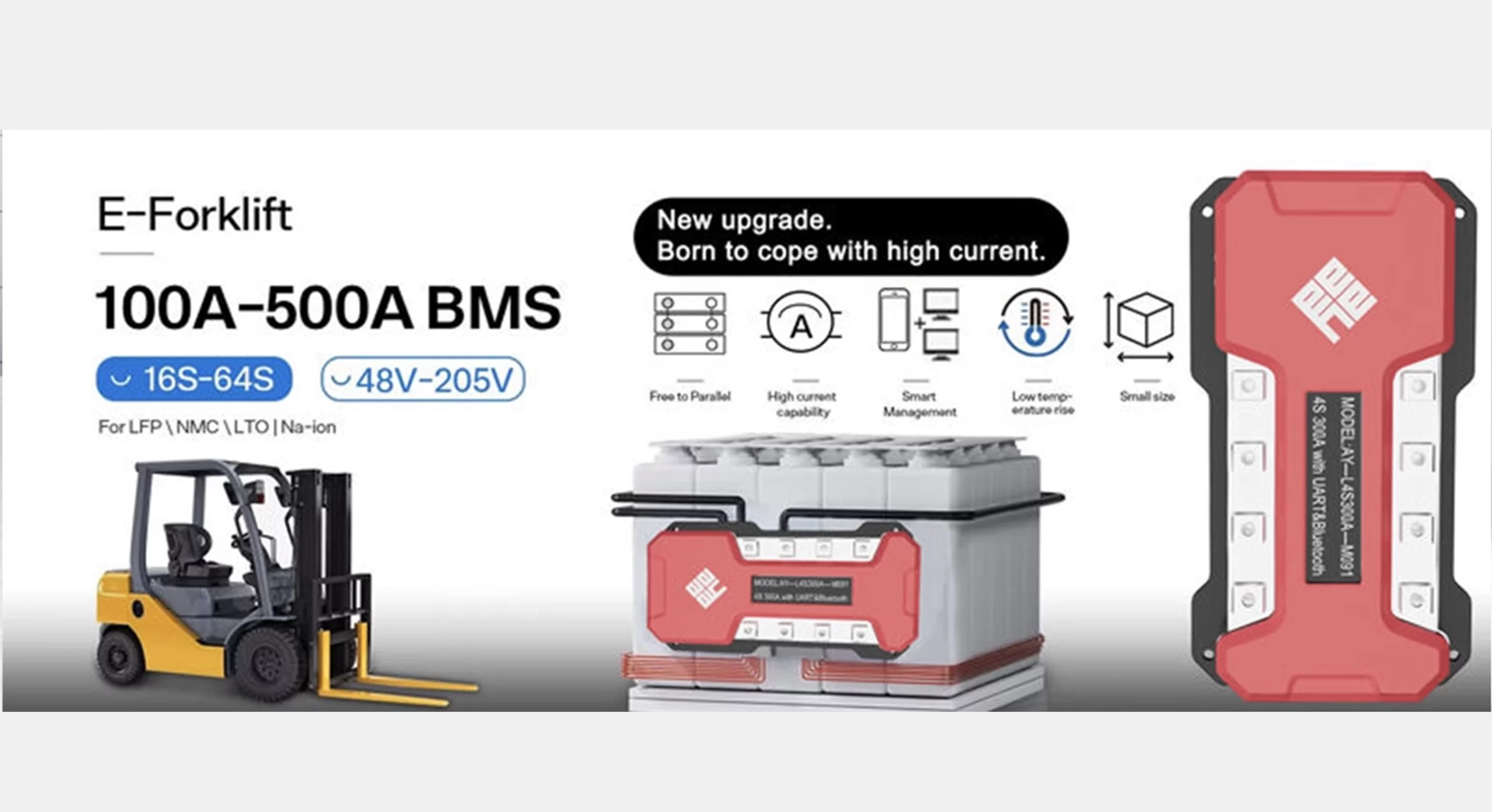
●Heavy-duty warehouse equipment that needs high torque and quick opportunity charging is powered by industrial forklifts.
●Data Center UPS: Protecting sensitive international information networks by acting as the vital fail-safe for uninterruptible power supplies.
What problems do traditional management systems face?
The processing power and accuracy required for contemporary 16-series lithium setups are sometimes absent from legacy battery management boards.
1. Imbalance Accumulation: Conventional boards frequently have trouble maintaining sixteen cells in alignment, which results in a considerable reduction in useful capacity.
2. High Heat Dissipation: Simple balancing circuits squander extra energy as heat, which might harm nearby cells.
3. Limited Connectivity: Reactive rather than proactive maintenance results from older systems’ inability to interface with cloud diagnostics or smart grids.
4. Inaccurate SoC Data: “Drifted” state-of-charge measurements from generic boards sometimes result in unplanned and expensive system shutdowns.
How does the 16s bms solve these industrial challenges?
In order to ensure voltage homogeneity, it simultaneously activates the balancing circuit and instantly interacts with the smart inverter to slightly restrict the output.
By preventing a thermal shutdown, this proactive management keeps the crops watered and shields the $15,000 battery investment from heat damage.
The Market Outlook for 16-Series Technology
As 48V systems become the “sweet spot” for efficiency and safety, the market for 16s bms technology is predicted to grow quickly.
We anticipate that wireless cell monitoring inside 16s setups will be widely used by 2027, doing away with the intricate wiring harnesses that today serve as failure spots.
Additionally, AI-driven firmware will become commonplace, enabling the BMS to learn a facility’s unique usage patterns and adjust the discharge curve for optimal efficiency.
The shift to “Thinking Power” will transform energy storage from a passive asset to a dynamic, self-optimizing system, completely changing how industries perceive it.
Empowering Industrial Autonomy through Precise Energy Governance
The intelligent control of each individual cell in the energy chain is the cornerstone of a robust 2026 power plan.
Your energy infrastructure will be safeguarded by the most cutting-edge safety procedures and balancing logic available if you install a high-performance 16s bms.
In an increasingly electrified environment, companies may optimize their operational return on investment and guarantee complete continuity by putting a high priority on technical accuracy and communicative hardware.
The smooth scaling of power assets while upholding the highest safety requirements is made possible by this strategic focus on energy governance.
The sophisticated management procedures of Ayaa Technology enable you to reach this degree of technological sovereignty and operational perfection, guaranteeing that your vital energy assets are constantly managed with complete accuracy.
Preguntas frecuentes
Q1:What is 16S in BMS?
A1:The term “BMS 16S” refers to a specific type of battery management system (BMS) designed to regulate a battery pack consisting of sixteen series-connected cells, most commonly Li-ion or LiPo batteries.
The number “16” represents the number of cells in series, while the letter “S” signifies series configuration.
Q2:What is the difference between 15S and 16S LiFePO4?
A2:The current industry standard for 48V systems is 16S LiFePO4 (51.2V nominal), which provides more stable voltage ranges and improved compatibility with the majority of inverters.
Although it is less frequent and offers lower voltage and capacity, 15S (48V nominal) can occasionally be employed for certain telecom applications.
Q3:What are the three types of BMS?
A3:BMS architectures often fall into one of three categories:
little BMS with a single board.
BMS that is distributed.
big, centralized BMS.
Q4:What is a 16S battery?
A4:Sixteen lithium ion cells are connected in series to create these 16S 57.6v lithium ion batteries.
Q5:Can I use LiFePO4 without BMS?
A5:Indeed, a Battery Management System (BMS) is essentially required and highly recommended for LiFePO4 batteries, particularly for multi-cell packs.
It ensures safety and prolongs battery life by offering vital protection against overcharging, overdischarging, overcurrent, and temperature extremes.
Cells may sustain damage or fail too soon in the absence of a BMS.
FABRICANTE OEM/ODM CERTIFICADO
El poder que deseas, La integridad que necesitas.
Sistema de gestión de baterías de litio personalizado
Soluciones BMS inteligentes de alto rendimiento para almacenamiento de energía, vehículos eléctricos, robótica y drones.
✔ Alta eficiencia y equilibrio activo
✔ Monitoreo y protección inteligentes
✔ Certificaciones globales
✔ Personalizable para cualquier aplicación
1500+
Clientela
Más de 30.000
Unidades/Mes
20+
Años de experiencia.
Obtenga su solución BMS personalizada
⚡ Los ingenieros responden en un plazo de 12 horas.
✔ Consulta gratuita sobre el diseño del sistema de gestión de edificios (BMS)
✔ Respuesta rápida y precios competitivos