Decoding the 100ah lithium battery with bms Technology
570
Decoding the 100ah lithium battery with bms Technology
The 100Ah capacity has become the “sweet spot” for both stationary and portable power in the quickly changing energy landscape of 2026.
The dependability of this energy source is crucial whether it is used to power a leisure vehicle, an off-grid cabin, or a marine vessel.
But a raw lithium cell is only a chemical storage device; a Battery Management System is what turns it into a secure, industrial-grade instrument.
A 100ah lithium battery with BMS is the ideal combination of digital control and high-density energy.
To maximize the return on investment for their power infrastructure, modern users must comprehend the process from assembly line to active operation.
What exactly is a 100ah lithium battery with bms and how is it defined?
An integrated energy storage solution, a 100ah lithium battery with bms usually uses the chemistry of nickel manganese cobalt (NMC) or lithium iron phosphate (LiFePO4).
The battery’s “100Ah” rating indicates that, under normal circumstances, it can supply 100 amps of electricity for an hour.
1.Capacity Threshold: At 12.8V, a 100Ah pack provides approximately 1.28kWh of energy, enough to run small appliances for an entire day.
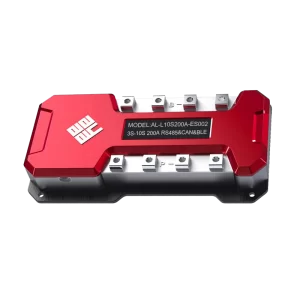
2.Integrated Intelligence: The BMS is an internal electronic circuit board that serves as the battery’s brain, constantly communicating with the individual cells.
3.Standardized Form Factor: Most 100Ah units are designed to fit Group 24 or Group 31 battery boxes, making them a direct drop-in replacement for traditional lead-acid batteries.
How does a 100ah lithium battery with bms operate during daily use?
A 100ah lithium battery with BMS operates through a smooth process of electrical regulation and data collection.
The BMS keeps an eye on the discharge curve to guarantee stability when the battery drains to power a load.
●Voltage Balancing: The BMS ensures that the entire pack reaches 100% capacity at the same time by identifying cells that are charging more quickly than others and shunting excess current away from them.
●Thermal Interlock: If the battery is used in a high-temperature environment, the BMS will throttle the output current to prevent internal degradation.
●Automatic Disconnect: In the event of a surge or a short circuit, the BMS opens the circuit in microseconds, far faster than a traditional physical fuse could react.
Why is the BMS so vital for the safety of a 100Ah lithium pack?
Although lithium chemistry is incredibly effective, it necessitates careful boundary control.
Because it avoids the chemical instability brought on by overcharging or deep draining, a 100ah lithium battery with BMS is essential.
When a lithium cell is pushed above 4.2V without a BMS, thermal runaway may occur, posing a fire danger.
On the other hand, a cell’s internal structure may collapse if it falls below 2.5V, making it incapable of holding a charge.
Regardless of the user’s charging habits, the BMS serves as a permanent digital sentry to guarantee the battery stays within its safe operating window.
In which work scenarios does the 100ah lithium battery with bms offer the greatest advantage?
The versatility of the 100Ah format has led to its dominance in several high-growth sectors where reliability is non-negotiable.
●Marine and Yachting: Providing steady power for trolling motors and onboard electronics without the weight of lead-acid alternatives.
●RV and Van Life: Enabling off-grid living by powering lights, refrigerators, and fans for extended periods.
●Solar Backup Systems: Acting as a modular building block for residential energy storage arrays.
●Portable Power Stations: Used in professional film sets and mobile medical clinics to provide clean, silent energy.
What specific roles does the BMS play in maintaining a 100Ah lithium battery?
The effectiveness of a 100ah lithium battery with bms is the result of the BMS performing multiple tasks in the background.
BMS Function
Technical Detail
User Benefit
Protección contra sobrecarga
Cuts power at 14.6V (for 12V LiFePO4)
Prevents cell swelling and fire risk
Over-discharge Protection
Cuts power at 10.0V
Prevents permanent capacity loss
Short-circuit Protection
Immediate MOSFET disconnection
Protects external wiring and devices
Equilibrio celular
Resistor-based energy shunting
Ensures 100% usable capacity
What is the step-by-step assembly process of a 100ah lithium battery with bms?
The manufacturing of a high-quality bms is a precision-driven process that determines the final safety and lifespan of the product.
1.Battery Capacity Adjustment: Cells are matched and graded so that their internal resistance and capacity are nearly identical.
2.Battery Spot Welding: Cells are joined using high-precision laser or spot welding to create stable parallel and series connections.
3.Cell Insulation Assembly: Specialized gaskets and insulation sheets are applied to prevent any accidental contact between cell terminals.
4.BMS Board Installation: The BMS is securely mounted and connected to the cell taps via a dedicated wiring harness.
5.BMS Status Monitoring: The system is powered on for the first time to calibrate its voltage and current sensors.
6.Bluetooth Configuration: If equipped, the Bluetooth module is synced to allow users to view battery health on a smartphone.
7.Voltage and Resistance Testing: The completed pack undergoes a full discharge-charge cycle to verify its 100Ah rating.
8.Insulation and Casing: High-density foam pads are added for vibration resistance before the pack is sealed in its final protective box.
How should you maintain your 100ah lithium battery with bms for maximum life?
While lithium batteries are low maintenance, following a few professional guidelines will ensure they last for the promised 10 years or more.
1.Avoid Constant 100% State: Lithium chemistry is happiest between 20% and 80% charge; avoid leaving the battery at a full 100% for months at a time.
2.Charge in the Right Climate: Never charge a lithium battery in sub-freezing temperatures unless it has an integrated heating element.
3.Tighten Terminals Regularly: Vibration in RVs and boats can loosen terminal bolts, leading to heat buildup; check them once a season.
4.Use a Dedicated Charger: Always use a charger with a lithium-specific profile to ensure the BMS can perform its balancing routine correctly.
Securing the Future of Portable Energy with Ayaa Technology
The intelligence that controls the system defines the transition from a group of cells to a dependable power asset.
The foundation of contemporary energy independence is a 100ah lithium battery with BMS, which provides a degree of efficiency and safety that was unthinkable ten years ago.
You are investing in a history of unwavering safety and technical excellence by selecting Ayaa Technology.
By offering the intelligent energy management needed to push the envelope of what is feasible, we enable your businesses and your travels.
Put your trust in Ayaa Technology to provide you with the most robust and sophisticated 100Ah lithium solutions on the market right now.
Preguntas frecuentes
Q1:What is the best BMS for LiFePO4 batteries?
A1:The specific application determines which BMS is suitable for lithium iron phosphate (LiFePO4) batteries.
In the market for high-capacity battery packs, AYAA intelligent BMS (active balancing type) is a market leader.
Q2:What is the holy grail of lithium batteries?
A2:With ten times the capacity of commercial graphite anodes, lithium metal anode batteries are regarded as the holy grail of batteries and have the potential to significantly extend the driving range of electric vehicles.
Q3:Does the LiFePO4 battery need BMS?
A3:LiFePO4 batteries do, in fact, need a battery management system (BMS).
It acts as the battery’s “brain,” preventing overcharging, overdischarging, overheating, and cell imbalance.
If you don’t have a BMS, you run the danger of irreversible battery damage, a reduced battery life, or serious safety hazards like fire.
Q4:What size inverter can I run off a 100Ah lithium battery?
A4:A 1000W pure sine wave inverter works best with a single 12 Volt 100Ah lithium battery since it meets the current constraints that most batteries can consistently supply.
A 1500W inverter can function, but the battery must have greater discharge capacity and load stacking must be kept under control.
Q5:Can I charge LiFePO4 without BMS?
A5:While in use, a LiFePO4 battery can be charged, but to ensure proper voltage and current management, a Battery Management System (BMS) is essential.
The BMS helps balance charging and usage to prevent overcharging or depletion.