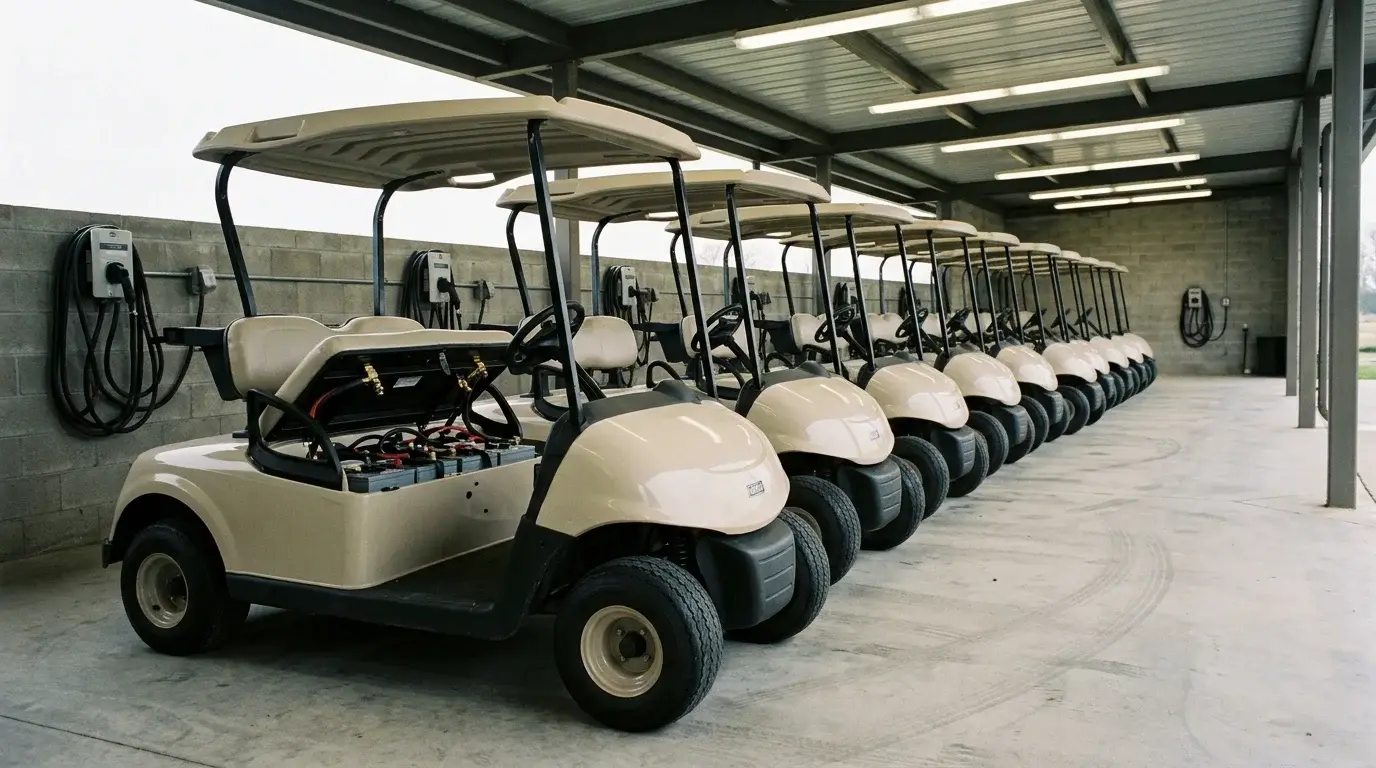
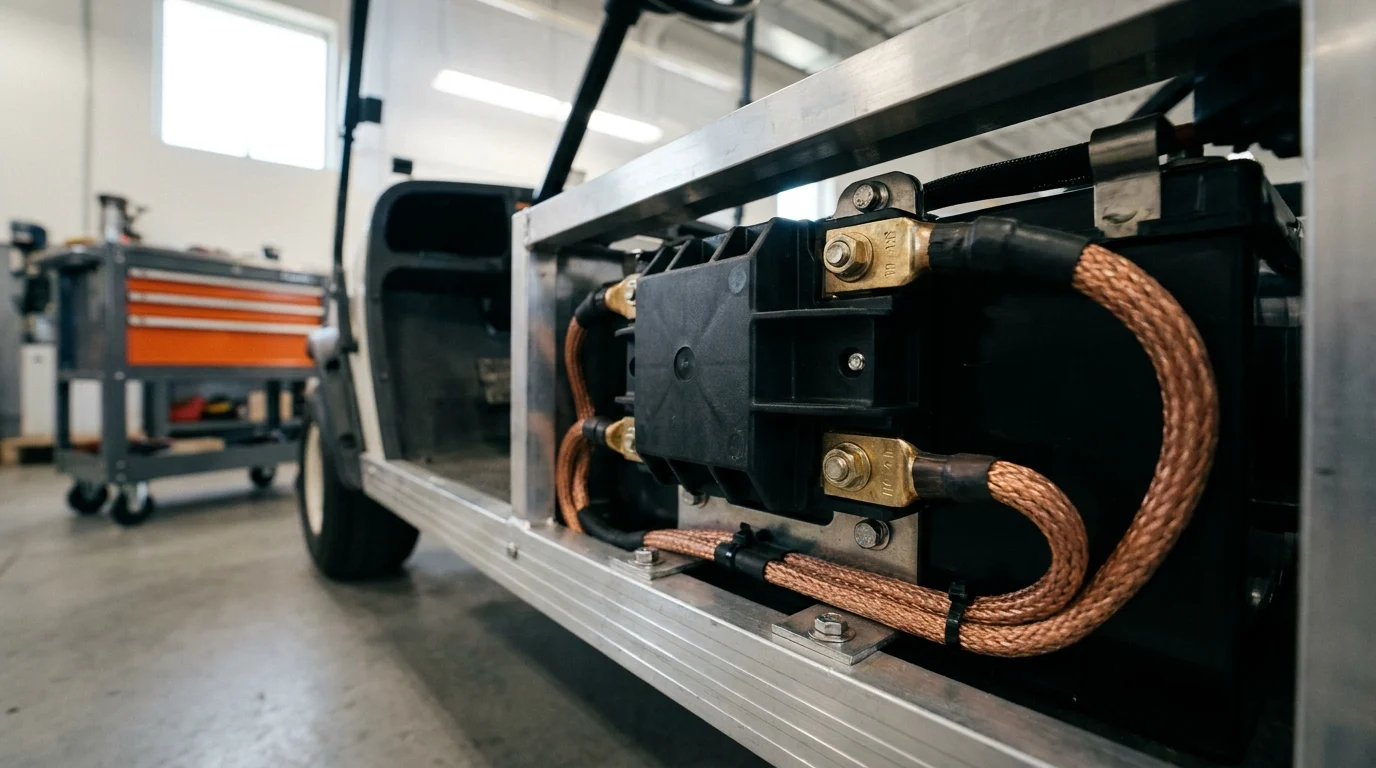
In a lithium vs lead-acid golf cart showdown, lithium wins: it lasts 5x longer and needs no water. While lead-acid batteries cost less on day one, lithium delivers 2,500 to 4,000+ cycles. It also cuts total battery weight by up to 70%.
Lithium recharges in under three hours. It eliminates the chore of refilling distilled water. You no longer have to scrub off corrosive white acid crust. Over an eight-year window, lithium is significantly cheaper to run.
Fleet managers avoid two to three costly replacement cycles. They also save hundreds of labor hours on maintenance. Flooded lead-acid only makes sense for carts driven occasionally on flat terrain. For daily commercial fleets and neighborhood cruisers, lithium is now the industry benchmark.

Lithium vs Lead Acid Golf Cart: Fast Facts Side-by-Side
Putting these figures side-by-side makes the performance gaps clear. Here is how both chemistries compare across key metrics.
| Parameter | Flooded Lead-Acid (Deep Cycle) | Lithium Iron Phosphate (LiFePO4) |
|---|---|---|
| Usable Capacity (DoD) | 50% recommended limit | 80% to 100% without cell harm |
| Expected Cycle Life | 300 to 500 cycles (at 50% DoD) | 2,500 to 4,000+ cycles (at 80% DoD) |
| Average Charge Time | 8 to 12 hours | 1.5 to 3 hours |
| Pack Weight (48V System) | ~320 to 380 lbs | ~85 to 105 lbs |
| Routine Maintenance | Monthly water refills and acid cleaning | Zero maintenance |
| Electrical Efficiency | ~75% to 80% | ~95% wall-to-wheel efficiency |
| Typical Lifespan | 3 to 5 years | 8 to 10+ years |
These numbers show clear technical advantages on paper. The physical difference behind the wheel is even more obvious.
Real-World Driving Performance: What You Notice Behind the Wheel
Sustained Voltage and Consistent Pull
Lead-acid chemistry suffers from a continuous drop in voltage as power drains. Under heavy load, this voltage sag gets much worse. Once a lead-acid pack drops below 50% capacity, acceleration feels sluggish. Carts then crawl slowly when climbing steep hills.
LiFePO4 cells maintain a flat discharge curve. On a 48V setup, voltage stays above 50V across 85% of the cycle. The motor receives full working voltage until the battery is nearly empty. You get instant throttle response on every hole.
Because lithium voltage remains flat, standard voltage meters cannot measure remaining capacity. At AYAA TECH, our Smart BMS uses a high-precision State of Charge (SOC) algorithm. This algorithm tracks current while accounting for shifts in ambient temperature. It keeps the SOC error rate within ≤ 5% for accurate mileage and return times.
The Dynamics of Shedding 250+ Pounds
Removing three hundred pounds of lead transforms how a cart drives. Steering effort feels much lighter, and front-end wandering stops. Rear leaf springs no longer sag under heavy passenger loads. Brakes also run cooler, which extends mechanical brake shoe life.
Lighter overall weight reduces turf wear on sensitive golf greens. It also prevents premature edge wear on street tires. On utility carts, that saved weight directly increases cargo capacity. You can carry more passengers and heavy tools without straining the chassis.

Rapid Opportunity Charging
Flooded lead-acid batteries demand a continuous 8- to 10-hour charge. Unplugging them early causes plate sulfation and shortens battery life. Lithium accepts high charging currents without any damage. Fleets can easily plug in during 30-minute lunch breaks.
Opportunity charging keeps vehicles running through multi-shift days. Heavy charging and hill climbing naturally generate thermal load. AYAA TECH manages heat by spacing out MOSFETs and sampling resistors evenly. We use premium thermal pads, thermal conductive gels, and aluminum heat sinks to protect internal components.
Upgrading Your Golf Carts or Commercial Fleet to Maintenance-Free Lithium?
Explore AYAA TECH Drop-In Battery Packs & Smart BMSUpfront Price vs. Long-Term Return on Investment (ROI)
The True Cost of Day-One Savings
Looking only at initial cost creates an expensive blind spot. Six 8V commercial lead-acid batteries cost between $900 and $1,400. A 48V drop-in lithium kit costs between $1,600 and $2,700 with a charger. The upfront gap is real, but it narrows quickly.
Lead-acid still makes sense if you drive under five miles per week. It works well if your cart sits in storage most of the year. It is also practical if you plan to sell the cart soon. In these cases, recovering the lithium premium takes too long.
The 8-Year Total Cost of Ownership (TCO)
Daily cart use changes the financial equation in favor of lithium. Over eight years, a regular cart burns through two or three lead-acid sets. Total replacement costs for lead-acid quickly pass $3,000. A quality lithium pack easily outlasts that entire period.
Lead-acid maintenance also requires expensive labor hours. Workers must refill water, clean acid leaks, and replace corroded cables. Eliminating these chores frees your team for other important repairs.
Lead-acid charging efficiency sits at only 75% to 80%. Substantial energy is lost as heat and gas. Lithium operates at roughly 95% round-trip efficiency. Across a 30-cart fleet, this saves thousands of dollars in electricity.
What to Check Before Converting to Lithium
Dedicated LiFePO4 Charging Curves
Standard lead-acid chargers use algorithms that create high voltage spikes. These spikes help desulfate lead plates. However, they cause a lithium BMS to cut the charging circuit. You must use a dedicated LiFePO4 charger with a CC/CV profile.
Controller Matching and Motor Demands
Stock golf carts use 250A motor controllers that draw moderate current. Modified carts create much heavier electrical loads. Lifted carts with larger tires demand intense current when starting from a stop.
Engineering Note: Never install a light-duty energy storage battery in an upgraded cart. A lifted cart with large off-road tires draws heavy inrush current on steep hills. A standard 100A BMS will trip its over-current protection immediately. Always verify that your battery’s peak discharge rating matches your motor controller.
On-Board Electronics and System Wiring
Club Car Precedent and DS models use an On-Board Computer (OBC). The OBC controls charging and sends a lockout signal to the controller. Upgrading to lithium requires a simple wiring bypass for the OBC. This allows the controller to run without the factory charger connected.
Many carts also power 12V lights and horns. With lithium, you cannot tap power from a single battery in series. You must install a 48V-to-12V DC-DC converter for accessories. This delivers clean, steady power to your electronics without unbalancing cells.

Which Battery Type Is Right for Your Setup?
Choosing the right chemistry depends on your budget and usage patterns. Here is a simple guide to help you decide.
-
Choose Lead-Acid If:
- Initial purchase price is your top concern.
- You drive fewer than five miles per week on flat ground.
- You plan to sell the cart within the next year.
- You do not mind routine watering and cleaning.
-
Choose Lithium (LiFePO4) If:
- You want zero watering and zero terminal maintenance.
- You manage a commercial fleet where downtime hurts revenue.
- Your cart carries heavy loads or climbs steep hills.
- You want full driving power that lasts all day.
Need Custom Battery Form Factors, Voltages, or Integrated CANbus Protocols?
Request OEM/ODM Engineering Support from AYAAFrequently Asked Questions
What are the downsides of using a lithium battery in a golf cart?
The main compromise is the higher initial purchase price. Lithium kits cost about twice as much as lead-acid sets. You also need a dedicated LiFePO4-compatible charger. Finally, standard lithium cells should never be charged below freezing.
Charging below 32°F (0°C) causes permanent lithium plating on the anode. This damage degrades capacity and creates internal short-circuit risks. Cold-weather carts require battery packs with built-in internal heating pads.
Will my golf cart go faster if I switch to lithium?
Yes, lithium makes your cart feel faster in two ways. First, removing 300 pounds improves low-end torque and acceleration. Second, lithium delivers steady voltage throughout the entire discharge cycle. The cart maintains top cruising speed until the pack is nearly empty.
Can I leave my lithium golf cart battery plugged in all the time?
Yes, as long as you use an approved smart lithium charger. The integrated Battery Management System automatically stops charging at 100%. This prevents cell damage and overcharging.
However, storing a battery at 100% for months causes unnecessary stress. For seasonal storage, keep the battery disconnected between 50% and 80% charge. Store it in a dry, temperature-controlled environment for maximum lifespan.