بيتعن الشركةالأحداث و الأخبارWhat makes Aviation & UAV BMS essential for intelligent next-generation drone energy management systems?
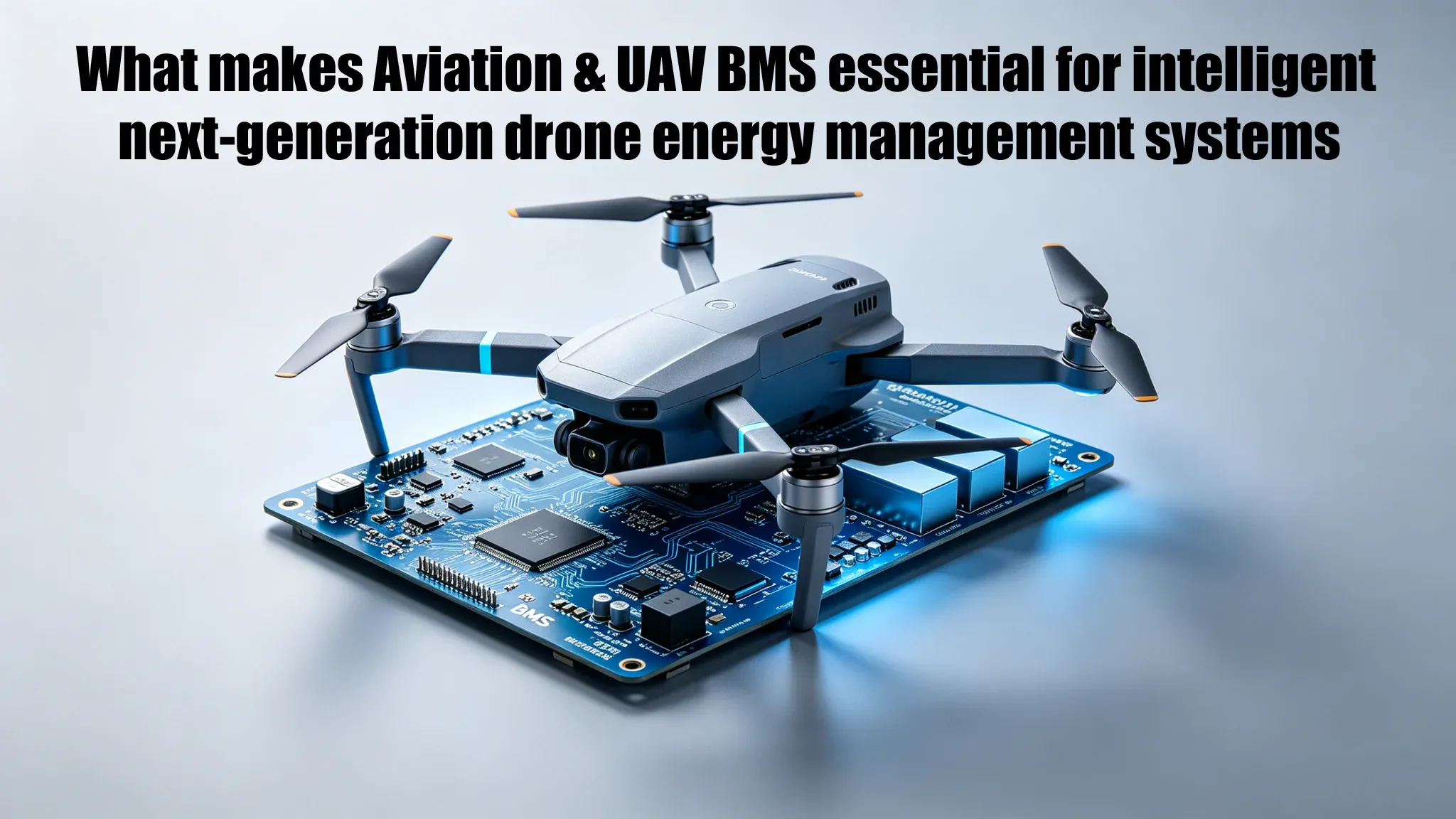
What makes Aviation & UAV BMS essential for intelligent next-generation drone energy management systems?
102
Aviation & UAV BMS is essential because it enables safe, intelligent, and highly efficient energy control for modern drones and aerospace systems. It ensures real-time monitoring, protection, and optimization of lithium battery packs under complex flight conditions, improving both safety and endurance in critical missions.
الطيران والطائرات المسيرة إدارة أنظمة بناء integrates data collecting, predictive control, and safety procedures to play a key role in intelligent next-generation drone energy management systems. It facilitates high-performance UAV operations where energy precision and dependability are essential, such as long-range flying, big payload delivery, and autonomous aviation missions.
Why does Aviation & UAV BMS define next-generation drone intelligence?
Aviation & UAV BMS is a digital energy brain that synchronizes battery performance with flying system requirements, in addition to being a protective circuit. To guarantee steady operation, it regularly assesses voltage, current, temperature, and state of charge. For contemporary UAV systems that need adaptive energy regulation in dynamic situations, this intelligence is crucial.
UAV BMS is becoming an essential infrastructure for aviation-grade performance due to the development of UAV platforms. By facilitating interaction with flight controllers and enabling predictive decision-making, it improves energy efficiency and mission awareness for various drone types.
How does aviation & UAV BMS safety protection system improve flight reliability?
ال aviation & UAV BMS safety protection system is designed to prevent battery failures that could compromise flight missions. It ensures multiple layers of protection while maintaining energy stability under high-load conditions.
Core safety functions include:
Overvoltage protection during rapid charging cycles
Temperature control for extreme environmental conditions
Cell balancing for long-term battery consistency
Short-circuit detection and automatic shutdown response
These mechanisms ensure that UAV platforms can operate safely in both commercial and aerospace environments, reducing risks during critical operations.
Key architecture of intelligent UAV energy control
Energy management is closely linked with avionics and communication systems in the sophisticated architecture of contemporary UAV systems. The primary interface between battery packs and flight control systems is the Aviation & UAV BMS.
By coordinating power output with flight demand, it facilitates intelligent decision-making. This enhances efficiency and operational safety by enabling drones to maintain steady performance even during abrupt acceleration, hovering, or payload fluctuations.
What distinguishes Aviation & UAV BMS from traditional UAV battery systems?
Aviation & UAV BMS differs significantly from conventional drone battery systems in terms of intelligence, safety depth, and communication capability. While traditional systems focus mainly on basic protection, aviation-grade systems emphasize real-time data fusion and predictive analytics.
ميزة
الطيران والطائرات المسيرة إدارة أنظمة بناء
Traditional UAV BMS
المراقبة في الوقت الفعلي
Advanced intelligent tracking
مراقبة الجهد الكهربائي الأساسية
Communication protocol
aviation UAV BMS with CAN bus and DroneCAN protocol
Limited UART/SMBus support
Safety system
aviation & UAV BMS safety protection system
Basic fuse-based protection
Energy optimization
التحكم التكيفي المدعوم بالذكاء الاصطناعي
Fixed threshold control
Application level
Aerospace and industrial UAV
Consumer drones
This comparison shows how aviation-grade systems significantly improve operational intelligence and reliability.
How does intelligent aviation & UAV BMS real time monitoring system enhance performance?
Data on battery performance is continuously gathered by the intelligent aviation & UAV BMS real-time monitoring system and sent to the flight controller. This makes it possible to make anticipatory changes while in flight to prevent energy failure or inefficiency.
By guaranteeing that each battery cell runs within safe bounds and optimizes discharge rates in accordance with mission objectives, it improves UAV performance. For autonomous drones and eVTOL systems that need constant power stability, this degree of monitoring is crucial.
Integration of advanced communication protocols in UAV energy systems
In order to synchronize energy and flight systems, modern aviation UAV systems mostly rely on communication protocols. Fast and dependable data transfer between battery modules and flight controllers is ensured by the Aviation UAV BMS with CAN bus and DroneCAN protocol.
For industrial and aerospace UAV applications, this integration enables smooth interoperability with cutting-edge autopilot systems like PX4 and ArduPilot, enabling real-time diagnostics and remote monitoring.
Why is overcharge and overdischarge protection critical in UAV aviation systems?
Battery safety becomes crucial in the high-stress operating circumstances of aviation UAV systems. Energy levels are always kept within acceptable operating bounds thanks to the Aviation UAV BMS’s overcharge and overdischarge safeguards.
This greatly lowers the chance of thermal runaway and prevents permanent battery damage. Additionally, it prolongs battery life, which is crucial for cost-effectiveness in aerospace and commercial drone fleets.
Core functional components of aviation UAV energy systems
Modern UAV energy systems are built on multiple integrated components that ensure safety, efficiency, and intelligence throughout the flight cycle. These components work together to maintain stable performance under varying conditions.
Key components include:
Battery cell monitoring units for voltage and temperature tracking
Energy balancing modules for equalized power distribution
Communication interfaces for real-time telemetry
Safety control circuits for emergency response execution
These elements form the backbone of next-generation aviation energy systems.
How does Aviation & UAV BMS support long-endurance drone missions?
Highly effective energy management systems that may maximize flight time while maintaining safety are necessary for long-endurance UAV operations. Aviation & UAV BMS balances energy consumption among all battery cells and optimizes discharge curves.
Drones may now operate over longer distances without sacrificing stability thanks to this. It is especially crucial for tasks requiring continuous operation, such as mapping, surveillance, and logistics.
Intelligent energy optimization in aviation UAV systems
Intelligent algorithms built into the Aviation & UAV BMS drive energy optimization in UAV systems. To increase efficiency, these algorithms examine flying patterns and dynamically modify energy output.
UAV systems can improve operational effectiveness and minimize energy waste by constantly adjusting to mission requirements. For autonomous fleets functioning in coordinated environments, this is especially crucial.
What role does predictive analytics play in UAV battery systems?
UAV systems can foresee energy requirements and possible malfunctions before they happen thanks to predictive analytics. Aviation & UAV BMS forecasts battery behavior under various flying scenarios by utilizing both historical and current data.
By ensuring safer operations and assisting operators in better planning maintenance cycles, this predictive capability lowers downtime and increases mission success rates.
Future trends in aviation UAV battery management technology
AI-powered, completely autonomous energy ecosystems are the way of the future for UAV energy systems. BMS for aviation and UAVs will develop into self-learning systems that can maximize performance without human assistance. Deeper connectivity with aerospace digital infrastructure, improved fleet management, and increased energy efficiency are all made possible by this change.
How will UAV energy systems evolve in intelligent aviation networks?
Future UAV networks will depend on completely integrated energy systems in which each drone instantly reports its battery condition. This networked ecosystem will be built on an intelligent aviation and UAV BMS real-time monitoring system. This will enable centralized management of drone fleets, enhancing large-scale operations’ energy efficiency, safety, and cooperation.
Industrial applications of aviation UAV energy intelligence
Highly dependable energy systems that can function in harsh environments are necessary for industrial UAV applications. In industries including agricultural, logistics, surveillance, and emergency response, Aviation & UAV BMS guarantees reliable performance. It is crucial for mission-critical industrial processes because of its capacity to sustain steady energy output under fluctuating loads.
Why is system integration important in UAV aviation energy control?
Energy management is fully coordinated with flight control, navigation, and communication systems thanks to system integration. The DroneCAN protocol and CAN bus in the Aviation UAV BMS facilitate smooth system layer interaction. This guarantees that software and hardware components operate in unison, increasing the overall dependability and efficiency of the system.
Challenges in designing advanced UAV BMS systems
Safety, weight, efficiency, and intelligence must all be balanced while designing cutting-edge UAV energy systems. Aviation UAV BMSs need to be lightweight and compact while managing high voltage loads. System adaptability is a major design problem since it must also guarantee interoperability with various UAV platforms and operating situations.
What is the future of aviation & UAV BMS in smart aerospace systems?
Fully autonomous, AI-enhanced energy infrastructures that support next-generation aircraft platforms are the key to the future of aviation and UAV BMS. Intelligent mission planning and deeper integration with autonomous flight systems will be made possible by these systems.
Intelligent battery management will become an essential part of aviation technology’s infrastructure as UAV applications spread into urban air mobility and cargo transportation.
أسئلة متكررة
Q1: What does UAV mean in aviation?
A1: UAV in aviation means Unmanned Aerial Vehicle, referring to aircraft operated without a pilot onboard, widely used in surveillance, logistics, and intelligent aviation systems.
Q2: What kind of battery is used in UAV?
A2: UAV typically uses lithium-ion, lithium polymer, or LiFePO4 batteries, managed by UAV BMS systems, providing high energy density, lightweight structure, and stable power output for aviation UAV applications, ensuring safety, endurance, and intelligent energy management in modern drone operations.
Q3: What is Aviation & UAV BMS?
A3: Aviation & UAV BMS is an advanced battery management system designed for aerospace and unmanned aerial vehicles. It monitors voltage, current, temperature, and state of charge to ensure safe and efficient energy usage in flight operations.
Q4: Why is Aviation & UAV BMS important for drones?
A4: It is important because it ensures battery safety, extends flight time, and prevents failures such as overcharge, over-discharge, and overheating. This is critical for long-endurance and mission-critical UAV operations.
Q5: How does Aviation & UAV BMS improve flight safety?
A5: It improves flight safety through continuous monitoring and multi-layer protection systems. These include real-time fault detection, thermal management, and automatic shutdown in case of abnormal battery behavior.
خاتمة
Aviation & UAV BMS is the foundation of intelligent drone energy management systems, enabling safety, efficiency, and real-time optimization across modern UAV and aerospace platforms. With advanced communication protocols, predictive analytics, and intelligent monitoring systems, it ensures that drones can operate reliably in increasingly complex environments. As UAV technology continues to evolve, aviation-grade battery management systems will remain essential for achieving safer, smarter, and more autonomous aerial operations.
لمعرفة المزيد عن نظام إدارة البطارية الذكي للطائرات بدون طيار من شركة أيا تك (4S-32)، أرسل بريدًا إلكترونيًا إلى [email protected]. للمزيد من التفاصيل، يرجى الاطلاع على هذه المقالات ذات الصلة.
مصنّع معتمد للمعدات الأصلية/تصميم المعدات الأصلية
القوة التي تريدها،, النزاهة التي تحتاجها.
نظام إدارة بطارية ليثيوم مخصص
حلول أنظمة إدارة البطاريات الذكية عالية الأداء لتخزين الطاقة، والمركبات الكهربائية، والروبوتات، والطائرات بدون طيار.
✔ كفاءة عالية وتوازن نشط
✔ المراقبة والحماية الذكية
✔ شهادات عالمية
✔ قابل للتخصيص لأي تطبيق
1500+
العملاء
أكثر من 30 ألف
الوحدات/شهريًا
20+
سنوات الخبرة.
احصل على حلول إدارة المباني المخصصة لك
⚡ يستجيب المهندسون خلال 12 ساعة
✔ استشارة مجانية لتصميم نظام إدارة المباني
✔ استجابة سريعة وأسعار تنافسية