
- Industries

Home Backup & Garden BMS
View More >Electric Forklift BMS
View More >Golf Cart BMS
View More >Electric Two-wheeler BMS
View More >Aviation & UAV BMS
View More >BMS For Power Tools
View More >Medical Equipment BMS
View More >








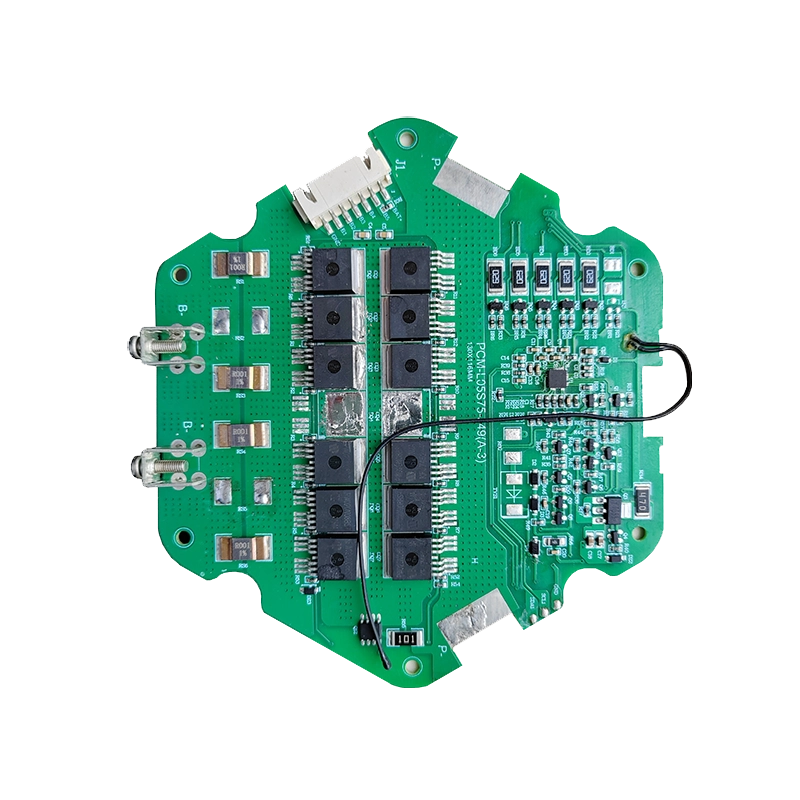
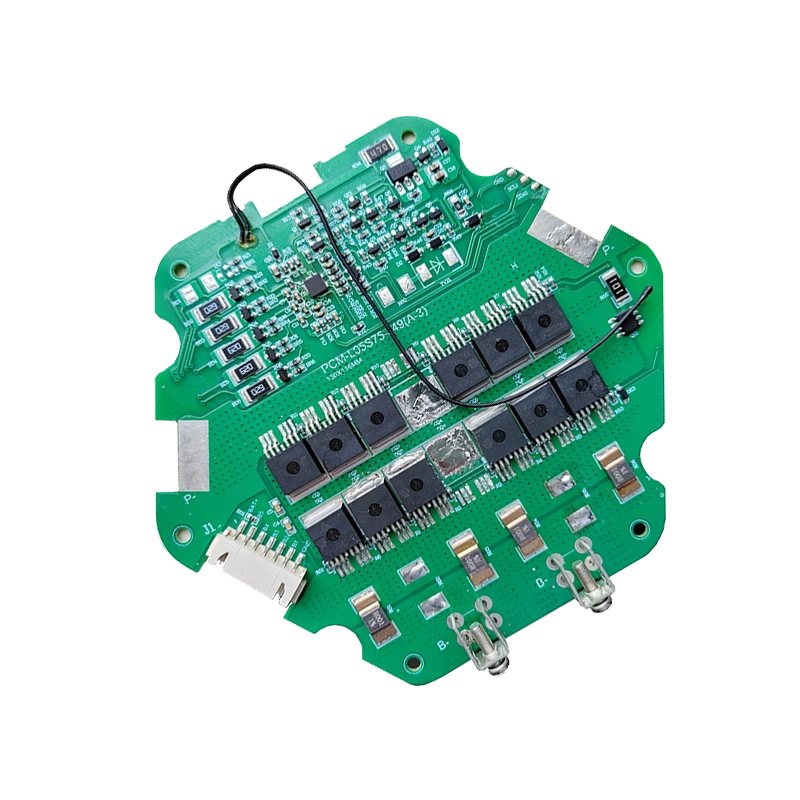
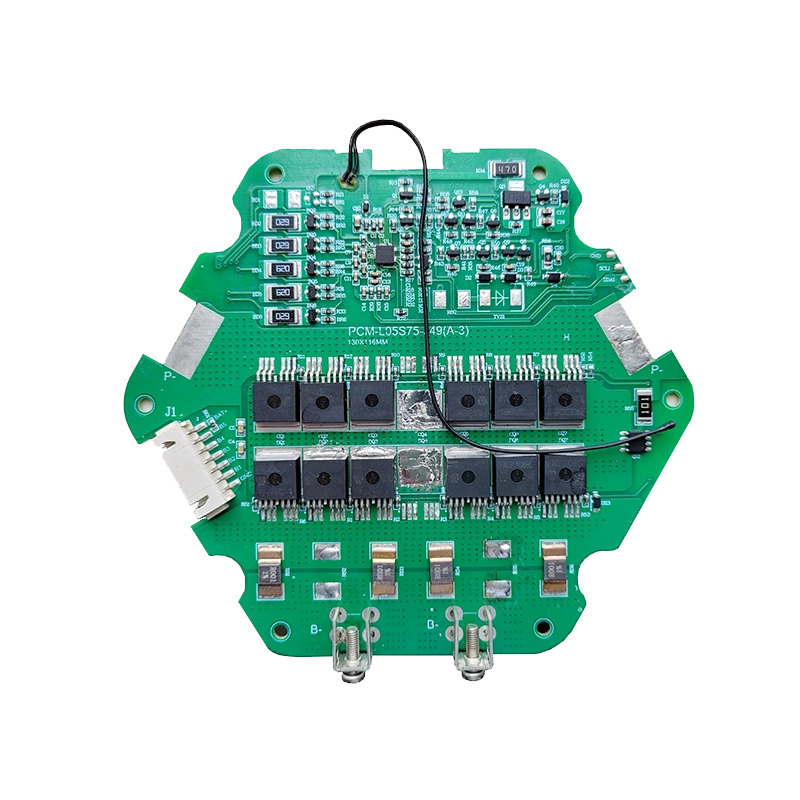
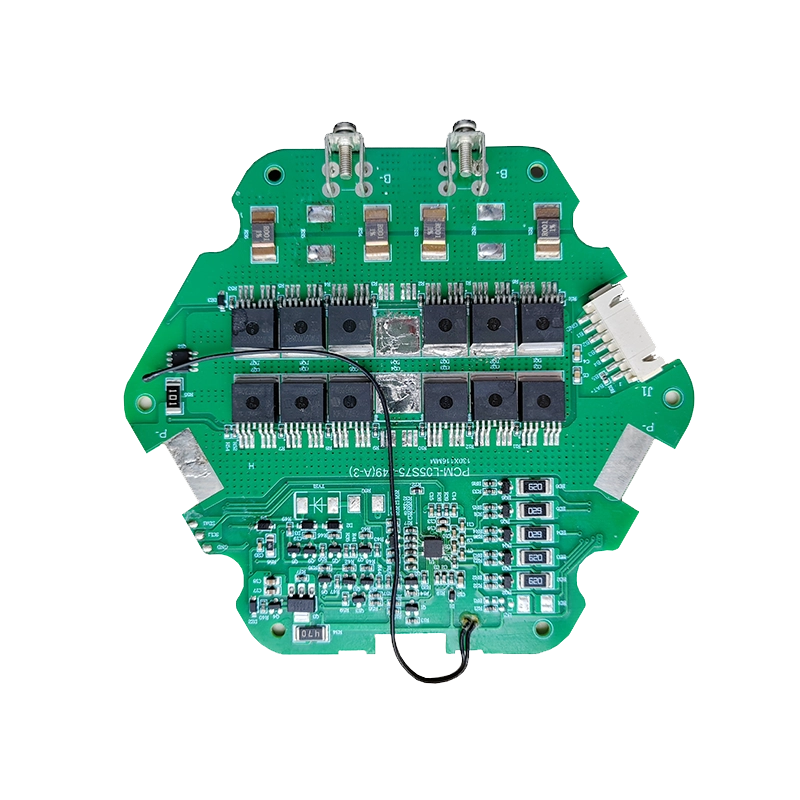
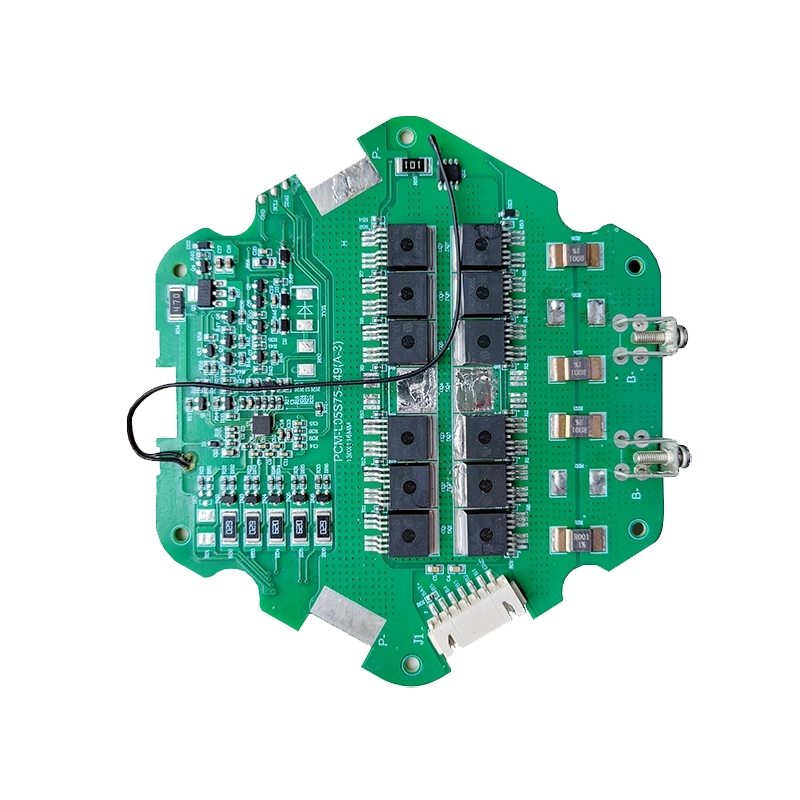
SMBUS| Model Number | PCM-L05S75-J49 | |||
| Communication Interface | SMBUS | |||
| Charging voltage | DC:17.25V~21V CC/CV(3.45V~4.2V/Cell)5s | |||
| Maximal continuous charging current | 20-75A | |||
| Maximal continuous discharging current | 20-75A | |||
| Normal operating-mode current | 600 uA | |||
| SLEEP operating-mode current | 350 uA | |||
| Balance current for single cell | / | |||
| Balance voltage for single cell | / | |||
| Over charge detection voltage | 3.6-4.35V | |||
| Over discharge detection voltage | 2.0-3.0V | |||
| Over charge current protection | / | |||
| Over current detection current 1 | 60-240A | |||
| Short Protection | YES | |||
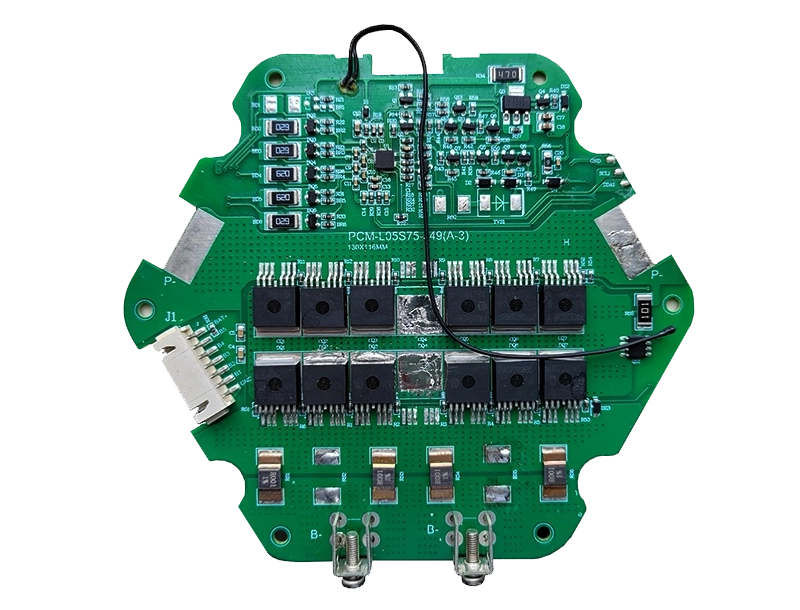 | |
| size | L130 *W116 *T8 mm |
| NTC | 10K |
| Temperature switch | / ℃(the batteries temperature) |
| Weak currentswitch | / |
| Active balance | / |
| Heater | / |
| Braking Resistors | / |
| Low temperature protOperating Temperature Range | -40~+85℃ |
| Storage Temperature Range | -40~+125℃ |
| LCD display screen | / |
| LED light board | / |
| Bluetooth mode | / |
| 4G | / |
| GPS | / |
| 5S 75A SMBUS Bluetooth BMS for 18V 18.5V Lithium Ion & 15V 16V LiFePO4 UAV Drone Battery Packs This sophisticated 5S 75A BMS, which offers smart battery management for both 18V/18.5V Lithium-ion and 15V/16V LiFePO4 configurations, was created especially for UAV drone battery packs. For demanding aerial applications, it provides reliable performance and real-time data access with integrated SMBUS connection and Bluetooth monitoring. Compact yet strong, it guarantees long battery life, safe flying, and ideal cell balancing, all of which are vital for drone operators. Technical Specifications Parameter Specification Battery Type: Lithium-ion / LiFePO4 Cell Configuration: 5S (5 series) Rated Voltage: 17.25V-21V Continuous Discharge Current: 20-75A Communication Protocol: SMBUS Key Features Optimized for UAV Drone Batteries Specifically designed for drone applications that demand precise protection, lightweight construction, and steady high-current output. SMBUS Communication Data-driven energy management is supported through real-time status communication via SMBUS with smart chargers or drone flight controllers. Bluetooth Monitoring For real-time temperature, voltage, and SOC (state-of-charge) monitoring, wirelessly connect to a smartphone app. Intelligent Protections To protect your UAV in challenging flying situations, there are several safety layers, such as voltage, current, and temperature cutoffs. High Efficiency Passive Balancing keeps all of the cells’ voltage levels constant, extending battery life and preserving UAV functionality. Custom PCB Layouts Available Designed with flexibility and optimized for insertion in drone battery compartments with minimal space. Applications UAV & Drone Battery Packs Designed for aerial platforms that need remote status tracking and dependable energy delivery. Electric Scooter Batteries Ideal for lightweight EV systems with 5S that require intelligent monitoring and current regulation. Portable Surveillance Systems Utilized in mobile security units and off-grid monitoring drones. Field Robotic Devices Supports mobile robots with great efficiency for research, mapping, and exploration. Backup Power Systems Perfect for small energy storage devices with safety and smart diagnostics. Why Choose Us 20+ Years of Industry Experience We are best suited to understand the demands of the developing electric vehicle and energy storage markets because we have more than 20 years of expertise with battery management and power solutions. Innovative R&D Capabilities Our committed R&D team never ceases pushing the limits of technology to bring smarter, safer, and more effective goods to the market, from integrated software platforms to creative BMS design. Proven Product Reliability To guarantee longevity, stability, and peak performance in real-world applications like motorcycles, golf carts, forklifts, and energy storage systems, our BMS and power solutions are put through rigorous testing under demanding circumstances. Customization and OEM/ODM Services To satisfy your unique requirements, we provide a broad range of customization options that cover form factors, wireless modules, communication protocols, and battery kinds. Comprehensive Technical Support Our technical staff is on hand around-the-clock to assist you with setup, integration, and troubleshooting, from pre-sales guidance to post-purchase support. Certifications and Compliance Every product we sell is of the best quality and safety since we strictly follow international standards like CE, IEC62109, VDE, and CQC. We are your reliable partner for scalable, intelligent, high-current BMS systems, regardless of whether your company manufactures electric vehicles, supplies battery packs, or integrates systems. Your next breakthrough can be powered by us. Our Certificates 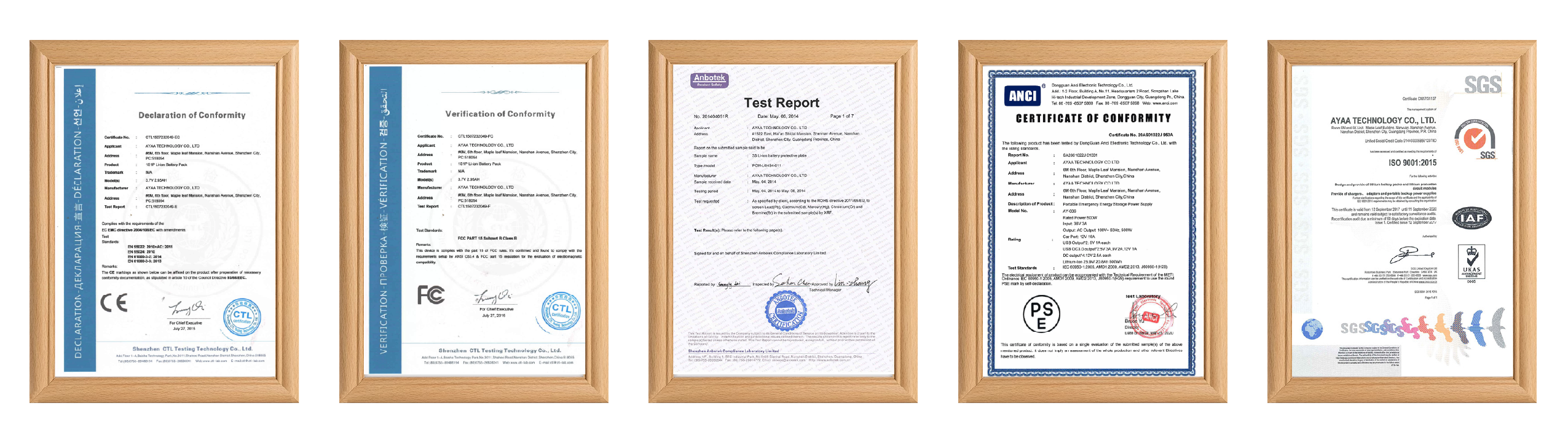 FAQ: Q:What is an UAV battery? A:From photography and videography to surveillance and even delivery services, drones have become an essential component of many sectors. All of them require a UAV battery. The UAV battery is at the core of the cutting-edge technology that these unmanned aerial vehicles (UAVs) depend on to fly. Q:What type of battery is used in a drone? A:Drone batteries come in a variety of varieties. Lithium Polymer (LiPo), Lithium-Ion (Li-ion), Nickel Metal Hydride (NiMH), and Nickel Cadmium (NiCd) batteries are the most often used types. Every type has advantages and disadvantages. LiPo batteries have a large energy storage capacity and are lightweight. Q:What is the best battery for a drone? A:The most common battery type for FPV drones is LiPo. They are perfect for applications where performance is essential because to their excellent power-to-weight ratio. Q:How to choose battery for UAV? A:The battery gets heavier as the voltage increases. Prior to comparing your drone motor efficiency with the motor thrust data table, you should review it. Additionally, you must confirm that the motor is compatible with a particular battery number and voltage range. Q:Are UAV drones electric? A:Among the primary categories are: Electric (battery-powered): These UAVs run quietly and require less maintenance thanks to rechargeable batteries, although their flight duration may be constrained. They are appropriate for sensitive activities and urban settings due to their lower noise levels. Q:Which drone has the best battery? A:The need for long-lasting, lightweight, high-capacity batteries will grow as drones become more sophisticated and adaptable. Leading companies that are pushing the boundaries of battery technology to meet a variety of operational requirements include Ayaabms DJI, Samsung SDI, Panasonic, and others. |