






Understanding Battery Management System Types: How to Choose the Right One
Battery management system types are more important than ever in the electrified world of today.
Battery management systems (BMS) are the brains behind every lithium-based battery pack, whether they are used to power electric vehicles (전기차), stabilize energy storage systems, or guarantee dependable performance in portable electronics.
To optimize performance, safety, and lifespan, engineers, procurement specialists, and manufacturers must comprehend the various battery management system types .
What Is a Battery Management System?
An intelligent interface called a Battery Management System (BMS) keeps an eye on and regulates a rechargeable battery’s performance.
It offers critical performance data in real-time, guarantees efficient energy use, and protects against safety risks like overcharging or overheating.
Selecting a battery management system types has an impact on a vehicle’s or device’s performance, longevity, and safety in a variety of scenarios.
The key objectives of any BMS are:
Prevent battery failure or degradation
Extend overall battery lifecycle
Monitor 충전 상태 (사회) and 건강 상태(SOH)
Enable thermal management and protection functions
Interface with external systems via CAN, RS485, SMBUS, or other protocols
Types of Battery Management Systems
Numerous battery management system types exist, each intended for a particular use case and energy system scale. Let’s examine the most typical ones:
중앙 집중식 BMS: A single control unit monitors all battery cells. Best suited for small to medium-sized systems.
Modular BMS: Uses multiple BMS boards across battery modules. Offers better scalability and redundancy.
분산형 BMS: Each battery cell or group has its own controller. Ideal for large-scale energy systems.
Wired vs. Wireless BMS: Wired systems use physical connections; wireless BMS (wBMS) provide flexibility and reduce weight—growing in popularity especially in EVs and aerospace.
Application size, communication requirements, voltage range, and safety standards all play a role in selecting the best BMS. Additionally crucial is the compatibility of BMS with battery chemistry (Li-ion, LiFePO4, NMC, etc.).
How a Battery Management System Works
Although battery management system types vary, they generally operate in a similar way:
Data Collection: Voltage, current, and temperature of each cell or module are monitored constantly.
State Estimation: Algorithms calculate SOC, SOH, and SOP (State of Power) using the collected data.
Charge/Discharge Management: The BMS controls charging cycles and limits discharging based on battery condition.
Thermal Regulation: Ensures optimal temperature through active cooling or heating systems.
의사소통: Exchanges real-time data with host systems via CAN, UART, RS485, or SMBUS.
Application Areas of Battery Management Systems
Knowing the locations and applications of different battery management system types can assist you in selecting the BMS that best suits your requirements.
전기 자동차(EV): Require high-reliability, modular or distributed BMS to manage complex multi-cell configurations. Integration with CANBUS and thermal management is key.
Energy Storage Systems (ESS): Use modular or distributed BMS to maintain safety and balance across large cell groups.
의료기기: Centralized BMS often used for compact, high-precision battery packs.
소비자 가전제품: Lightweight, centralized BMS types with smart features like Bluetooth connectivity are preferred.
Key Features of an Effective Battery Management System
Whatever the kind, a good BMS should provide:
High-accuracy monitoring: Accurate voltage, current, and temperature detection for safe operation.
Multiple protections: Overcharge, over-discharge, short-circuit, and overcurrent protection.
Balancing functions: Passive or active cell balancing to prolong battery life.
Customizable protocols: CAN, RS485, UART, and SMBUS support for easy system integration.
Low power consumption: Essential for portable or long-standby systems.
Wide temperature operation: Crucial for automotive and outdoor deployments.
Real-World BMS Solutions: Ayaa Technology Products
Let’s look at three exceptional solutions from Ayaa Technology, a global provider of intelligent power management systems, to demonstrate how cutting-edge BMS design satisfies industrial demands.
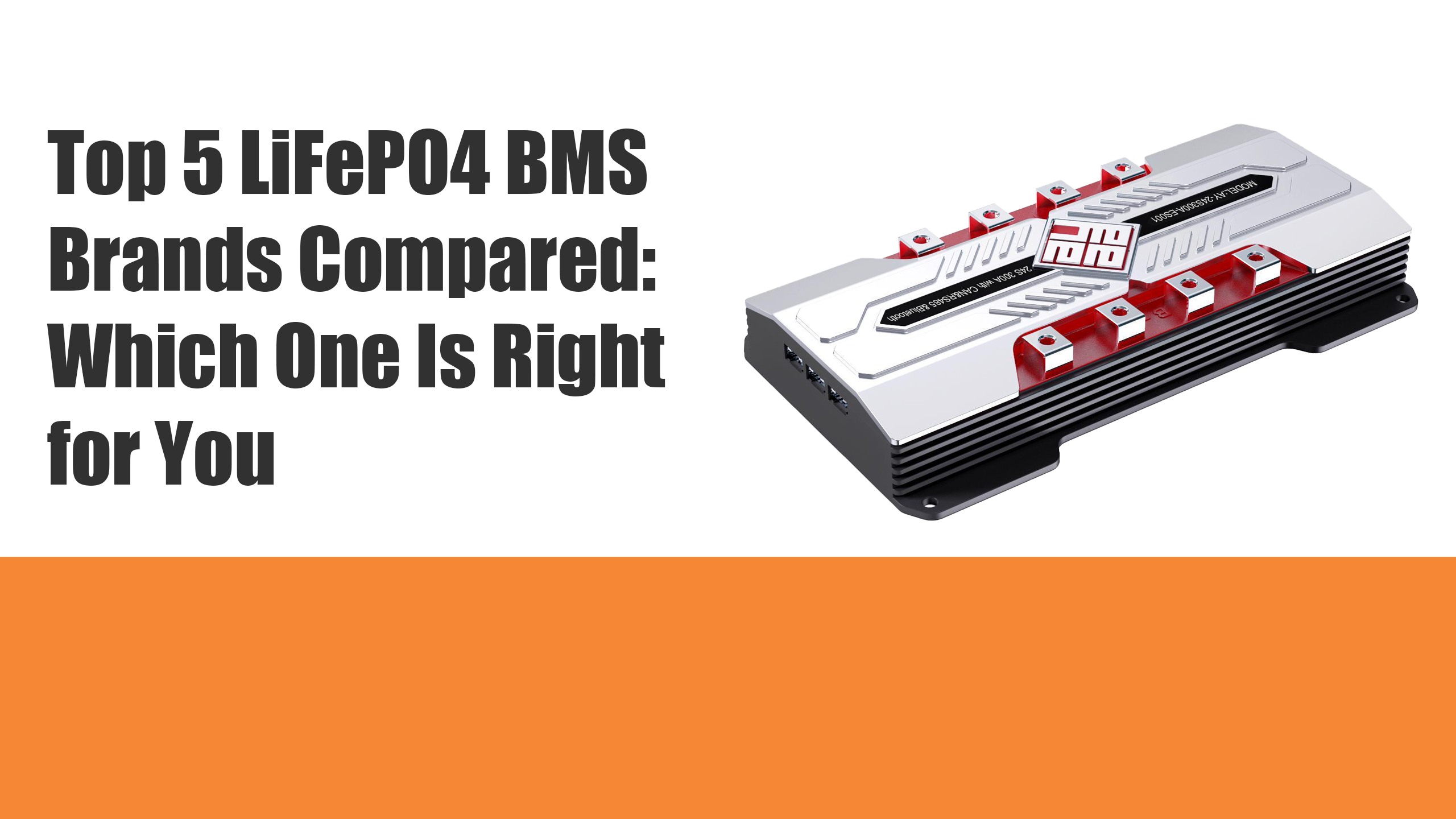
AY-L24S300A-ES001 (7S–24S): High-Power, Parallel-Ready BMS
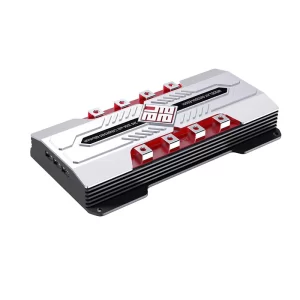
Up to 24 series cells and a continuous discharge current of 300A are supported by this BMS.
It supports numerous communication protocols, including as CAN and RS485, and parallel setups, making it perfect for EVs and large-scale energy storage.
An excellent illustration of a modular battery management system type that provides exceptional scalability, system compatibility, and protection is the AY-L24S300A-ES001.
AY-L10S200A-ES002 (4S–10S): Compact Yet Powerful
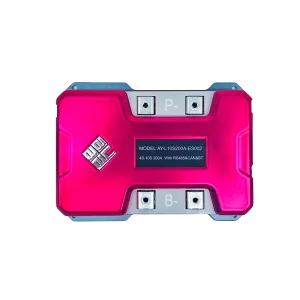
This BMS, which is designed for 4–10 series cells, has a strong material selection, a high discharge current (up to 200A), and flexible connection by RS485 and UART.
Medium-sized electric vehicles, light-duty storage systems, or mobility platforms are excellent candidates for the AY-L10S200A-ES002, demonstrating how centralized battery management system types may provide both performance and compactness.
AY-LS10S200A-H200 (6S–10S): Smart Monitoring Meets Safety
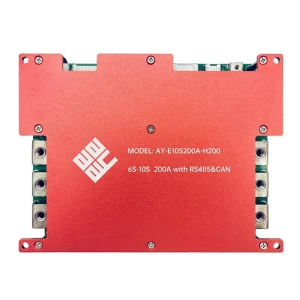
This model incorporates support for passive balancing, accurate SOC computation, and intelligent temperature management.
It has thermal protection features appropriate for tough settings (working range from -40°C to +85°C) and supports up to 10 series cells.
It is a very adaptable battery management system types for safety-critical applications since it is a centralized BMS with sophisticated smart monitoring.
How to Choose the Right Battery Management System Type
Choosing the best BMS necessitates assessing:
System scale: More series cells or parallel packs may require modular or distributed BMS.
Application environment: Temperature range, shock/vibration, and ventilation.
Monitoring detail: Is accurate SOC/SOH calculation necessary? Is remote monitoring required?
Communication needs: Do you need CANBUS for EVs or RS485 for industrial ESS?
Budget and longevity: Choose a solution that balances cost with performance and lifespan.
Ayaa Technology provides a broad range of BMS devices that are suited to various application situations.
The technical team at Ayaa can adapt BMS designs to your specific project needs, whether you require a high-current modular type for EV batteries or a smart centralized BMS for portable energy solutions.
자주 묻는 질문
Q:How many types of battery management systems are there?
A:Three main categories of BMS architectures exist in total: little BMS with only one board. BMS that is distributed. Big, centralized BMS.
Q:What are the different types of BMS connections?
A:Parallel and serial are the two basic kinds into which BMS connections can be generally divided.
Q:How do you decide what BMS to use?
A:You must figure out the maximum current that will pass through your batteries under typical operating conditions in order to choose the right amp rating for your BMS.
This entails taking into account elements like charging rates, load needs, and any prospective future additions or changes to your battery system.
Battery Management System Types and Future Outlook
Making wise selections in contemporary energy applications requires an understanding of battery management system types.
As electrification and sustainable technologies increase, choosing the right BMS might mean the difference between system failure and peak performance.
The AY-L24S300A-ES001, AY-L10S200A-ES002, and AY-LS10S200A-H200 are examples of solutions that show how cutting-edge BMS technology can be customized to meet particular use cases while maintaining flexibility, efficiency, and safety.
With the market moving toward more intelligent, AI-powered BMS systems, collaborating with seasoned partners like Ayaa Technology guarantees that your products stay competitive and prepared for the future.
Visit www.ayaatech.com or get in touch with our engineering team directly to find out more about our complete BMS products, customisation options, or to obtain samples.
문의하기
뉴스 추천
-

BMS 연결 다이어그램 이해: MOSFET 제어부터 셀 밸런싱까지
08/19/2025 -
인산철 리튬 BMS 상위 5개 브랜드 비교: 당신에게 맞는 것은?
05/16/2025 -
스마트 BMS 작동 방식 - 종합 가이드.
03/11/2025 -
전통적인 에너지원 대신 태양광 에너지 시스템을 선택하는 이유는 무엇인가요?
03/31/2025 -
배터리 관리 시스템은 지게차 성능을 어떻게 향상시키는가
01/16/2025