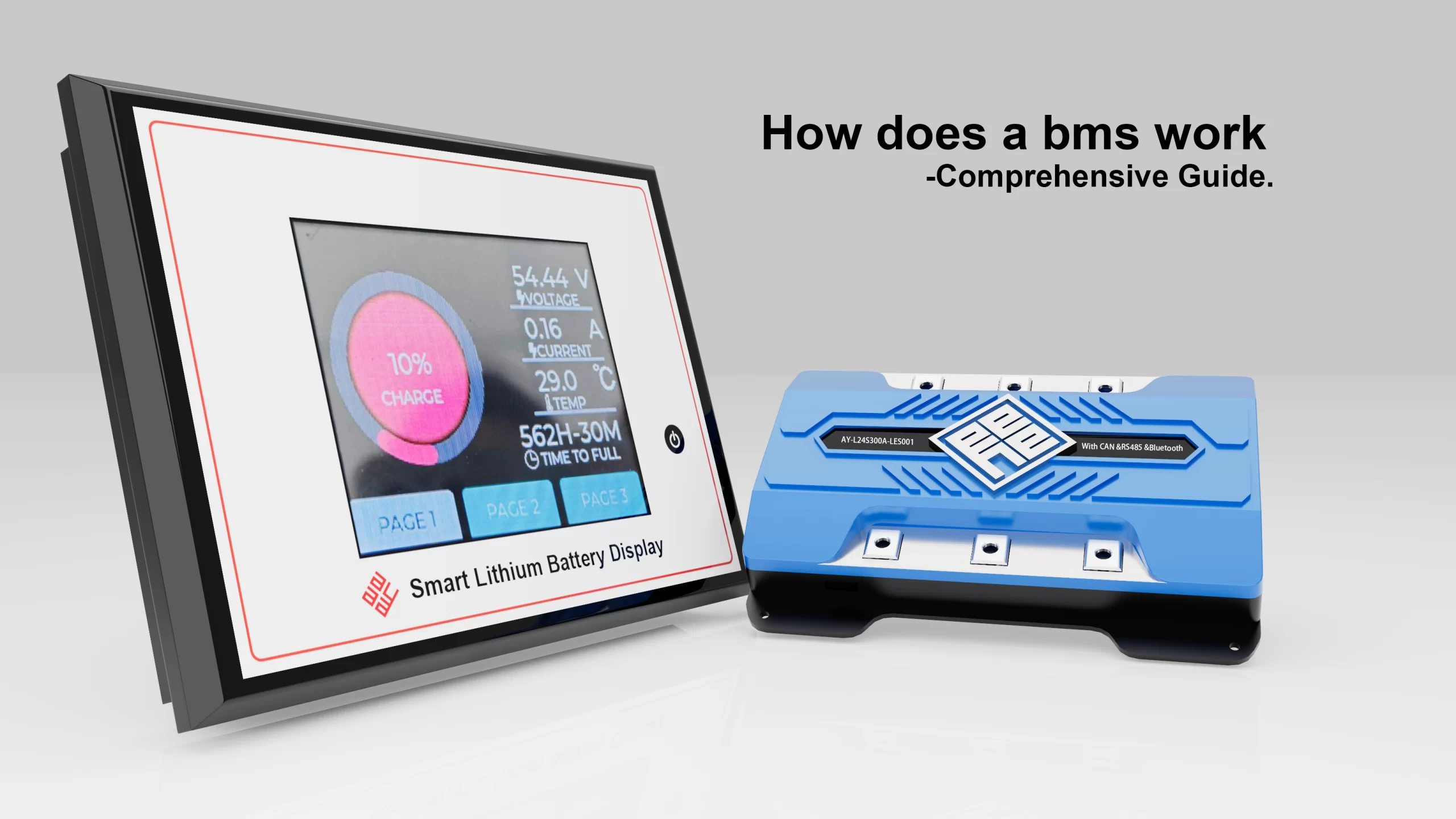







LiFePO4 BMS Installation and Optimization Guide
Whether you’ve purchased a LiFePO4 (Lithium Iron Phosphate) battery system for solar storage, RV power, e-bikes, marine setups, or home off-grid electricity, one part silently controls the battery’s lifespan and safety: the LiFePO4 BMS.
There is much more to a battery management system than just battery protection.
It balances cells, controls charging, guards against hazardous situations, and guarantees your battery runs well for many years.
Let’s now go over everything you need to know about LiFePO4 BMS systems, including what they are, why you need one, how to select the best model, and how to install and optimize them securely.

Introduction to LiFePO4 Battery Management Systems
LiFePO4 batteries are renowned for their stability, extended cycle life, and safety.
However, without appropriate management, battery cells cannot function safely even with this inherently stable chemistry.
The LiFePO4 BMS can help with that.
It serves as your battery system’s control center, keeping an eye on voltages, temperatures, current flow, and general health while averting dangerous situations before they arise.
1. What Is a LiFePO4 BMS?
An intelligent safety system called a LiFePO4 BMS (Battery Management System):
Monitors the voltage of each cell
Controls charge and discharge current
Balances energy between cells
Protects against electrical and thermal risks
Extends battery lifespan
Your battery is susceptible to failure, overheating, decreased capacity, and possibly irreversible damage if your lifepo4 BMS is not configured correctly.
2. What Are the Key Components and Functions of a LiFePO4 BMS?
What does a LiFePO4 BMS consist of?
Most BMS units include:
Voltage sensors — Monitor each cell individually
Current shunts or MOSFETs — Control charge and discharge flow
Temperature sensors — Prevent hot or cold charging conditions
Balancing circuitry — Keeps voltages equal
Microcontroller/CPU — Makes decisions based on sensor data
Communication interface (Bluetooth, UART, CAN, RS485)
Protection circuits — Trigger shutdown during unsafe conditions
What functions does a LiFePO4 BMS perform?
Prevents overcharging
Prevents over-discharging
Protects against short circuits
Limits excessive current
Monitors temperature
Balances cell voltages
Tracks SOC (State of Charge)
Tracks SOH (State of Health)
These functions work together automatically to keep your LiFePO4 battery safe.

3. Why Is a LiFePO4 BMS Better Than Other Lithium BMS Systems?
Many people ask: Can I use a general lithium BMS for my LiFePO4 battery?
Short answer: 아니요.
Here’s why a dedicated lifepo4 bms is superior:
| 기능 | Generic Lithium BMS | LiFePO4 BMS |
|---|---|---|
| Cell voltage range | 3.6–4.2V | 3.2–3.6V |
| Temperature limits | Less strict | Optimized for LFP safety |
| Balancing requirements | Lower precision | High precision needed |
| Lifespan optimization | 제한된 | Supports 3000–6000 cycles |
| Charging profile | Misaligned | Accurate for LiFePO4 |
LiFePO4 chemistry differs from other forms of lithium, hence a BMS tailored to its precise voltage thresholds and thermal behavior is necessary.
Why Do You Need a Battery Management System?
The importance of a BMS is sometimes underestimated by novice users.
Without one, a LiFePO4 battery cannot function properly.
Why is the BMS so important?
LiFePO4 cells must stay within a narrow voltage range
Low-temperature charging can permanently damage cells
Overheating can cause runaway reactions
Cells naturally drift out of balance during use
High-current loads must be controlled
The only part that can handle all of these circumstances in real time is your BMS.
What Happens If You Don’t Use a BMS?
Skipping a BMS is one of the fastest ways to destroy a LiFePO4 battery.
1. Overcharging
Cells may exceed safe voltage limits, leading to:
부종
Permanent damage
Internal heating
2. Overheating
Without temperature sensors, the battery cannot protect itself from thermal damage.
3. Cell Imbalance
Cells drift over time, leading to:
Reduced capacity
Faster degradation
Early failure
4. Shorter Lifespan
Without BMS protection, a LiFePO4 pack that could last ten or more years could fail in one to three years.
How to Choose the Right LiFePO4 BMS for Your Application
Selecting the right lifepo4 bms guarantees both maximum performance and safety.
Here are some things to think about:
1. Voltage
Match the BMS exactly to your battery configuration:
4S (12.8V)
8S (25.6V)
16S (48V)
2. Amperage
Select a BMS that supports your continuous and peak discharge needs.
3. Capacity
Ensure the BMS can handle your battery’s amp-hour rating.
4. C-Rating
Your discharge rate must fall within the BMS’s safe limits.
Optional Features to Consider
Bluetooth monitoring
CAN/RS485 communication
Temperature sensors
Adjustable parameters via app
Active or passive balancing
Without feeling overburdened, these tools enable customers to make better informed purchasing decisions.
LiFePO4 BMS Safety-Critical Features
Several integrated safeguards are part of your BMS.
This is what they do and why it matters.
1. Overcharge Protection
Stops charging when cells reach maximum voltage.
2. Over-discharge Protection
Prevents cells from being drained too low.
3. Short Circuit Protection
Instantly disconnects the battery to avoid fire or damage.
4. 세포 균형
Ensures all cells stay at equal voltage, prolonging lifespan.
5. Temperature Monitoring
Stops charging when temperatures are too low or too high.
Together, these allow your bms to maintain safe and stable operation.
Making the Most of Your LiFePO4 BMS
How Can You Maximize Efficiency and Battery Life?
Keep battery between 20–80% for daily use
Avoid charging below 0°C
Allow cell balancing at full charge
Avoid frequent 100% charging cycles
Follow recommended charge current limits
How Should You Respond to Alarms and Faults?
Common alerts include:
High voltage
Low voltage
High temperature
Current overload
Cell imbalance
Each alert indicates a condition that requires attention—never ignore them.
How Often Should You Perform Maintenance?
Check wiring every 3–6 months
Ensure balance leads are secure
Inspect terminals for corrosion
Review BMS logs via app
Good maintenance extends the health and capacity of your LiFePO4 battery system.
Your Complete Roadmap to a Safer, Longer-Lasting LiFePO4 Battery System
The secret to optimizing safety, performance, and battery longevity is to choose and install a lifepo4 BMS correctly.
The BMS guarantees steady, effective, and long-term operation whether you’re creating a do-it-yourself pack, upgrading an RV system, installing solar storage, or powering an e-bike.
자주 묻는 질문
Q1:Do you need a BMS for LifePO4?
A1:As a protector, the BMS continuously checks the battery’s temperature and charge level to avert any hazardous circumstances.
LiFePO4 batteries may overheat or overcharge without warning in the absence of a BMS, which could result in damage or unplanned failures.
Q2:Which BMS for LifePO4?
A2:AYAA Smart BMS.
Q3:Does LifePO4 have BMS?
A3:For lithium batteries to avoid abuse situations, maintain cell balance, and extend service life, a BMS is necessary.
LifePO4 BMS modules are built exclusively for the unique features of lithium iron phosphate chemistry.
Q4:How to wake up a lithium BMS?
A4:For five to ten minutes, connect the battery to the charger.
After disconnecting, check the voltage.
Use a regular charger to continue charging if the voltage has increased above the threshold.
To prevent overheating or other issues, keep a close eye on the battery.
Q5:What is the 80 20 rule for lithium batteries?
A5:For lithium batteries, the “80/20 rule” recommends charging to no more than 80% and avoiding discharging below 20% in order to extend battery life.
This is because, in contrast to full charges and deep discharges, maintaining the battery in this mid-range decreases stress on the cells, which lowers degradation over time.
Full charges should be utilized when necessary, such as prior to a lengthy trip, however this rule is merely a recommendation rather than a required legal requirement.
문의하기
최신 뉴스
- Lithium vs. Lead-Acid Golf Cart Batteries: 10-Year Cost Analysis
- Ultimate Guide to Lithium Golf Cart Batteries 2026
- Why FPV Battery for World Cup-Level Outdoor Filming Still Needs Custom Smart BMS
- Final Guide for Order Picker Battery & Smart BMS Upgrade
- Smart BMS for Automated Forklift Batteries: Solving 6 Key Challenges
공유
뉴스 추천
-

BMS 연결 다이어그램 이해: MOSFET 제어부터 셀 밸런싱까지
08/19/2025 -
인산철 리튬 BMS 상위 5개 브랜드 비교: 당신에게 맞는 것은?
05/16/2025 -
스마트 BMS 작동 방식 - 종합 가이드.
03/11/2025 -
전통적인 에너지원 대신 태양광 에너지 시스템을 선택하는 이유는 무엇인가요?
03/31/2025 -