


48V Golf Cart Batteries: Why They Are the Best Long-Term Investment
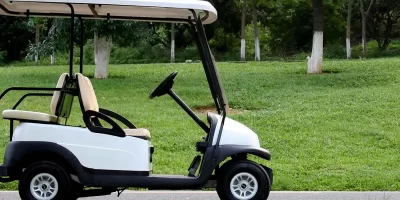
From being straightforward vehicles used to navigate golf courses, golf carts have developed into adaptable forms of transportation for communities, colleges, resorts, and warehouses.
Every golf cart’s battery system is its fundamental component and controls the vehicle’s range, speed, and efficiency.
Most golf carts have always been powered by lead-acid batteries, but the recent transition to 48V golf cart batteries, particularly lithium-based ones, has drastically changed both performance and ownership costs.

Why Lithium 48V Golf Cart Batteries Are a Smart Investment
Although lead-acid batteries are still in use because they are less expensive initially, lithium batteries are obviously more valuable in the long run.
Let’s examine why lithium-based 48V golf cart batteries are the way of the future.
1. Longer Lifespan
Lead-acid batteries only survive 500–1,500 rounds of charging, but a high-quality lithium 48V pack can last 3,000–5,000 cycles.
This implies that you could get dependable performance for up to ten years, even with frequent, intensive use. This lowers replacement costs and frequency over time.
2. 경량 설계
Because they are large and heavy, lead-acid batteries add weight to the cart and decrease efficiency.
48V lithium golf cart batteries, on the other hand, are up to 70% lighter, which enhances handling, speed, and acceleration. Additionally, this lessens the load on tires and motors.
3. Higher Energy Efficiency
Compared to lead-acid batteries, which have an efficiency of 70–80%, lithium batteries have an efficiency of 95%+.
As a result, less power is wasted and your cart will last longer between charges because more of the stored energy is actually used.
4. Cost Savings Over Time
Lithium 48V golf cart batteries are more expensive initially, but over time, their longer lifespan and less maintenance need make them more cost-effective.
A lithium pack can last more than twice as long as a lead-acid pack, which needs to be replaced every three to five years.
Charging Tips for 48V Golf Cart Batteries
For your 48V golf cart batteries to last longer, proper charging is essential. One of the primary causes of early battery failure is improper charging practices.
Use the Correct Charger
Make sure your charger is always compatible with the chemistry and voltage of your battery. A lithium-compatible charger is necessary for a lithium battery.
Avoid Overcharging or Undercharging
While undercharging eventually results in decreased capacity, overcharging might cause overheating. These problems are avoided by a smart BMS that balances the cells automatically.
정기적으로 충전하세요
After every use, recharge your battery rather than letting it run completely flat. Since lithium batteries don’t have the “memory effect,” charging them doesn’t impair their functionality.
Preserving the Charge of 48V Golf Cart Batteries
Controlling the energy storage and release of your 48V golf cart batteries is essential for optimal performance.
- Partial charging cycles are better than full depletion. Avoid letting the battery drop below 20%.
- Monitor voltage balance using a BMS system to ensure cells charge evenly.
- Keep batteries topped up to about 80% if you plan to store the cart for weeks without use.
Proper charge preservation prolongs the pack’s lifespan and ensures steady performance.
Routine Maintenance of 48V Golf Cart Batteries
Compared to lead-acid batteries, lithium 48V golf cart batteries require less maintenance, which is one of its key benefits. Routine inspections are still crucial, though.
- Clean terminals to prevent corrosion.
- Inspect connections to ensure there are no loose wires.
- Monitor battery health using BMS reports or diagnostic tools.
Lithium cells don’t require watering like lead-acid cells do, which saves time and lowers the possibility of human error.
Protecting Batteries from Weather and Extreme Temperatures
Golf carts are frequently in outdoor settings. Extremes in temperature can have a big impact on 48V golf cart batteries.
- High heat can cause overheating and reduced capacity.
- Extreme cold slows chemical reactions inside the cells, reducing power output.
Keeping the cart in a covered or climate-controlled space is a smart idea. If conditions are dangerous, advanced BMS solutions control temperature by stopping charging.
Off-Season Storage Tips
Proper storage is crucial if your golf cart won’t be used for several months.
- Charge to around 50–80% before storing.
- Disconnect accessories to prevent slow drains.
- Store in a dry, cool location to avoid heat or freezing temperatures.
- Let the BMS manage idle power consumption to ensure the pack is preserved without manual intervention.
The Role of Smart BMS in 48V Golf Cart Batteries
The Battery Management System (BMS) is the unsung hero of lithium battery packs. When it comes to 48V golf cart batteries, the BMS is in charge of:
- Voltage Monitoring: Ensures all cells charge and discharge evenly.
- Overcharge/Over-discharge Protection: Prevents damage from unsafe voltage ranges.
- Temperature Regulation: Protects against overheating or freezing conditions.
- Current Control: Avoids sudden surges that could harm electronics or reduce safety.
Your battery lasts longer, performs better, and runs safely under all circumstances when it has a strong BMS.
Maximizing the Value of Your 48V Golf Cart Batteries with 스마트 BMS Solutions
Purchasing 48V golf cart batteries ensures long-term dependability, efficiency, and safety in addition to improving your vehicle’s performance.
Selecting lithium technology has several benefits alone, but those benefits are increased when combined with a top-notch BMS.
Our cutting-edge BMS solutions at AYAA Technology are made to extend the life of lithium golf cart batteries, guarantee balanced performance from each cell, and offer defense against dangers related to voltage, current, and temperature.
A 48V lithium battery with AYAA’s smart BMS is the obvious choice for golf cart owners looking for the best return on investment in terms of long-term performance and peace of mind.
자주 묻는 질문
Q: How much does it cost to replace 48 volt golf cart batteries?
A: The least expensive up front are lead-acid batteries, which cost $150 to $250 per unit (6V/8V) or $800 to $1,500 for a whole 36V/48V set. With moderate use, they usually last two to three years.
Q: Can you put 4 12 volt batteries in a 48 volt golf cart?
A: It is possible to power a 48V golf cart with four 12V batteries by connecting them in series. However, since golf carts need continuous power delivery, you must make sure the batteries are “deep cycle” varieties rather than vehicle starter batteries.
Be ready for any issues with wires, hold-downs, battery trays, the overall weight and size of the new arrangement, and the requirement for individual battery monitoring.
Q: How long do batteries last in a 48 volt golf cart?
A: Depending on the battery type, regular maintenance, and driving circumstances, a 48-volt golf cart battery can last anywhere from three to five years for lead-acid batteries to eight to ten years or longer for lithium-ion batteries.
How long a battery pack lasts depends on a number of factors, including topography, frequency of use, charging habits, and the weight of the cart.
Q: What is the best lithium battery for a golf cart 48V?
A: The 48v 105ah batteries are tied for the best battery for golf carts with four passengers or those with minor modifications.
Q: What is the life expectancy of a 48V battery?
A: Depending on its type, use, and upkeep, a 48-volt battery can live anywhere from two to more than fifteen years. Lithium-ion batteries typically outlast conventional lead-acid batteries in terms of lifespan.
The battery’s overall lifespan is greatly impacted by a number of factors, including operating temperature, charging behaviors (such as avoiding deep discharges), the number of charge cycles, and battery quality.
최신 뉴스
- How Home Backup & Garden BMS enhances battery safety in home energy storage systems?
- What makes Aviation & UAV BMS essential for intelligent next-generation drone energy management systems?
- Which Marine & Boat BMS Provides Intelligent Balancing for Safer and More Efficient Lithium Battery Operation?
- Why UAV BMS and commercial drone BMS enable safe high voltage UAV operations?
- How does Smart Active Balancer BMS improve efficiency and performance of high voltage battery packs?
공유
뉴스 추천
-

BMS 연결 다이어그램 이해: MOSFET 제어부터 셀 밸런싱까지
08/19/2025 -
인산철 리튬 BMS 상위 5개 브랜드 비교: 당신에게 맞는 것은?
05/16/2025 -
스마트 BMS 작동 방식 - 종합 가이드.
03/11/2025 -
전통적인 에너지원 대신 태양광 에너지 시스템을 선택하는 이유는 무엇인가요?
03/31/2025 -
배터리 관리 시스템은 지게차 성능을 어떻게 향상시키는가
01/16/2025