What Is a 100Ah Lithium Battery and How Does It Work?
1784
What Is a 100Ah Lithium Battery and How Does It Work?
From tiny home appliances to massive off-grid uses, lithium batteries are becoming a crucial part of contemporary energy storage systems.
The 100Ah lithium battery has drawn the most attention among them because of its high energy density, extended cycle life, and adaptability.
Examining the chemical makeup, capacity, performance characteristics, and the vital role that a Battery Management System (Sistema de gestión de edificios (BMS)) plays in maintaining effectiveness and safety are all part of comprehending what a 100Ah lithium battery is and how it operates.
Understanding Lithium Batteries
One kind of rechargeable battery that depends on the movement of lithium ions between the anode and cathode during cycles of charging and discharging is the lithium battery.
The electrical energy needed to power gadgets is produced by this ion movement.
Many applications favor lithium batteries because of its extended cycle life, low self-discharge rate, high energy density, and lightweight design.
Types of Lithium Batteries
Lithium batteries come in a variety of forms, each with unique characteristics:
Lithium Iron Phosphate (LiFePO4): LiFePO4 batteries are well-known for their long life cycles, stability, and resistance to overheating.
They are extensively utilized in solar energy systems, electric cars, and home energy storage.
Lithium Nickel Manganese Cobalt Oxide (NMC): is appropriate for applications needing a smaller size and greater power output since it has a higher energy density than LiFePO4.
Lithium Cobalt Oxide (LCO): frequently found in consumer devices such as laptops and cellphones because of its short lifespan and high energy density.
Lithium Titanate (LTO):has a longer cycle life and incredibly quick charging, but it costs more.
Because of their strong safety profile and consistent performance, LiFePO4 batteries are the recommended option among these for 100Ah lithium battery applications.
What Does 100Ah Mean?
A battery’s capacity, or the amount of current it can provide over a certain time period, is expressed in terms of 100Ah (ampere-hour).
Theoretically, a 100Ah lithium battery can provide 100 amps for an hour or 10 amps for ten hours until it is completely depleted.
It is essential to comprehend ampere-hours when sizing batteries for particular uses.
Users can determine the total energy stored, expressed in watt-hours (Wh), by combining the Ah rating and battery voltage:
Energy (Wh)=Capacity (Ah)×Voltage (V)
For instance, about 1,200Wh of energy may be stored in a 100Ah lithium battery with a nominal voltage of 12V.
Factors Affecting 100Ah Lithium Battery Runtime
A 100Ah lithium battery’s capacity is not the only factor that affects its runtime.
How long a battery can power a system or gadget depends on a number of things:
Connected Load: The higher the power demand from connected devices, the faster the battery will discharge.
Tipo de Batería: Different lithium chemistries have unique discharge characteristics and efficiencies.
Battery Age and Health: Older batteries or those subjected to harsh conditions may have reduced capacity.
Tasa de descarga: Higher discharge rates can lead to reduced usable capacity due to efficiency losses.
Self-Discharge: Although lithium batteries have low self-discharge, it can slightly reduce available energy over time.
Temperatura: Extreme temperatures, both hot and cold, can affect battery performance and longevity.
Calculating Runtime for a 100Ah Lithium Battery
The following computations are commonly employed to determine how long a 100Ah lithium battery can power a system:
1. Capacity in Watt-Hours
Convert ampere-hours to watt-hours using the battery voltage:
Wh=Ah×Voltage (V)
Example: 100Ah × 12V = 1,200Wh
2. Depth of Discharge (DoD)
Because it can shorten their lifespan, batteries shouldn’t always be completely depleted.
The Depth of Discharge is used to determine the usable capacity (DoD):
Usable Capacity=Wh×DoD
The usual safe DoD for a LiFePO4 battery is 80%:
1,200Wh×0.8=960Wh
3. Inverter Efficiency
The efficiency of the inverter must be taken into account while powering AC devices.
If the inverter’s efficiency is 90%:
Effective Energy=960Wh×0.9≈864Wh
Runtime can then be estimated by dividing this energy by the load wattage.
A 100W gadget, for example, may potentially operate for:
864Wh/100W≈8.6 hours
The Role of BMS in 100Ah Lithium Batteries
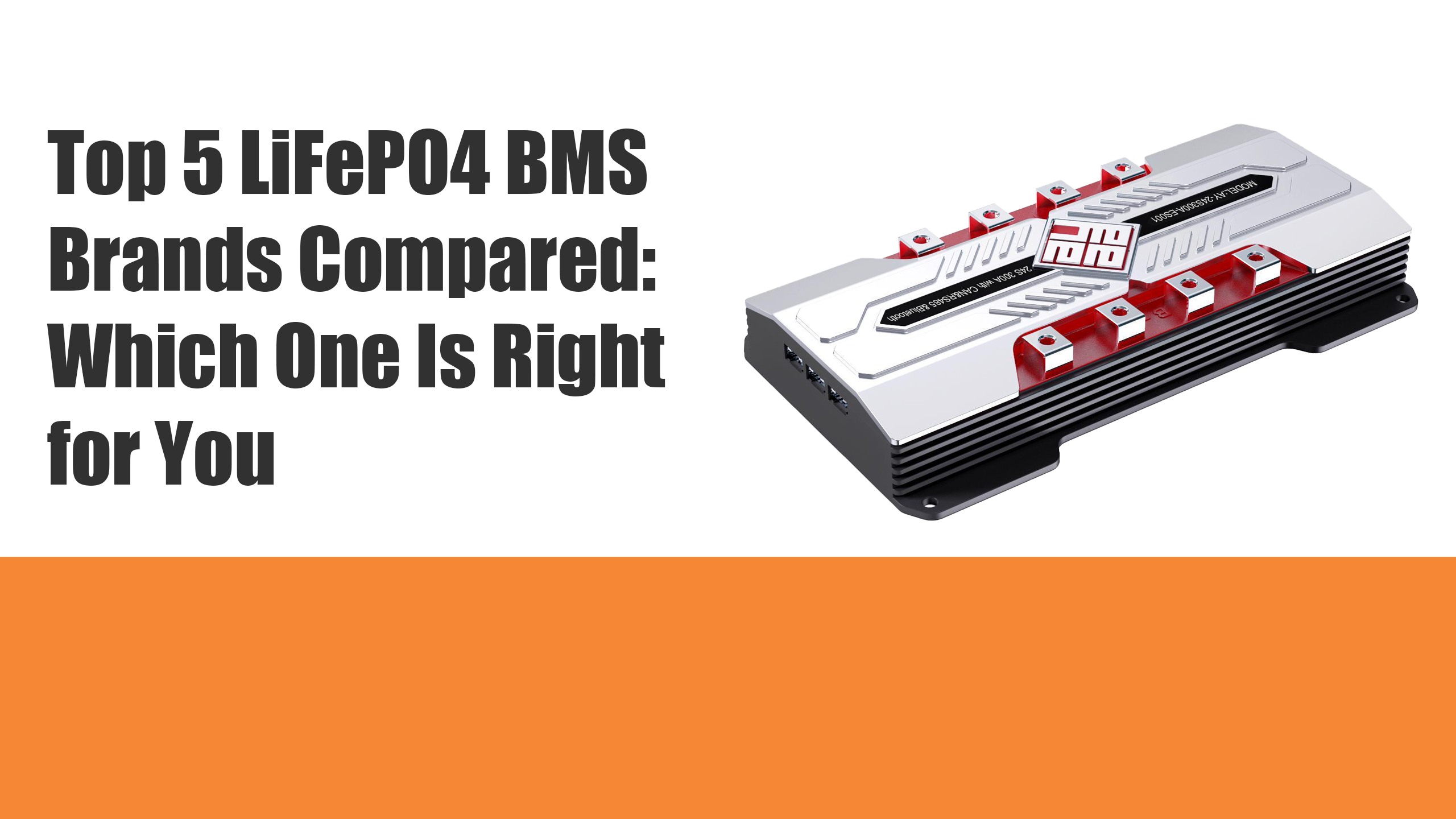
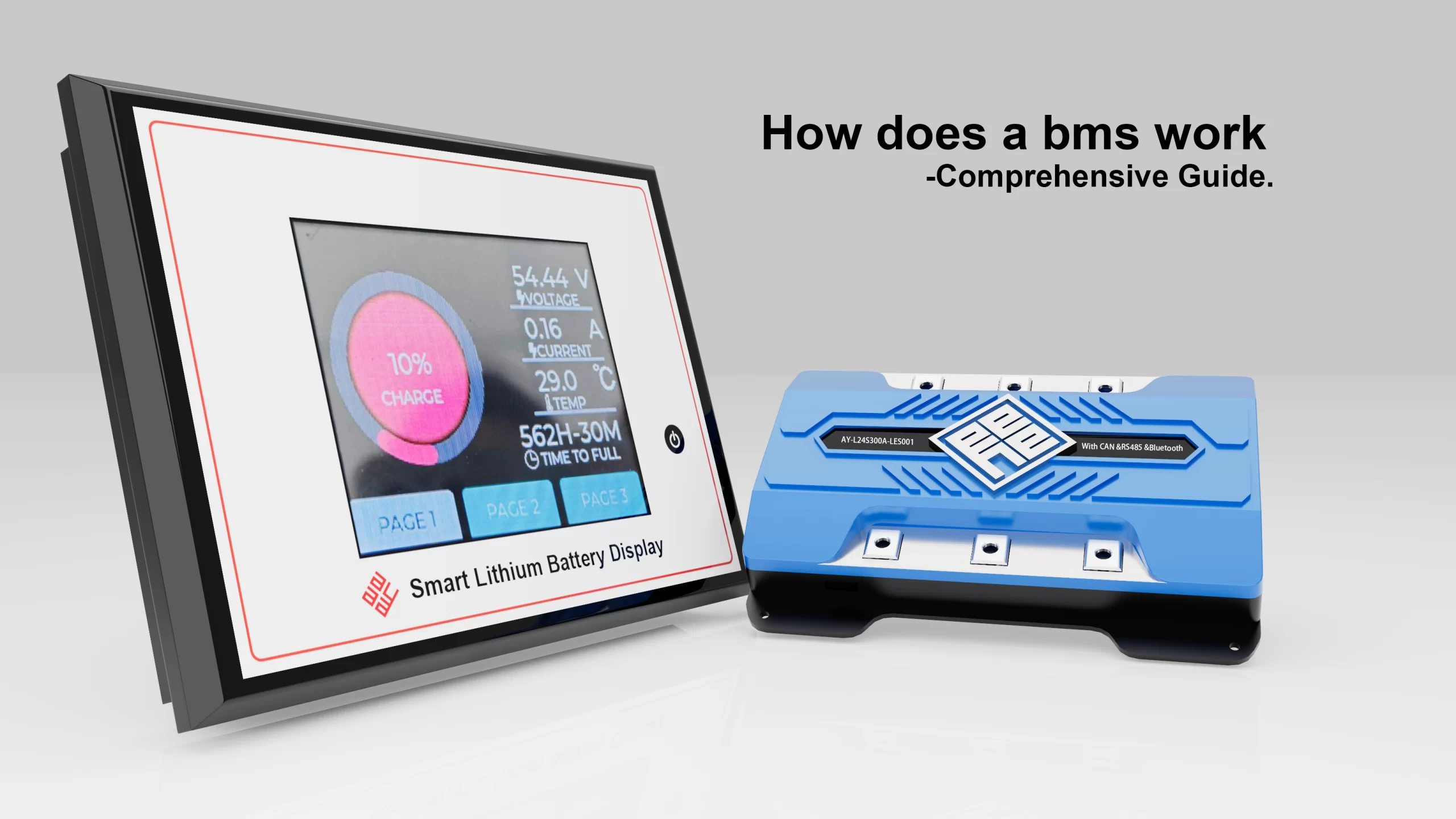
The longevity, performance, and safety of a 100Ah lithium battery are all dependent on a Battery Management System (BMS).
Several facets of battery operation are tracked and managed by the BMS:
Voltage and Current Protection: Prevents overcharging or excessive discharge that could damage the battery.
Monitoreo de temperatura: Ensures the battery operates within safe thermal limits.
State of Charge (SOC) Management: Provides accurate information on remaining capacity.
Detección de fallas: Alerts users to abnormal conditions such as short circuits or thermal runaway risks.
The 100Ah lithium battery may securely provide steady performance for hundreds or even thousands of cycles by incorporating a BMS.
Common Applications of 100Ah Lithium Batteries
100Ah lithium battery packs are extensively utilized in many different industries because of their adaptability:
Small Appliances: Portable electronics, LED lighting, and small power tools.
Medium Load Appliances: Household devices like refrigerators, fans, and pumps.
Heavy Equipment: Powering electric bikes, wheelchairs, and small machinery.
Off-Grid Systems and vehículos recreativos: Solar energy storage, mobile power supply, and recreational vehicles.
Lithium batteries’ high energy density, extended cycle life, and minimal maintenance needs are advantageous for these applications.
Tips for Maximizing 100Ah Lithium Battery Performance
Use a BMS: Always choose a battery with a reliable BMS to prevent overcharge, over-discharge, and thermal issues.
Avoid Extreme Temperatures: Store and operate batteries within recommended temperature ranges.
Proper Storage: Keep batteries partially charged (around 50–70%) during long-term storage to maintain capacity.
Avoid Over-Discharge: Repeated deep discharges reduce overall lifespan.
Monitor Usage Patterns: Track energy consumption to prevent unexpected power depletion.
Integrating 100Ah Lithium Batteries with Renewable Energy
The 100Ah lithium battery is frequently used in conjunction with charge controllers and inverters in off-grid solar or wind systems.
Sufficient energy storage and constant power availability are guaranteed by proper sizing.
The BMS is essential for safeguarding the battery against erratic charge cycles and balancing energy input from renewable sources.
Why a 100Ah Lithium Battery Is the Smart Choice
In conclusion, a 100Ah lithium battery is a safe, effective, and adaptable energy storage option.
Among its benefits include:
High energy density and longer runtime compared to lead-acid alternatives
Stable and safe chemistry, especially LiFePO4
Integration with BMS for monitoring, safety, and performance optimization
Suitable for a wide range of applications, from small appliances to off-grid systems
Users can increase longevity and efficiency by being aware of capacity, runtime-affecting factors, and appropriate battery management.
Prioritizing models with cutting-edge BMS technology when choosing a 100Ah lithium battery guarantees dependable and secure functioning for many years to come.
For dependable, high-performing 100Ah lithium batteries with integrated BMS solutions for home, recreational, and commercial applications, check out AYAA Technology’s cutting-edge energy storage product range.
Preguntas frecuentes
Q1:How many hours will a 100Ah lithium battery last?
A1:With a normal cycle life of 3,000 to 5,000+ cycles, a 100Ah lithium battery can have a calendar life of 7 to 15 years.
With a straightforward calculation of 100Ah / device amps = hours, its real runtime will vary from a few hours to several days, depending on the power consumption (wattage) of the connected device.
Q2:How long will a 12V fridge run on a 100Ah lithium battery?
A2:3.3 days.
Q3:Is it better to have 2 100Ah batteries or 1 200Ah battery?
A3:If you wish to run entirely off the grid, a 200Ah lithium battery is the best option.
Additionally, this option is ideal for tasks requiring a large power supply.
However, the two-100Ah Lithium barry option is exactly what you need for a more adaptable and expandable system.
Q4:How long will a 100Ah battery run a 55lb trolling motor?
A4:A 55-pound trolling motor can run on a 100Ah battery for about two hours at full throttle, four to six hours at medium speed, or eight to ten hours at low speed.
However, these times can vary greatly based on the motor’s specific current draw, the type of battery (lead-acid vs. lithium), weather, hull weight, and water conditions.
Divide the battery’s 100Ah capacity by the expected amp-hour demand of the trolling motor at the speed you want to use to get an idea of runtime.
Q5:Is a 200W solar panel enough for a 100Ah battery?
A5:A 200W solar panel would be required for efficient charging of a 12V 100Ah battery, assuming around five hours of the day’s peak sunlight.
Since it’s usually prudent to go a bit beyond what you need, the material indicates that a 300W solar panel would be your best bet.