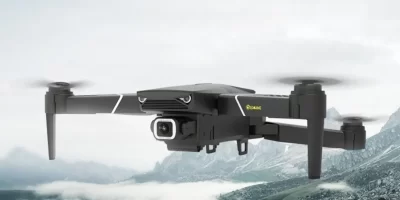
High-performance energy systems are necessary for unmanned aerial vehicles (vehículos aéreos no tripulados), such as recreational drones and industrial inspection platforms, to remain in the air.
Every drone’s UAV battery is its lifeblood; it controls flight duration, payload capacity, safety, and mission success.
Selecting and maintaining the appropriate UAV battery has become a crucial engineering issue as 2025 brings growing need for autonomous operations, beyond-visual-line-of-sight flights, and larger onboard sensors.
This article provides you with the necessary technological basis if you’re designing or updating a UAV.
What Is a UAV Battery?
The propulsion motors, onboard electronics, sensors, flight controls, and communication modules of drones are all powered by rechargeable UAV battery.
In contrast to consumer tool or smartphone batteries, UAV batteries need:
Alta densidad energética — to maximize flight time
High discharge capability — to support rapid throttle changes
Light weight — to improve maneuverability and lift efficiency
Strict safety management — due to high operational risks
A UAV battery is more than just an energy cell container in the majority of modern professional systems.
To guarantee dependable flight performance, it is an intelligent, safety-managed power system that incorporates communication modules, thermal safeguards, a BMS, and monitoring sensors.
What Types of UAV Batteries Are Used on Drones?
Three rechargeable battery chemistries are the main ones used by contemporary UAVs.
In terms of structure, energy production, and applicability for particular use cases, every chemistry behaves differently.
Lithium-ion chemistry with a polymer-based electrolyte enable flexible cell packaging in LiPo batteries.
The majority of LiPo packs are made as prismatic pouches, which allow for optimal weight distribution and shape.
How It Works
Lithium ions travel via polymer electrolyte layers from the anode to the cathode during discharge, providing the UAV powertrain with electrical energy.
Strengths
Extremely high discharge rate (C-rate)
Lightweight and compact
Delivers strong bursts of power for acceleration
Limitaciones
Lower cycle life than Li-ion
Higher thermal instability — risk of swelling or fire if mishandled
Best For
Racing drones, multicopters needing high thrust, consumer aerial platforms.
Lithium-Ion (Li-Ion) Battery
Chemistry & Structure
uses liquid electrolyte in cylindrical or prismatic cells. The most popular cell formats are 18650 and 21700.
How It Works
Graphite anodes and layered metal oxide cathodes exchange lithium ions. A BMS controls safe operating conditions and charging.
Strengths
Mayor densidad de energía → longer flight time
Better cycle life and stability than LiPo
Cost-efficient for high-volume production
Limitaciones
Lower discharge rate compared to LiPo
Thermal propagation risk if cells are damaged
Best For
Long-range unmanned aerial vehicles (UAVs) for industrial inspection, agricultural, delivery, and mapping.
Nickel-Cadmium (NiCd) Battery
Chemistry & Structure
Uses nickel oxide hydroxide cathode and cadmium anode in alkaline electrolyte.
How It Works
For the UAV system, ion transfer between nickel and cadmium plates produces electrical output.
Strengths
Very robust in extreme environments
Tolerates high cycle usage and self-healing properties
Limitaciones
Heavy and low energy density
Memory effect reduces capacity over time
Cadmium is toxic → environmentally restricted
Best For
Uncommon in contemporary UAV battery designs, although still present in certain older military hardware.
Summary
Chemistry
Energy Density
Discharge Ability
Seguridad
Peso
Costo
UAV Usage
LiPo
Alto
Muy alto
Medio
Very Light
Medio
Racing & consumer drones
iones de litio
Muy alto
Alto
Alto
Luz
Bajo
Professional long-range UAVs
NiCd
Bajo
Medio
Muy alto
Pesado
Medio
Legacy/military systems
In 2025, the preferred UAV battery remains lithium-based, with LiPo for aggressive power and Li-ion for endurance missions.
How Do You Choose the Best UAV Battery for Your Drone?
Weight restrictions, application requirements, and electrical factors must all be balanced when choosing a UAV battery.
Engineers need to think about:
✔ 1. Size and Weight
Efficiency is increased with a lighter battery since it lowers thrust load.
However, the capability required for the duration of the operation must not be compromised by miniaturization.
Key metric: Wh/kg energy density
✔ 2. Capacity (mAh or Ah)
Determines maximum flight endurance.
Higher capacity = longer flight time
But also higher weight and cost.
✔ 3. Voltage (V)
Voltage correlates to motor performance and drone thrust.
More series cells (S-config) = higher voltage output
Common UAV configs: 3S, 4S, 6S, 12S, 14S
Correct voltage must match ESC and motor ratings to prevent failure.
✔ 4. Discharge Rate (C-Rate)
Indicates how fast current can be drawn safely.
50C to 120C ratings are common for high-performance LiPo packs.
Professional Li-ion packs with BMS current protection can have temperatures between 5C and 15C.
✔ 5. Connectors
Certain power and communication terminal standards, including XT60, XT90, EC5, or special CAN-based smart battery ports, are necessary for various UAV platforms.
✔ 6. Battery Management System (BMS)
The hidden but crucial component that:
Monitors voltage of each cell
Balances cells to prolong life
Detects overcurrent, short circuit, and thermal runaway
Tracks SOC/health metrics for flight system communication
For industrial, commercial, and enterprise UAVs:
A BMS is mandatory for airworthiness and safety compliance.
How Do You Build a Custom UAV Battery?
Custom battery engineering is frequently used by companies with mission-critical UAV fleets to achieve the best possible balance between energy, longevity, and safety.
The design process includes:
1. Chemistry and Cell Selection
LiPo, Li-ion, or next-generation chemistries like solid-state are chosen by engineers based on:
Required flight time
Load and discharge demands
Operating environment
Overall pack dependability is determined by cell quality; imbalance and wear are decreased by matching Internal Resistance (IR) across cells.
2. BMS Integration
A customized UAV battery must incluir:
BMS Function
Value
Over-voltage protection
Prevents lithium plating & fires
Under-voltage protection
Avoids irreversible cell damage
Over-current/short circuit protection
Protects electronics & payload
Thermal management
Controls heating during demanding flight
Equilibrio celular
Ensures synchronized aging across pack
Communication interface
Reports SOH, SOC, and alarms to flight controller
Unacceptable hazards for commercial operations include UAV crashes, mid-air shutdowns, and damaged cells in the absence of BMS oversight.
3. Mechanical Design
Optimal structural design must ensure:
High shock/vibration resistance
Lightweight but strong enclosure
Waterproofing/dustproofing rated to IP standards
Efficient heat dissipation
Fire-retardant separation barriers between cells
Structural engineering is as critical as electronic design.
4. Testing & Validation
Before deployment, custom UAV batteries undergo:
Cycle testing (aging assessment)
Crash and drop testing
Altitude/low-pressure testing
Thermal runaway and abuse testing
EMC compliance
Aviation safety certification as needed
Objective: guarantee maximum energy delivery with no compromise on safety.
What Factors Affect the Lifespan of a UAV Battery?
Factor
Impact on Life
Capacity and chemistry
Determines theoretical cycle life
Payload and flight duration
Higher load = higher cell stress
Temperatura
Heat accelerates chemical degradation
UAV weight and aerodynamics
Inefficiency reduces battery health
Charge rate and method
Poor chargers shorten battery life
Number of charge cycles
Each cycle consumes some lifespan
Storage conditions
Deep discharge storage causes damage
Electrode aging and electrolyte degradation cause even the greatest UAV battery to gradually lose capacity.
These consequences are lessened by intelligent BMS monitoring.
Every extra gram increases thrust current and heat generation.
✔ Carry Spare UAV Batteries
Instead of overworking a single battery, rotate packs to even out wear.
✔ Use Low-Power/Smart Flight Modes
Optimized propeller RPM and smoother throttle response reduce current spikes.
✔ Avoid Extreme Temperatures
Heat accelerates degradation
Cold reduces chemical activity → shorter flight time
Ideal operating zone: 15°C–35°C
✔ Prevent Overcharging and Deep Discharging
BMS voltage limits protect cells, but operators should also:
Disconnect chargers when fully charged
Land before battery drops below 20–25% SOC
✔ Store Batteries Properly
Keep at 40–60% SOC in temperature-controlled rooms when idle.
✔ Avoid High-Altitude Flight When Unnecessary
Thin air reduces propeller efficiency → motors demand more current.
Cycle life can be increased by 30–50% or more when prudent usage and proper charging practices are combined.
Why Is the BMS So Important for UAV Battery Safety and Reliability?
Every contemporary UAV battery is powered by the BMS.
Without protection and balance in real time:
One weak cell → early shutdown → drone crash
Over-charge → lithium plating → fire
Over-discharge → permanent loss of capacity
Over-heat → thermal runaway → explosion
BMS contributes to UAV performance through:
Benefit
Real Outcome
Safety protections
Prevents catastrophic mid-air incidents
Equilibrio celular
Longer flight time throughout battery life
SOC/SOH monitoring
Accurate fuel-gauge reporting to pilots
Thermal control
Reliable performance in dynamic power demand
Fault diagnostics
Predictive maintenance and lower downtime
BMS is the difference between a successful mission and a catastrophic one for commercial drones used in delivery, surveying, firefighting, inspection, agriculture, or military.
Why Choose Ayaa Technology for Your Custom UAV Battery?
High-reliability lithium battery systems for industrial UAV platforms are Ayaa Technology’s area of expertise, including:
With over 20 years of experience serving international markets, Ayaa Technology offers high-performance, intelligent, and safe UAV battery solutions that are customized to meet your mission’s needs.
Our engineers optimize every aspect, from chemistry selection to BMS programming and enclosure design, whether your UAV needs greater safety redundancy, longer endurance, or better discharge capability.
Get in touch with us to create a unique UAV power system that propels your inventiveness into the heavens.
Preguntas frecuentes
Q1:What is an UAV battery?
A1:Unmanned aerial vehicle (UAV) energy storage battery systems’ dependability is essential to their safe operation and effective mission execution.
It has the potential to greatly enhance applications in emergency response, monitoring, and logistics.
Q2:Which is better 18650 or 21700 for drones?
A2:Greater Energy Density: Compared to the 18650, the 21700 cell has a greater energy density (Wh/kg), which enables longer runtimes and greater capacity.
This is perfect for robotics or UAVs when longer operating times are crucial.
Q3:Can a 400Ah battery power a house?
A3:For instance, the updated 12V 400Ah LiFePO4 battery offers up to 5.248kWh of energy with an actual capacity of 410ah, guaranteeing your home has enough backup power for lengthy periods of time.
Q4:How long does an UAV battery last?
A4:Professional drone batteries can achieve flight times ranging from 20 minutes to several hours.
Q5:What is the 80 20 rule for lithium batteries?
A5:For lithium batteries, the “80/20 rule” recommends charging to no more than 80% and preventing discharging below 20% in order to extend the battery’s life.
This is because, in comparison to full charges and deep discharges, maintaining the battery in this mid-range decreases stress on the cells, which lowers degradation over time.