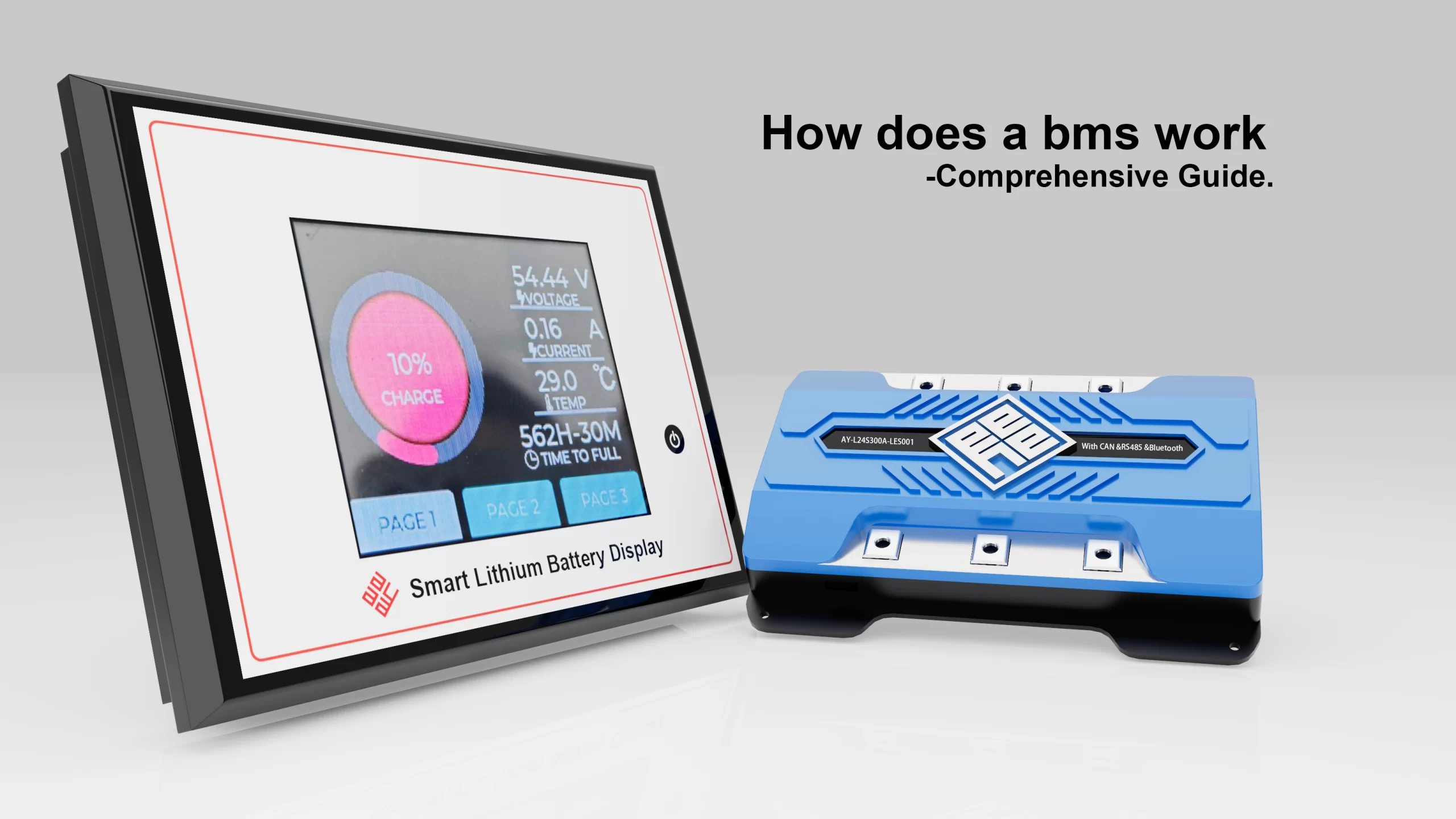
Warum ein BMS LiFePO4 für moderne Energiespeichersysteme unerlässlich ist
2148
Warum ein BMS LiFePO4 für moderne Energiespeichersysteme unerlässlich ist
Energy storage solutions are becoming essential for commercial, industrial, and residential applications as the use of renewable energy continues to grow globally. LiFePO4 (Lithium Iron Phosphate) batteries are unique among battery chemistries because of their exceptional safety, extended cycle life, and reliable operation. However, to optimize performance, prolong lifespan, and guarantee safety, even premium LiFePO4 cells need to be closely watched over and managed. The BMS LiFePO4 (Battery Management System) is useful in this situation.
A BMS is an essential part that oversees every cell in a LiFePO4 battery pack, guaranteeing balanced charging, safe discharge, temperature control, and defense against electrical irregularities. It is not merely an optional extra. A dependable BMS in contemporary Energiespeicherung systems turns a group of separate cells into an intelligent, robust, and effective power source.
The importance of a BMS LiFePO4, its operation, important configurations, the dangers of running without one, and how to choose the best BMS for your application are all covered in this article.
Understanding LiFePO4 Batteries
Because of a number of special benefits, LiFePO4 batteries—a kind of lithium-ion battery—have become more and more popular in energy storage applications:
Sicherheit: LiFePO4 cells are more chemically and thermally stable than conventional lithium-ion chemistries, which lowers the possibility of thermal runaway or fire.
Langlebigkeit: Generally speaking, they survive 2000–5000 cycles, depending on usage and discharge depth.
Stable Voltage:LiFePO4 consistently produces energy by maintaining a comparatively flat discharge voltage.
Environmental Benefits: They are better for the environment because they don’t contain cobalt or heavy metals.
LiFePO4 is perfect for energy storage because of these advantages, but effective battery management calls for a complex BMS.
Why a BMS LiFePO4 Is Necessary
If not controlled, even the strongest and safest LiFePO4 batteries are susceptible to a number of hazards:
1. Cell Voltage Monitoring and Balancing
To obtain the required voltage and capacity, a LiFePO4 battery pack is made up of several cells coupled in series and parallel. Small differences in the voltages of individual cells can cause imbalances, which over time may harm cells and reduce efficiency.
Each cell’s voltage is continuously monitored by a BMS LiFePO4, which actively balances the cells to ensure consistent voltage levels for maximum longevity and performance.
2. Overcharge and Over-Discharge Protection
LiFePO4 batteries can have their lifespan significantly reduced and their safety compromised by overcharging or deep draining. By setting voltage cutoff thresholds, the BMS prevents discharge below a safe minimum and stops charging when a cell reaches the maximum voltage.
3. Thermal Management
LiFePO4 cells can deteriorate and lose capacity at high temperatures. By keeping an eye on the battery pack’s temperature, the BMS can activate cooling mechanisms or shutdown procedures to avoid overheating.
4. Current and Short-Circuit Protection
Whether it occurs during charging or discharging, an abrupt spike in current might damage the battery. Current flow is controlled by BMS LiFePO4 systems, which also have protection circuits to guard against short circuits and overcurrent.
5. State of Charge (SOC) and State of Health (SOH) Monitoring
By calculating SOC and SOH in real time, the BMS provides users with information on battery condition and remaining capacity. Planning maintenance, maximizing usage, and avoiding unplanned downtime are all made easier with accurate monitoring.
6. Communication and Smart Features
CAN-Bus, SMBUS, Bluetooth, and Wi-Fi communication are frequently integrated into modern BMS LiFePO4 systems, enabling customers to monitor their batteries using apps, energy management systems, or cloud platforms. This feature is particularly important for energy storage installations in business settings.
LiFePO4 BMS Configuration Options
The battery size, system complexity, and your application all influence the BMS design you choose. Common LiFePO4 BMS setups consist of:
1. Centralized BMS
A single controller monitors and manages all battery cells.
These dangers are reduced by a well-designed BMS LiFePO4, which offers protection and performance enhancement.
How to Select the Right LiFePO4 BMS
A number of things need to be taken into account when selecting the best BMS for your LiFePO4 battery pack:
1. Voltage Rating
Ensure the BMS supports the series configuration (e.g., 12S, 16S) of your LiFePO4 pack.
2. Current Rating
Select a BMS capable of handling peak charge and discharge currents without triggering false shutdowns.
3. Capacity Support
The BMS should accommodate the total ampere-hour (Ah) rating of your battery pack.
4. C-Rating
Ensure the BMS can manage the charge/discharge rate specific to your application, whether for rapid energy release in EVs or steady energy storage in residential systems.
5. Smart Features
Consider features such as Bluetooth connectivity, CAN communication, temperature monitoring, and cell balancing.
6. Environmental Considerations
Choose a BMS suitable for operating conditions, including ambient temperature, humidity, and potential exposure to vibrations.
Maximizing Efficiency and Longevity with LiFePO4 BMS
After installation, a LiFePO4 BMS offers operational protections and actionable data:
Responding to Alarms: Over-voltage, under-voltage, over-current, and temperature warnings allow timely intervention.
Regular Maintenance: Periodic inspections ensure sensors, connectors, and BMS software are functioning correctly.
Zellbalancing Active balancing minimizes energy loss and ensures consistent output across all cells.
System Integration: Integration with renewable energy controllers or smart grids allows efficient energy distribution and usage planning.
Applications of BMS LiFePO4 in Modern Energy Storage Systems
Several industries benefit from LiFePO4 BMS’s adaptability:
Residential Energy Storage: Solar power storage, off-grid systems, and smart homes.
Commercial Installations: Large-scale battery banks for warehouses, factories, and data centers.
Electric Vehicles: Powering e-bikes, EVs, buses, and industrial vehicles safely and efficiently.
Marine and Aviation Applications: Ensuring safe and reliable energy supply in boats and unmanned aerial vehicles.
DIY Off-Grid Projects: Custom battery packs for renewable energy enthusiasts.
LiFePO4 BMS Trends in 2025 and Beyond
BMS LiFePO4 systems are growing increasingly intelligent and integrated as energy storage technology advances:
Advanced Communication: BMS systems now feature Bluetooth apps, CANBUS, and cloud-based monitoring.
AI-Assisted Diagnostics: Predictive analytics can anticipate failures, optimizing maintenance schedules.
Integrated Thermal Management: More BMS units monitor and regulate temperature actively for long-term stability.
Modular and Scalable Designs: Allow for flexible expansion in large battery storage farms.
Enhanced Safety Protocols: Real-time monitoring ensures compliance with global safety standards and reduces risk of catastrophic failures.
The wide voltage range (1S–35S), large current capacity (up to 320A), sophisticated balancing, and smooth interaction with EVs, energy storage systems, and industrial applications set Ayaa Smart BMS apart among the top solutions.
FAQ
Q:What is BMS in LiFePO4?
A:Lithium iron phosphate battery packs are managed by specialized electrical devices called LifePO4 battery management systems. It keeps an eye on the temperature, voltage, and general condition of each individual cell in the pack.
Q:Do I need a BMS for LiFePO4?
A:Yes, Batteries that use LiFePO4 (Lithium Iron Phosphate) must have a Battery Management System (BMS). LiFePO4 batteries require a BMS to operate safely and effectively, preventing damage and guaranteeing their longevity.
F: Welches ist das beste BMS für LiFePO4?
A:Ayaa Smart BMS.
F: Kann ich LiFePO4 mit einem BMS laden?
A:To limit the current, a DC to DC converter would be required. Furthermore, the BMS will cut the circuit and produce a high voltage spike when a LiFePO4 battery hits charge protection voltage. Additionally, this damages the battery.
Q:Can I charge LiFePO4 without BMS?
A: A BMS can be very beneficial for LiFePO4 batteries. In the absence of a BMS, there is a greater chance of overcharging or overdischarging individual cells, which can result in shorter battery life, safety risks, and decreased performance.
Schlussfolgerung
In the quickly expanding field of renewable energy today, a BMS is now necessary rather than optional. Through monitoring, balancing, and protection functions, it guarantees the longevity, safety, and effectiveness of battery packs while facilitating more intelligent energy management. A dependable BMS turns LiFePO4 cells into a robust, intelligent energy solution for use in industrial settings, electric vehicles, and domestic solar storage.
Ayaa Smart BMS is a top option for contemporary energy storage systems because it provides unparalleled performance, cutting-edge features, and strong protection for those looking for a cutting-edge and reliable LiFePO4 battery management solution.