Why the 3.7 V Drone Battery Is Essential for Lightweight and High-Performance UAVs
1003
Why the 3.7 V Drone Battery Is Essential for Lightweight and High-Performance UAVs
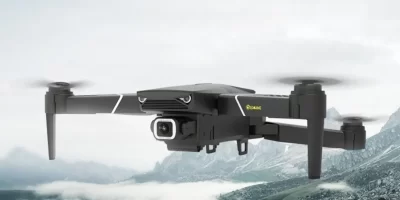
Unmanned aerial vehicles, or UAVs, are becoming essential instruments in a variety of fields, including agriculture monitoring, surveying, delivery, and photography.
The power supply is the foundation of any high-performance Drohne, 3.7 V drone battery has become the industry standard for lightweight UAVs.
Optimizing flight time, safety, and operational efficiency requires an understanding of battery management systems’ (BMS) design, benefits, and function.
What Is a 3.7 V Drone Battery?
Usually, a 3.7 V drone battery is a Lithium-Ionen or lithium-polymer (LiPo) single-cell battery.
The great energy density, lightweight design, and steady voltage delivery during flight make these batteries highly valued.
For small to medium-sized UAVs, a 3.7 V battery offers simplicity in design while yet offering enough power, unlike multi-cell batteries that can add weight and complexity.
Because of its small size, drone makers are able to create lightweight frames without compromising functionality.
Furthermore, 3.7 V batteries are frequently modular, allowing for parallel connections for longer flying times or easy replacement.
Are All Drone Batteries 3.7 Volts?
Not every drone battery has a 3.7 V rating.
Larger drones might need batteries set up in series or parallel to reach higher voltages, such 7.4 V (2S), 11.1 V (3S), or even 22.2 V for industrial drones, even though 3.7 V is a single-cell value for Li-ion or LiPo chemistry.
For lightweight drones where payload economy, flying time, and agility are crucial, the 3.7 V drone battery is especially well-suited.
Small UAVs can achieve remarkable lift and maneuverability without the load of larger battery packs thanks to its low voltage and high discharge rate.
What Specifications Should I Look for in a 3.7 V Drone Battery?
When selecting a 3.7 V drone battery, several specifications should be considered:
Kapazität (mAh): Determines the flight time. Higher capacity extends flight duration but may increase weight.
Discharge Rate (C rating): A high C rating ensures the battery can handle peak current demands during aggressive maneuvers.
Battery Management System (BMS): Protects against overcharge, over-discharge, and thermal stress, extending battery life.
Connector Type: Must be compatible with the drone’s power system for safe and reliable connections.
Form Factor: Compact design ensures optimal weight distribution and fit within the drone frame.
How Does BMS Enhance a 3.7 V Drone Battery’s Performance?
One essential part of contemporary 3.7 V drone battery is the battery management system (BMS).
To guarantee safe functioning, it keeps an eye on the temperature, charge cycles, and cell voltage.
The BMS guards against safety risks, unplanned failures, and battery deterioration by preventing over-discharge and over-charge.
Furthermore, the BMS maintains consistent performance and increases total longevity by balancing the battery cells during charging and discharging.
This results in more consistent flight schedules, less maintenance, and increased safety for lightweight UAVs on challenging missions.
How Does a 3.7 V Drone Battery Compare to 18650 and 21700 Cells?
While the 3.7 V drone battery is a single-cell solution, 18650 and 21700 cells are cylindrical lithium-ion batteries often used in multi-cell packs.
Key comparisons include:
Energy Density: 3.7 V LiPo cells often achieve higher energy density for their size.
Gewicht: LiPo cells are lighter and more flexible in shape, ideal for drone frames.
Discharge Rate: LiPo cells can deliver higher peak currents, supporting rapid acceleration and maneuvers.
Kompatibilität: 3.7 V batteries are often ready-to-use in UAV designs, reducing assembly complexity.
For lightweight drones, 3.7 V LiPo batteries typically provide superior flight efficiency and design flexibility.
How Can I Maximize Flight Time with a 3.7 V Drone Battery?
Optimizing flight performance requires careful consideration of both the battery and drone design:
Use the Correct BMS Settings: Ensure the battery’s BMS is configured to protect and balance cells efficiently.
Weight Management: Minimize additional payload to reduce current draw.
Flight Planning: Efficient flight paths and smooth maneuvers reduce energy consumption.
Regular Maintenance: Keep connectors clean and inspect the battery for swelling or damage.
Optimal Charging: Charge within recommended voltage and current limits to maintain capacity over time.
These practices help maintain the reliability and performance of the 3.7 V drone battery across repeated missions.
Why Are 3.7 V LiPo Batteries Ideal for High-Performance UAVs?
Der 3.7 V drone battery offers several advantages that make it ideal for lightweight and agile UAVs:
Hohe Energiedichte: Enables longer flights without excessive weight.
Flexibility: Can be shaped to fit unique drone designs.
High Discharge Rates: Supports rapid acceleration and precise control.
Safety with BMS: Reduces risks associated with overcharging or thermal runaway.
Cost-Effective: Provides strong performance at a reasonable price point.
These features collectively allow drone manufacturers and operators to achieve high-performance operation without compromising safety or flight endurance.
What Are the Latest Advancements in 3.7 V Drone Batteries?
Innovation in 3.7 V drone batteries continues to accelerate, driven by demand for longer flight times and safer operation:
Advanced BMS Integration: Real-time monitoring and intelligent balancing extend battery life.
Improved Chemistry: Enhanced lithium-polymer formulations offer higher energy density and thermal stability.
Smart Charging Solutions: Chargers communicate with BMS to prevent overcharging and ensure optimal health.
These advancements help UAV operators push the limits of drone endurance, payload capacity, and operational reliability.
How Should I Store and Maintain a 3.7 V Drone Battery?
Proper care is essential for long-term performance:
Avoid Overcharging or Full Discharge: Maintain battery levels between 40% and 80% for storage.
Store in a Cool, Dry Place: Excessive heat can reduce lifespan.
Inspect Connectors and Terminals: Keep clean to ensure reliable power delivery.
Use BMS Features: Always monitor cell health and charge cycles.
Periodic Full Charge: Recharge every 3–6 months to maintain capacity.
By following these guidelines, operators can maximize both safety and performance of their 3.7 V drone battery.
Why the 3.7 V Drone Battery Is Vital for Lightweight UAVs
The foundation of lightweight, high-performing UAVs is the 3.7 V drone battery.
Drones can fly for longer periods of time, be safer, and operate more efficiently thanks to their high energy density, flexible form factor, and BMS integration.
The 3.7 V battery will continue to be essential to the next wave of UAV innovation due to continuous improvements in battery chemistry, BMS technology, and smart charging solutions.
Ayaa Technology offers sophisticated 3.7 V drone batteries with integrated BMS for operators and manufacturers looking for dependable, effective, and secure power solutions.
This ensures great performance and extended battery life across a variety of UAV applications.
FAQ
Q1:How long will a 3.7 V lithium battery last?
A1:The lifespan of a 3.7V lithium-ion battery is roughly two to three years, or 300 to 1,000 cycles of charging and discharging.
Maintain the charge between 20% and 80% to extend its lifespan.
Keep it in a dry, cool place and don’t charge it excessively.
To avoid harm, store the battery at 50% charge.
Q2:Are all 3.7 V batteries the same size?
A2:No, 3.7V batteries are not all the same size.
They come in a wide range of shapes, sizes, and types (such as 18650, 21700, and 14500) to fit a variety of devices, from phones and flashlights to electric cars.
The voltage remains constant, but the capacity and dimensions vary greatly.
Q3:What battery do most drones use?
A3:An outline of the most popular drone batteries is provided below:
Lithium polymer (LiPo): LiPo batteries are popular due to their energy density and lightweight design, which makes them perfect for applications requiring both power and agility.
Q4:Are all lithium batteries 3.7 V?
A4:It isn’t always 3.7v and is determined by the chemistry.
Right here, I have a LiFeS (lithium iron sulfide) cell with a 1.5V nominal output.
Q5:How to revive a 3.7 V lithium battery?
A5:A 3.7V Li-ion battery can be revived by giving it a short, low-current “boost” charge to activate its protection circuit (BMS) and allow a standard charger to function.
This is typically accomplished by connecting the battery in parallel to a good battery for a few seconds or by using a specialized charger in NiMH mode or a bench power supply with current limiting (about 100mA) until the voltage rises above 2.5V-3V.
It is important to switch to a proper Li-ion charger right away if the battery is swollen, hot, leaking, or below 2V, as this poses a fire hazard.