The phrase “UAV drone” has come to represent creativity, automation, and sophisticated aerial intelligence in today’s quickly changing technological environment.
But even with their widespread use, many people are still unsure if drones and UAVs are the same thing.
What distinguishes a UAV drone, and how do they vary in terms of use, design, and regulation?
Are UAV and Drone the Same Thing?
Although the phrases drone and UAV (Unmanned Aerial Vehicle) are frequently used synonymously, they are not exactly the same.
A unmanned aerial vehicle (UAV) is a vehicle that can fly without a human pilot on board.
The vehicle, the ground control station, communication links, sensors, and the BMS that keeps an eye on the battery and power system are all components of the larger UAS (Unmanned Aircraft System) system.
However, the term “Drohne” is more broad and can refer to any autonomous or remotely operated equipment, whether it be underwater, on land, or in the air.
That is intended for certain purposes like surveillance, mapping, or photography.
In short:
Not all drones are UAVs, but all UAVs are drones.
An aerial unmanned device driven by advanced energy and control technology is specifically referred to as a UAV drone.
Why Are Drones Also Called UAVs?
Because of their aerospace roots, drones are frequently referred to as UAVs.
Unmanned aerial vehicles (UAVs) utilized for surveillance, target acquisition, and reconnaissance were initially referred to as UAVs in the military and aviation sectors.
The abbreviated term “drone” became more widely used when drone technology became available to the general public.
UAV is still the technical word used in aviation and regulatory papers, nevertheless.
When you hear the term “UAV drone,” you are essentially referring to a drone that is made especially for flying and has sensors, communication systems, and energy management technology.
It is frequently fueled by lithium batteries that are managed by a BMS to guarantee flight stability and durability.
Are All UAVs Considered Drones?
Although the majority of UAVs are classified as drones, not all UAVs have the same function or degree of autonomy.
Certain UAVs are completely autonomous, using GPS, AI algorithms, and real-time battery management systems to take off, navigate, and land without human assistance.
Others need to be operated remotely by a pilot or operator on the ground.
Whether a UAV drone is categorized as a drone, a remotely piloted vehicle, or an autonomous aircraft frequently depends on its degree of autonomy.
For instance:
A UAV drone is a commercial quadcopter drone used for photography.
Although it is a drone, a military surveillance UAV with autonomous flight capabilities is designed for durability and accuracy.
To maximize power distribution and avoid mid-air failures brought on by power imbalance or overheating, both mostly rely on BMS technology.
What Are the Key Features of a UAV Drone?
A UAV drone is unique due to a number of characteristics that make it effective and adaptable for a range of uses.
1. Unmanned Operation
UAV drones don’t have a human pilot on board.
AI and pre-programmed flight paths allow for either remote or automatic control.
2. Aerodynamic Flight
UAV drones can fly steadily in a variety of air conditions by using revolving blades or fixed wings for lift.
To optimize energy use, their structure places a high priority on low weight and effective aerodynamics.
3. Versatility Across Environments
Because of its adaptable propulsion systems and weather-resistant parts, UAV drones can be used in a variety of settings, from distant mountains or oceans to urban areas.
4. Purpose-Driven Design
Every UAV drone has a distinct function, such as delivery, mapping, surveillance, or rescue missions.
Their parts, such as the BMS and battery system, are tuned appropriately.
5. Controlled Operations
The BMS collaborates with flight control systems, such as gyroscopes and sensors, to provide safe returns in low-battery situations, stable propulsion, and balanced power consumption.
Because of these characteristics, UAV drones are indispensable in a variety of fields, including agriculture, logistics, defense, and filmmaking.
What Is the Difference Between UAV and Drone?
Despite their similarities, UAVs and drones differ significantly in terms of terminology, applications, and technological sophistication.
Kategorie
UAV (Unmanned Aerial Vehicle)
Drone
Definition
A specific type of aircraft without an onboard pilot
A general term for remotely operated or autonomous devices
Scope
Airborne systems only
Includes air, land, and water-based devices
Usage
Technical and military contexts
Civilian and hobbyist contexts
Autonomy
Often autonomous with advanced sensors and BMS
May be manual or automated
Energy Source
Powered by advanced battery systems (often with BMS)
May use simple power systems
To put it briefly, a UAV drone bridges the gap between professional aviation and consumer technology by combining the high-level technical design of a UAV with the user-friendly operation of a drone.
How Do UAV and Drone Regulations Differ?
Depending on the region, weight, and purpose of the drone, different regulations apply.
Civilian UAV Drones: usually governed by aviation authorities such as the JCAB in Japan, the EASA in Europe, and the FAA (Federal Aviation Administration) in the United States.
Operators frequently require certification, registration, and compliance with flight regulations.
Commercial UAVs: Must adhere to extra safety and data security regulations, particularly whether utilized for delivery, mapping, or inspection.
Military UAVs: Because of their strategic significance, they must operate under distinct international rules and defense procedures.
Another regulatory issue is energy management.
Lithium-ion battery-powered UAVs need to have approved BMS systems to avoid thermal overload, voltage imbalance, and fire risks.
What Are the Four Main Types of UAV Drones?
UAV drones are available in a variety of configurations, each tailored to certain applications:
Offer excellent control, stability, and vertical takeoff/landing.
Equipped with BMS-regulated battery packs to manage high current loads.
Fixed-Wing Drones:
Resemble airplanes with a single wing structure.
Efficient for long-distance missions like mapping or agricultural monitoring.
Depend on BMS to optimize energy efficiency for extended flight time.
Single-Rotor Drones:
Similar to helicopters, with one large rotor and a tail rotor.
Offer higher payload capacity and longer endurance.
Require advanced BMS to stabilize high-power lithium battery output.
Hybrid VTOL (Vertical Take-Off and Landing) Drones:
Combine the best of fixed-wing and multirotor designs.
Can hover like a helicopter and cruise like a plane.
Depend on smart battery management systems to transition between flight modes efficiently.
The BMS, which controls energy flow, keeps an eye on cell temperature, and guarantees safe landing in the event of battery anomalies, is crucial to the operation of every type of drone.
What Are the Three Main Categories of UAV Drones by Flight Altitude?
UAV drones can be divided into three main groups based on their endurance and altitude:
Micro and Small UAVs:
Operate below 2,000 feet.
Common in photography, inspection, and hobby use.
Utilize compact BMS-integrated batteries for lightweight operation.
Medium-Altitude, Long-Endurance (MALE) UAVs:
Operate between 10,000–30,000 feet.
Used for border surveillance, environmental monitoring, and cargo transport.
Require large-capacity BMS-controlled lithium battery systems to sustain long missions.
High-Altitude, Long-Endurance (HALE) UAVs:
Operate above 50,000 feet for extended surveillance or communications.
Utilize hybrid or solar-powered systems, often featuring redundant BMS units for safety.
These categories demonstrate how UAV drone performance, endurance, and safety compliance are directly impacted by power management systems and battery innovation.
The Crucial Role of BMS in UAV Drones
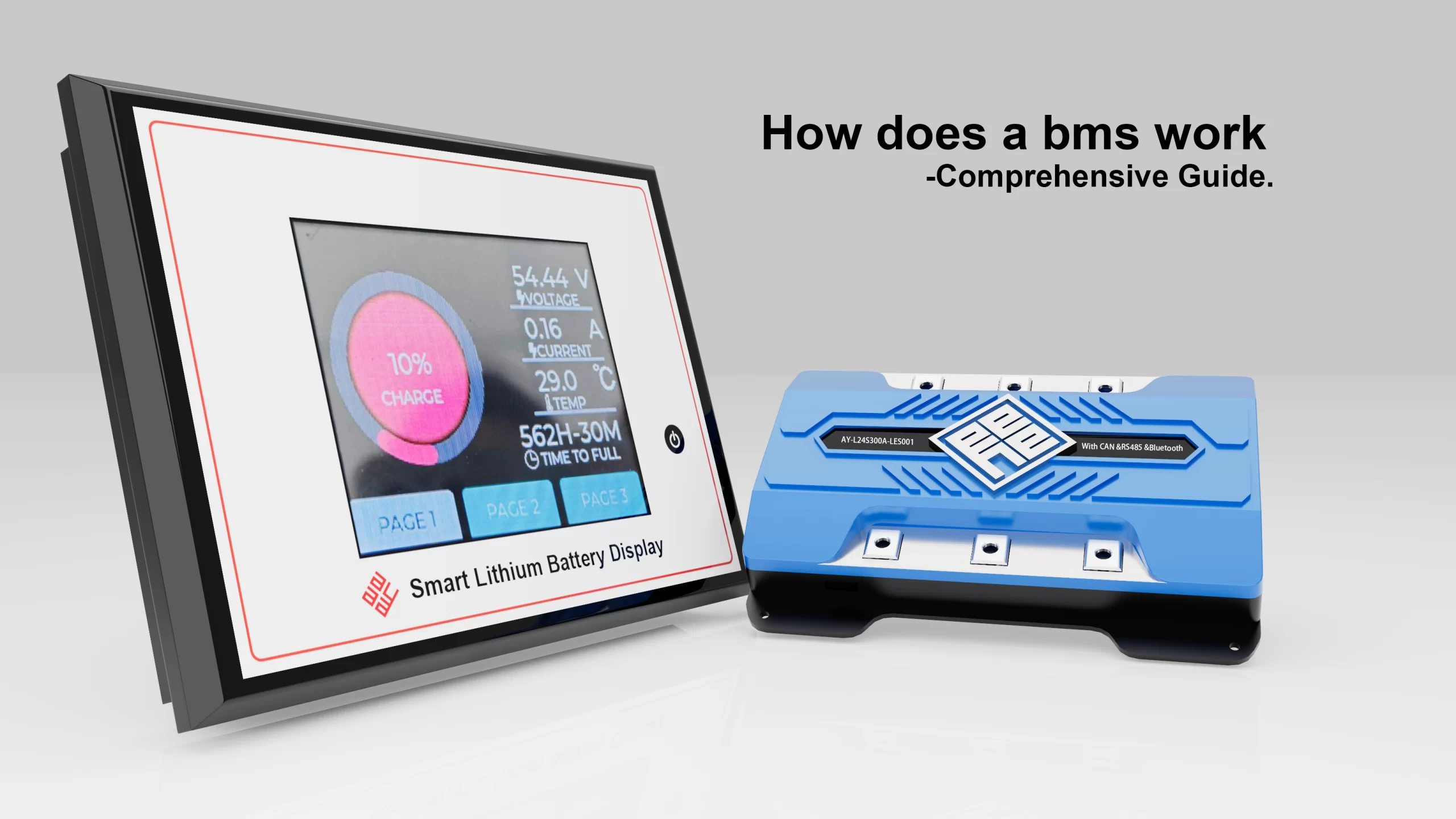
The Battery Management System (BMS), the unseen custodian of drone energy, must be mentioned in any discussion of UAV drones.
A BMS performs the following essential functions:
Monitors Voltage and Temperature: Prevents overcharging, over-discharging, and overheating.
Balances Cells: Ensures even energy distribution across all battery cells.
Protects Against Failure: Detects faults and shuts down unsafe operations.
Extends Battery Life: By managing charge cycles efficiently.
Supports Data Logging: Provides real-time data to operators for predictive maintenance.
UAV drones carry the risk of short flight times, thermal runaway, or abrupt power outages in the absence of a well-designed BMS, all of which could result in crashes.
Therefore, the BMS is essential to the dependability, effectiveness, and safety of UAV drones.
Empowering the Future of UAV Drone Technology
By combining superior power management, sophisticated sensors, and autonomous flight, the UAV drone has transformed industries.
Longer, safer, and more productive flights have been made possible by the integration of high-efficiency lithium batteries with sophisticated BMS systems, from aerial photography to agricultural mapping, from emergency response to defense.
The Battery Management System will continue to be at the center of every advancement in drone technology, enabling UAVs to achieve unprecedented levels of intelligence and endurance.
Ayaa Technology offers state-of-the-art designs for modern UAV drone BMS systems that are developed for safety, accuracy, and long-term dependability in aerial applications globally.
FAQ
Q1:What is an UAV drone?
A1:A UAV drone is a motorized aircraft that may be controlled remotely or fly on its own without the need for a human pilot.
The terms “drone” and “UAV” (Unmanned Aerial Vehicle) are frequently used interchangeably, while “drone” might refer to smaller, hobby-grade machines while “UAV” is sometimes used to designate more complex systems.
Military operations, agricultural, mapping, delivery, and search and rescue are just a few of the many uses for these vehicles.
Q2:What is the difference between a drone and a UAV?
A2:Although the phrases “drone” and “UAV” (Unmanned Aerial Vehicle) are sometimes used synonymously, “UAV” refers particularly to an aircraft that flies, whilst “drone” is a more general term that can refer to any unmanned vehicle.
While UAVs are more prevalent in the military, engineering, and regulatory domains, “drone” is more frequently used by the general public and media.
Q3:How far can an UAV drone fly?
A3:Under perfect circumstances, the majority of consumer drones can fly 4–7 miles (6.4–11.3 km) from the controller.
While enterprise drones can go over 9 miles (14.5 km) using sophisticated signal systems like OcuSync or LTE, toy drones can only travel a few hundred feet.
Q4:Can an UAV fly without GPS?
A4:Unmanned aerial vehicles (UAVs) can fly in coordinated swarms without using GPS, inter-drone communication, or centralized control systems thanks to a new control scheme created by Professor Dwaipayan Mukherjee and research scholar Chinmay Garanayak at the Indian Institute of Technology (IIT) Bombay.
Q5:What are the 4 types of drones?
A5:Single-rotor, multi-rotor, fixed-wing, and hybrid VTOL drones are the four main categories of drones.
From large-scale land surveys and industrial inspections to precise mapping and monitoring, each type fulfills distinct operational requirements.