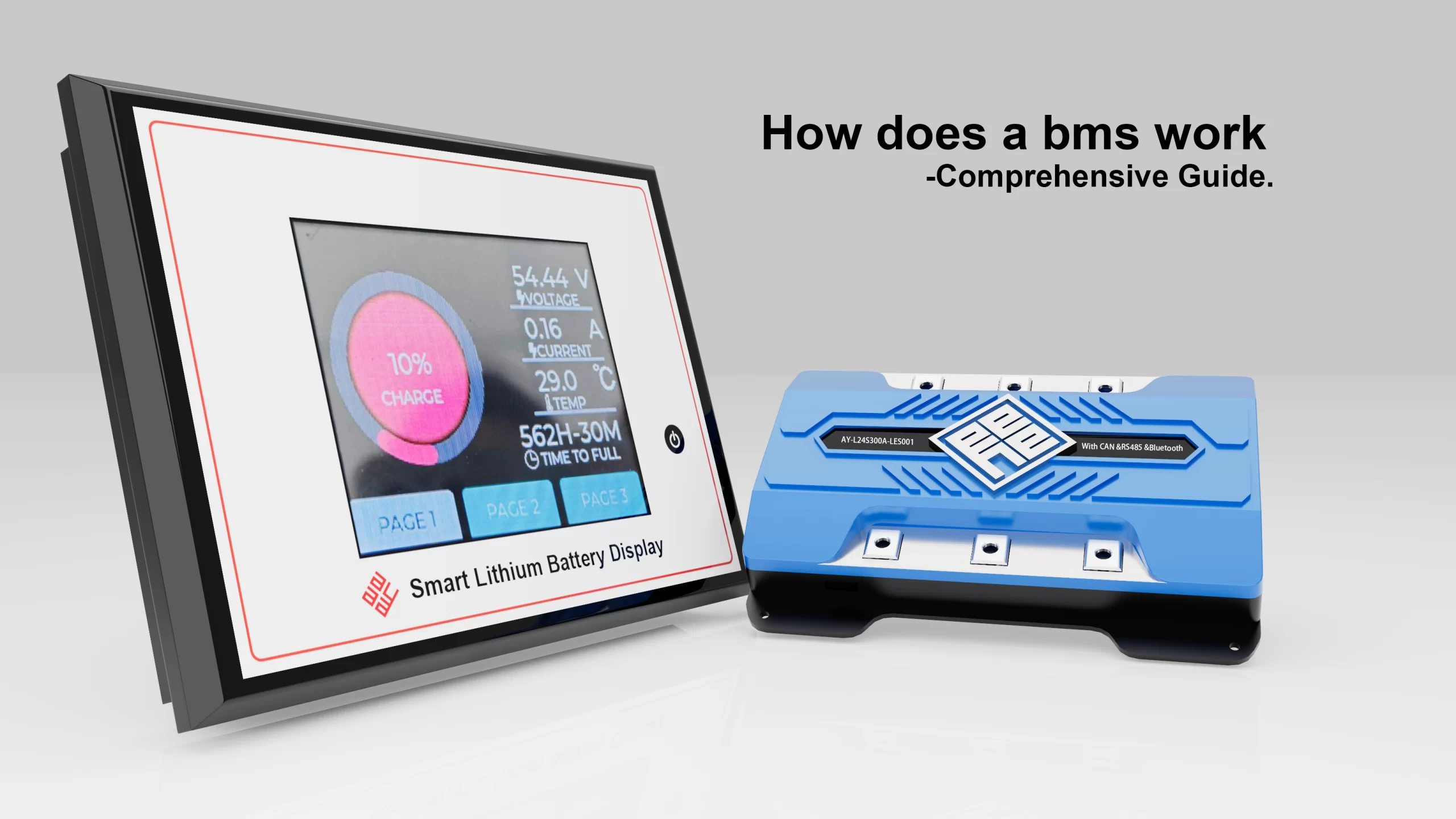
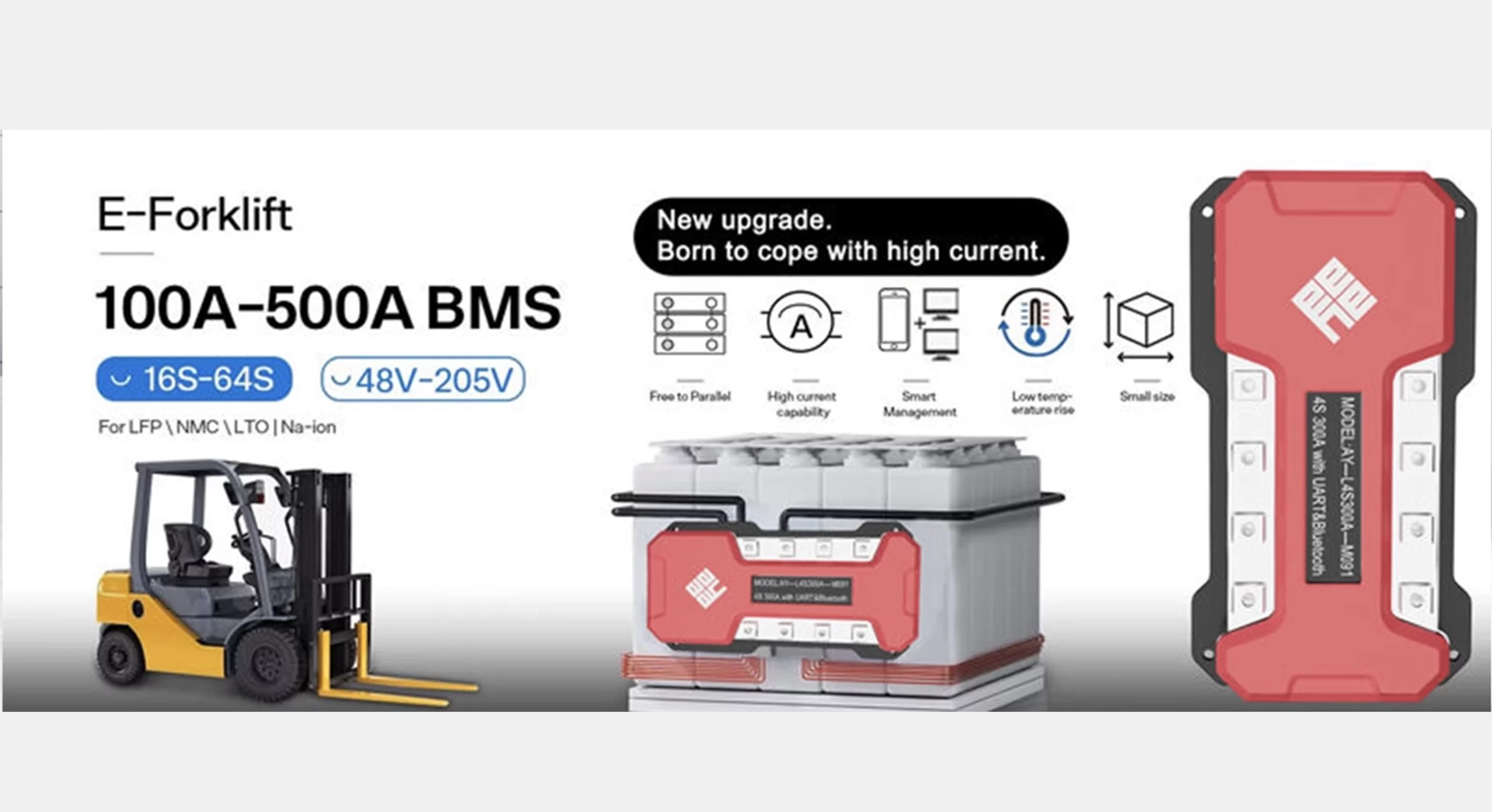
Smart Active Balancer BMS delivers stable voltage for lithium battery systems
187
Smart Active Balancer BMS delivers stable voltage for lithium battery systems
Modern industries have been completely changed by lithium battery technology, which powers everything from solar energy storage systems and electric cars to robotics, drones, marine equipment, and industrial backup power solutions. Battery stability and safety are now more crucial than ever due to the growing demand for high-performance lithium battery packs. TheSmart Active Balancer BMSis one of the main technologies in charge of preserving battery dependability.
A Smart Active Balancer BMS delivers stable voltage for lithium battery systems by intelligently monitoring battery conditions, balancing cell voltage, and protecting the battery pack from harmful operating conditions. Compared with traditional battery management systems, active balancing technology provides higher efficiency, better energy utilization, and significantly improved battery lifespan.
What is a Smart Active Balancer BMS?
A Smart Active Balancer BMS is an advanced battery management system designed specifically for lithium battery packs. Its primary purpose is to monitor battery health, maintain voltage consistency, and protect the battery from electrical and thermal risks.
Unlike traditional passive balancing systems, active balancing technology transfers energy between cells rather than wasting excess energy as heat. This intelligent energy redistribution helps improve battery efficiency and maintain stable voltage levels during charging and discharging.
A Smart Active Balancer BMS delivers stable voltage for lithium battery systems by continuously analyzing cell performance and automatically correcting voltage imbalance before it becomes a problem.
Why voltage balance is critical in lithium battery systems
Lithium battery packs consist of multiple cells connected in series and parallel configurations. Even when cells are manufactured together, slight differences in capacity, resistance, and aging characteristics naturally occur over time.
Without proper balancing, these differences can lead to:
Uneven charging and discharging Reduced battery capacity Excessive heat generation Shortened cycle life Safety risks such as overvoltage or thermal runaway Reduced overall system efficiency
When one cell becomes weaker than the others, it can negatively affect the entire battery pack. Maintaining stable voltage across all cells is therefore essential for maximizing battery performance and reliability.
A Smart Active Balancer BMS delivers stable voltage for lithium battery systems by ensuring every cell operates within safe voltage ranges at all times.
How active balancing technology works
Active balancing differs significantly from passive balancing methods.
Passive balancing
Passive balancing removes excess energy from higher-voltage cells by converting it into heat through resistors. Although simple and inexpensive, this method wastes energy and becomes less efficient in large battery packs.
Active balancing
Active balancing transfers energy directly from stronger cells to weaker cells. Instead of wasting energy, the system redistributes it within the battery pack.
This process offers several advantages:
Höhere Energieeffizienz Faster balancing speed Reduced heat generation Improved battery lifespan Better performance in large-capacity battery systems
Because of these benefits, active balancing technology is increasingly used in advanced lithium battery applications.
Main functions of a Smart Active Balancer BMS
A high-quality Smart Active Balancer BMS performs many important functions beyond simple balancing.
Real-time voltage monitoring
The system continuously monitors the voltage of every battery cell. If any cell exceeds safe operating limits, the BMS immediately takes corrective action.
Current management
The BMS controls charging and discharging currents to prevent overload conditions that could damage the battery.
Temperature protection
Thermal sensors monitor battery temperature in real time. If overheating occurs, the system reduces current or disconnects the battery to prevent damage.
State of charge estimation
The BMS calculates the remaining battery capacity and provides accurate SOC data for users and connected devices.
Communication functions
Modern systems support communication protocols such as CAN, UART, RS485, and Bluetooth for intelligent system integration and remote monitoring.
These functions allow the Smart Active Balancer BMS to maintain stable and reliable battery operation in demanding applications.
How Smart Active Balancer BMS improves battery lifespan
Battery lifespan is one of the most important factors affecting the total cost of lithium battery systems.
A Smart Active Balancer BMS delivers stable voltage for lithium battery systems and significantly extends cycle life through intelligent management.
Preventing overcharge and over-discharge
Extreme charging conditions are one of the main causes of lithium battery degradation. The BMS ensures all cells remain within safe voltage limits.
Reducing thermal stress
Balanced cells generate less heat during operation, reducing long-term chemical degradation.
Maintaining uniform aging
Active balancing ensures all cells age at similar rates, preventing weak cells from limiting overall battery performance.
Improving charging efficiency
Balanced voltage allows the battery pack to charge more effectively and consistently.
As a result, lithium batteries managed by a Smart Active Balancer BMS often achieve substantially longer service life compared with unmanaged systems.
Applications of Smart Active Balancer BMS
A Smart Active Balancer BMS delivers stable voltage for lithium battery systems used in many industries and applications.
Electric vehicles
Electric cars, motorcycles, and electric bicycles require precise battery balancing for safe and efficient operation.
Solarenergiespeichersysteme
Home and commercial energy storage systems depend on stable voltage to maximize energy utilization and storage reliability.
UAV and drone batteries
High-performance drones require stable voltage output for reliable flight control, longer endurance, and safe operation.
Marine battery systems
Boats and marine equipment operate in demanding environments where battery safety and reliability are essential.
Industrial backup power
Data centers and industrial UPS systems require consistent battery performance for emergency power applications.
RV and portable power stations
Portable energy systems benefit from efficient balancing and longer battery lifespan.
In all these applications, stable voltage directly impacts system performance and operational safety.
Advantages of Smart Active Balancer BMS over traditional systems
Compared with conventional battery management systems, Smart Active Balancer BMS solutions provide several important advantages.
Höhere Energieeffizienz
Because energy is redistributed rather than wasted, active balancing improves overall battery efficiency.
Faster balancing speed
The system corrects voltage differences more quickly, especially in large battery packs.
Better thermal performance
Reduced heat generation improves system safety and reliability.
Improved scalability
Active balancing works well with high-capacity and high-voltage battery systems.
Enhanced battery lifespan
Uniform cell balancing reduces long-term degradation and extends usable battery life.
These benefits make Smart Active Balancer BMS technology increasingly popular in advanced lithium battery applications.
Key factors when choosing a Smart Active Balancer BMS
Selecting the right BMS is critical for achieving optimal battery performance.
Voltage compatibility
Ensure the system supports the battery pack voltage configuration.
Current capability
Choose a BMS capable of handling peak charging and discharging currents.
Balancing current
Higher balancing current improves balancing speed and efficiency.
Kommunikationsprotokolle
CAN, UART, or Bluetooth support allows easier integration with external systems.
Protection accuracy
High-precision monitoring improves both safety and efficiency.
Environmental durability
Industrial and outdoor applications may require waterproof or vibration-resistant designs.
A properly selected Smart Active Balancer BMS can dramatically improve battery reliability and operational performance.
Future trends in Smart Active Balancer BMS technology
As lithium battery technology evolves, Smart Active Balancer BMS systems are becoming more intelligent and connected.
Future developments may include:
AI-based battery health prediction Cloud-based remote battery monitoring Faster balancing algorithms Wireless BMS communication systems Integration with renewable energy management platforms Advanced thermal management technologies
These innovations will further improve battery safety, efficiency, and energy optimization.
Why industries are adopting Smart Active Balancer BMS solutions
Industries are rapidly shifting toward electrification and renewable energy systems. This transition requires safer and more efficient battery technologies.
A Smart Active Balancer BMS delivers stable voltage for lithium battery systems while reducing maintenance costs, improving operational reliability, and maximizing energy efficiency.
For manufacturers and system integrators, adopting advanced BMS technology offers competitive advantages such as:
Lower warranty failure rates Improved product reliability Better customer satisfaction Enhanced energy efficiency Longer battery service intervals
These advantages make Smart Active Balancer BMS systems a critical technology for modern lithium battery applications.
FAQ
Q1: What is smart active balance BMS?
A1: A smart active balance BMS is an advanced battery management system that transfers energy between lithium battery cells to maintain voltage balance, improve efficiency, extend battery lifespan, reduce heat generation, enhance charging performance, and provide protection against overcharge, overheating, and electrical faults.
Q2: Do lithium batteries need a balancer?
A2:Yes, lithium batteries need a balancer to maintain equal voltage between cells, improve charging efficiency, prevent overcharge or over-discharge, reduce heat buildup, extend battery lifespan, and ensure safe, stable performance in electric vehicles, drones, energy storage, and industrial power applications.
Q3: How to connect active balancer to lithium battery?
A3: Connect the active balancer to each lithium battery cell according to the wiring diagram, ensuring correct polarity and voltage sequence. Secure all balance wires firmly, verify connections before powering on, and use compatible battery configurations to ensure safe, efficient balancing performance operation.
Q4: What is the balancing voltage of LIFEPO4 BMS?
A4: The balancing voltage of a LiFePO4 BMS typically ranges from 3.4V to 3.6V per cell, depending on the battery management system design. Balancing begins when voltage differences appear between cells, helping maintain stability, safety, charging efficiency, and longer battery lifespan performance.
Schlussfolgerung
As lithium battery systems continue to power electric vehicles, drones, energy storage systems, marine equipment, and industrial applications, maintaining stable voltage and battery safety has become essential. A Smart Active Balancer BMS delivers stable voltage for lithium battery systems by combining intelligent active balancing, real-time monitoring, advanced protection functions, and efficient energy management.
Compared with traditional balancing methods, active balancing technology provides higher efficiency, reduced heat generation, improved battery lifespan, and more reliable performance. Whether used in renewable energy systems, UAV applications, or industrial power solutions, a Smart Active Balancer BMS plays a vital role in ensuring safe, efficient, and long-lasting battery operation.
As industries continue moving toward smarter and more sustainable energy solutions, the importance of advanced battery management systems will only continue to grow.
For more detailed information, please check more related articles.
ZERTIFIZIERTER OEM/ODM-HERSTELLER
Die Leistung, die Sie wollen, Die Integrität, die Sie brauchen.
Kundenspezifisches Lithium-Batterie-BMS
Hochleistungsfähige intelligente BMS-Lösungen für Energiespeicherung, Elektrofahrzeuge, Robotik und Drohnen.
✔ Hohe Effizienz und aktives Balancing
✔ Intelligente Überwachung & Schutz
✔ Globale Zertifizierungen
✔ Anpassbar für jede Anwendung
1500+
Kunden
30K+
Einheiten/Monat
20+
Jahre Erfahrung.
Holen Sie sich Ihre maßgeschneiderte BMS-Lösung
⚡ Ingenieure antworten innerhalb von 12 Stunden
✔ Kostenlose BMS-Designberatung
✔ Schnelle Antwort und wettbewerbsfähige Preise