LiFePO4 BMS Selection Guide: Matching Your Pack’s Voltage, C-Rating, and Current
4262
LiFePO4 BMS Selection Guide: Matching Your Pack’s Voltage, C-Rating, and Current
Lithium iron phosphate (LiFePO4) batteries have become one of the most reliable and commonly used energy storage technologies, praised for their safety, extended cycle life, and stability. To provide the best possible performance and protection, even the most resilient battery chemistry needs to be carefully managed. The LiFePO4 BMS (Battery Management System) is essential in this situation. An essential component of every battery pack, a BMS is in charge of monitoring, balancing, and protecting cells from temperature and electrical hazards.
In this post, we’ll investigate how to select the correct LiFePO4 BMS by evaluating critical criteria such as pack voltage, current ratings, and C-rating. By the conclusion, you will understand how to match your battery pack with the proper BMS to enhance safety, efficiency, and lifespan.
Understanding the Role of a LiFePO4 BMS
A LiFePO4 BMS works as the brain of the battery pack. Its main responsibilities include:
Voltage management: Preventing overcharge and over-discharge conditions.
Aktueller Schutz: Monitoring charging and discharging currents to avoid overcurrent or short-circuits.
Thermal regulation: Protecting cells from overheating by monitoring temperature sensors.
Zellbalance: Ensuring all cells in the pack maintain uniform voltage, which extends the overall cycle life.
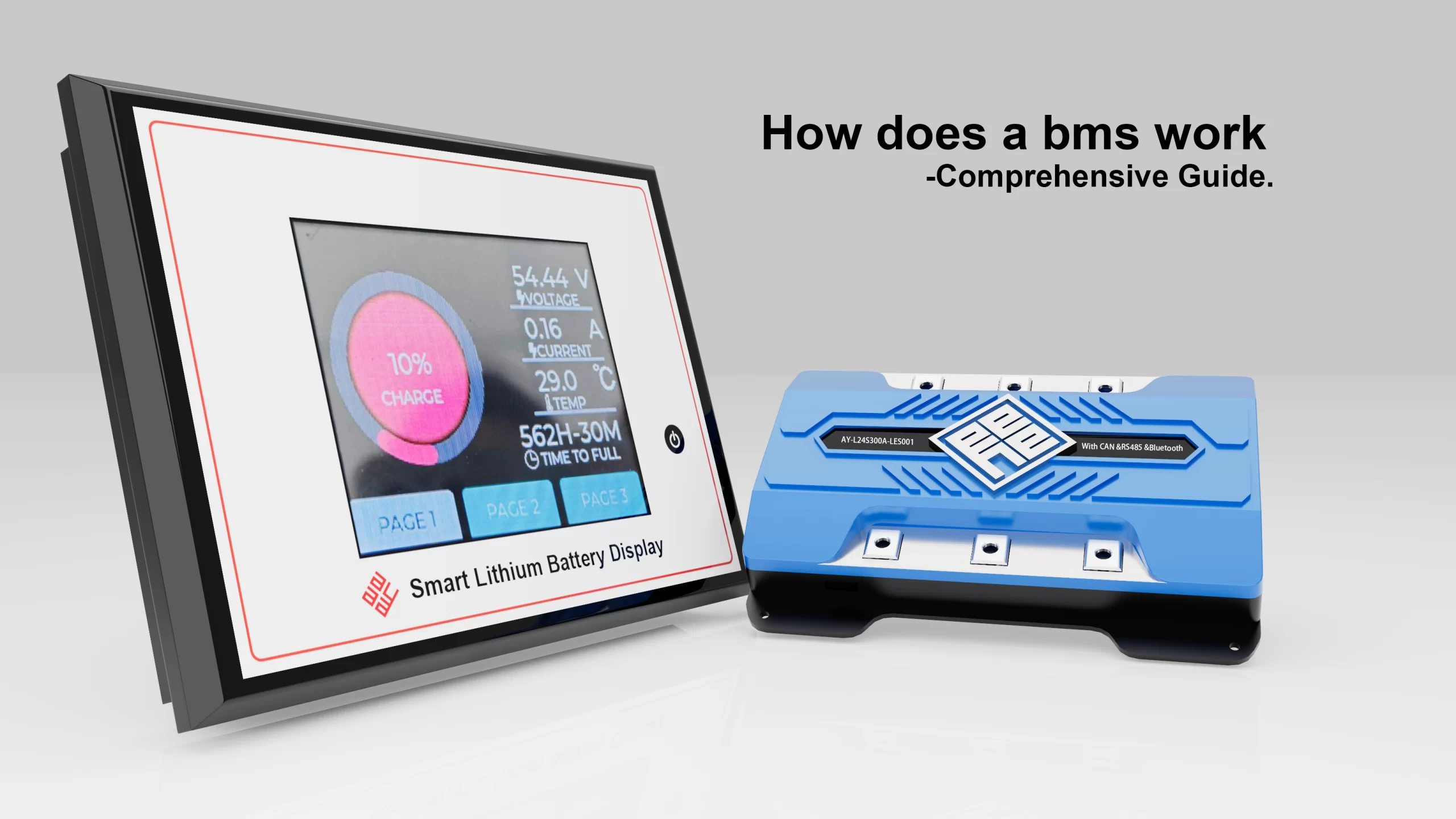
Diagnostics and communication: In smart BMS systems, real-time data can be transmitted via CAN-Bus, UART, or Bluetooth for better system integration.
Without a BMS, LiFePO4 cells risk becoming imbalanced, overheated, or irreversibly destroyed. Worse, in high-current applications, the absence of protection could create dangerous thermal runaway events.
Why Choosing the Right LiFePO4 BMS Matters
The choice of BMS directly effects your battery system’s safety, dependability, and efficiency. A misaligned or undersized BMS can:
Limit performance if current ratings are too low.
Cause overheating if power demand exceeds protection thresholds.
Shorten battery life if balancing functions are inadequate.
Invalidate warranties or certifications if safety measures are insufficient.
Therefore, selecting the correct LiFePO4 BMS isn’t optional—it’s vital.
Step 1: Matching Your Pack’s Voltage
Every BMS is intended to handle a specified number of cells in series (S). For LiFePO4 batteries, each cell has a nominal voltage of 3.2V and a fully charged voltage of 3.65V.
When picking a LiFePO4 BMS, the number of series cells (S) must perfectly match your pack’s arrangement. For example, a 48V (16S) LiFePO4 battery requires a 16S BMS. Using a mismatched BMS will result in inaccurate monitoring and dangerous operation.
Step 2: Matching Current Ratings
The LiFePO4 BMS’s current capacity is the next important consideration. Current requirements vary depending on whether the application demands continuous current (steady operation) or peak current (short bursts, such as motor acceleration).
Continuous current rating → The maximum amperage the BMS can safely handle under normal use.
Peak/Surge current rating → The maximum amperage tolerated for short durations (e.g., a few seconds).
Zum Beispiel:
Solarenergiespeichersysteme may require a 100A BMS.
Electric scooters or bikes might need 50–80A continuous with 120A peak.
Electric vehicles (Elektrofahrzeuge) or industrial applications could demand 200A–300A or higher.
Undersizing your BMS will cause overheating and protection cutoffs, while oversizing adds extra expenditure. Always match the maximum draw of your application with your LiFePO4 BMS current rating.
Step 3: Considering the C-Rating
How quickly a battery may be charged or drained in relation to its capacity is determined by its C-rating. For example:
A 100Ah LiFePO4 battery with a 1C rating can safely discharge at 100A.
At 0.5C, it can discharge at 50A.
At 2C, it can discharge at 200A.
Make sure a LiFePO4 BMS can manage the highest current demand depending on the battery’s C-rating before choosing one. Your battery will perform poorly and experience premature cutoffs if it is rated at 1C but your BMS only allows 0.5C discharge.
Additional Considerations for Choosing a LiFePO4 BMS
Beyond voltage, current, and C-rating, a LiFePO4 BMS’s performance is influenced by a number of additional factors:
Temperature Sensors and Thermal Protection
Essential for applications exposed to harsh environments.
Prevents charging at low temperatures (below 0°C) and overheating during heavy loads.
Balancing Method
Passive balancing: Simple, cost-effective, dissipates excess energy as heat.
Active balancing: More advanced, redistributes energy between cells, extending battery life.
Kommunikationsprotokolle
Smart BMS options with CANBUS, UART, or Bluetooth allow integration with external systems, data monitoring, and remote troubleshooting.
Scalability
For large battery systems (like energy storage), a modular BMS design can be expanded for multiple packs in parallel or series.
What Happens If You Skip a LiFePO4 BMS?
Some do-it-yourself builders wonder if a BMS is required, particularly for tiny packs. The risks include:
Überhöhte Preise → Leads to cell swelling, thermal stress, and eventual failure.
Überentladung → Irreversible damage and reduced cycle life.
Unbalanced cells → Causes one cell to degrade faster, limiting pack performance.
Overcurrent/short-circuit hazards → Could result in overheating, fire, or system shutdown.
By serving as the battery pack’s continual protector, a LiFePO4 BMS removes these dangers.
Practical Example: Matching a 48V LiFePO4 Battery with the Right BMS
Suppose you’re constructing a 48V 100Ah LiFePO4 pack:
Stromspannung → 16S configuration → must use a 16S BMS.
Application → Solar inverter with peak load surges → recommend 150A continuous, 200A peak BMS.
Thermal safety → Include a BMS with at least two temperature sensors.
When these parameters are met, the system functions effectively and securely in any situation.
FAQ
Q:Do you need a BMS for LiFePO4?
A: Damit LiFePO4-Batterien funktionieren, Leistung erbringen und lange halten, ist ein Batteriemanagementsystem (BMS) eine entscheidende Sicherheitsfunktion, die nicht ignoriert werden kann.
F: Welches ist das beste BMS für LiFePO4?
A:AYAA Smart BMS.
Q:What is BMS in LiFePO4?
A:Lithium iron phosphate battery packs are managed by specialized electrical devices called LifePO4 battery management systems. It keeps an eye on the temperature, voltage, and general condition of each individual cell in the pack.
F: Was ist die beste BMS-Einstellung für LiFePO4?
A:The ideal voltage range is between 14.0 and 14.4 volts because LiFEPO4 cells dislike voltages higher than 4 and most BMS would shut down above 14.6 volts. It would take at least ten hours at constant voltage and 10 amps.
Q:Can I charge LiFePO4 without BMS?
A:A lifepo4 battery’s battery management system (BMS) is a crucial part. It gives the cells sophisticated protection and management, guaranteeing their safe operation and extending their longevity.
Q:Which is better, AGM or LiFePO4?
A:For many uses, the Lifepo4 battery is a better choice. Despite being more costly, it is ultimately a more economical choice because of its greater energy density, longer cycle life, deeper discharge depth, lower weight, smaller size, improved safety, and longer cycle life.
F: Kann ich LiFePO4 mit einem BMS laden?
A: Ein LiFePO4-Akku kann zwar während des Gebrauchs geladen werden, jedoch ist ein Batteriemanagementsystem (BMS) erforderlich, um die Spannung und den Stromfluss entsprechend zu regeln. Um Überladung oder Tiefentladung zu vermeiden, sorgt das BMS für einen ausgeglichenen Lade- und Entladevorgang.
Q:How to size BMS for LiFePO4 cells?
A:By dividing the nominal voltage required for your project by 3.25, the nominal voltage of LiFePO4 chemistry, and rounding to the closest whole number, you may determine the BMS (Battery Management System) for Lithium Iron Phosphate (LiFePO4 or LFP) batteries.
Schlussfolgerung
A LiFePO4 BMS is the core control unit that guarantees your battery system operates at peak efficiency, safety, and longevity. It is more than just a protective device. The selecting procedure should always take into:
Voltage compatibility → Match the series cell count.
Current ratings → Ensure both continuous and peak currents meet application needs.
C-rating alignment → Prevents premature cutoffs and protects against over-discharge.
Additional functions → Such as balancing method, temperature monitoring, and communication features.
You can select the best LiFePO4 BMS for your project, whether it’s for industrial applications, electric mobility, or renewable energy storage, by carefully weighing these aspects.
Solutions such as the AYAA SMART BMS offer sophisticated features like CANBUS/SMBUS communication, active or passive balancing, high-current handling up to 320A, and Bluetooth connectivity for mobile diagnostics for applications that require intelligent control and real-time monitoring. These features facilitate system performance optimization, long-term dependability, and BMS adaptation for a variety of use cases, including solar storage, electric cars, and industrial robots.
Ultimately, by prolonging the life of your LiFePO4 battery system, purchasing the appropriate BMS not only improves safety but also lowers long-term expenses.