Forklift Battery Comparison: Lead-Acid vs. Lithium-Ion Technologies Explained
2086
Forklift Battery Comparison: Lead-Acid vs. Lithium-Ion Technologies Explained
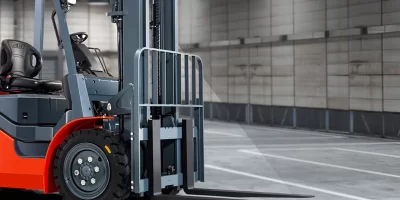
A forklift battery is the foundation of productivity in contemporary industrial and warehousing operations.
Selecting the appropriate battery technology has an impact on safety, maintenance needs, long-term costs, and operational efficiency.
Lithium-ion and lead-acid batteries are currently the two main forklift battery technologies.
This article examines their distinctions, benefits, and the ways in which intelligent battery management systems (بي إم إس) improve longevity and performance.
What Is a Forklift Battery and Why Does It Matter?
Electric forklifts are powered by electrical energy from a forklift battery.
In contrast to internal combustion engines, electric forklifts move, lift, and transport items solely using battery power. A trustworthy forklift battery guarantees:
Consistent energy for uninterrupted operation
Long working hours without downtime
Reduced operational costs over the battery’s life
All of these issues are impacted by the choices between lead-acid and lithium-ion, so making an informed choice is essential.
What Are the Differences Between Lead-Acid and Lithium-Ion Forklift Batteries?
Lead-Acid Batteries:
Mature technology, widely used in industrial settings
Lower upfront cost
Heavier and bulkier, adding weight to the forklift
Requires regular maintenance, including water refills and equalization
Moderate energy density and shorter cycle life
Lithium-Ion Batteries:
Advanced, modern battery technology
Higher upfront cost but longer lifespan
Lightweight, offering better forklift handling
Maintenance-free due to integrated بي إم إس
Higher energy density, faster charging, and opportunity for partial charges
How Long Do Forklift Batteries Last?
An important consideration in operational planning is battery lifespan:
Lead-Acid Forklift Batteries: last 1,500–2,000 cycles on average in ideal circumstances.
Proper maintenance, such as electrolyte management and regular equalization, is important to reach these numbers.
Lithium-Ion Forklift Batteries: can withstand 3,000–5,000 cycles because of integrated BMS systems that guard against thermal stress, overcharging, and overdischarging.
Over time, this longer lifespan dramatically lowers replacement costs.
How Can You Maintain Forklift Battery Capacity?
Maintaining battery capacity is crucial to operational efficiency.
Lithium and lead-acid technologies use different methodologies:
Lead-Acid Forklift Battery Maintenance:
Equalization/Cell Balancing: Regularly equalize cells to prevent voltage imbalances.
Temperature Control: Avoid overheating; excessive heat shortens battery life.
Liquid Level Management: Maintain proper electrolyte levels to prevent sulfation and capacity loss.
High-Temperature Tolerance: Resists thermal degradation without manual intervention.
No Liquid Management: Sealed units eliminate the need for water level monitoring.
How Does a Forklift Battery Affect Run Time?
The type of battery has a direct effect on how long a forklift can run before needing to be recharged:
Lead-Acid Battery: Average run time is approximately 5.4 hours per full charge.
Lithium-Ion Battery: Provides longer run time, around 7.2 hours, enabling more extended operational periods and fewer interruptions for charging.
What Are the Charging Differences Between Lead-Acid and Lithium-Ion Forklift Batteries?
Charging procedures have a big impact on battery life and productivity. Here is a thorough comparison:
Feature
Lead-Acid Battery
Lithium-Ion Battery
Charge Time
8–10 hours full charge
2–4 hours full charge
Cooling Period
Required between charges
Not required
Charging Method
Slow, deep cycles recommended
Opportunity charging supported
Safe Discharge
Moderate
High, controlled by BMS
Partial Charging
Limited
Fully supported, no damage
An important benefit in hectic operations is that lithium-ion batteries enable opportunity charging, which enables forklifts to be charged during brief breaks without compromising battery health.
How Do Cost, Efficiency, and Operations Compare?
Although lead-acid batteries are less expensive initially, lithium-ion batteries end up being more economical over time because:
Reduced maintenance and labor costs
Longer lifespan, reducing replacements
Higher energy efficiency, reducing electricity costs
Less forklift downtime, increasing operational productivity
Despite their higher initial costs, lithium-ion forklift battery frequently offer a quicker return on investment when considering total cost of ownership and operational efficiency.
What Role Does a BMS Play in Lithium Forklift Batteries?
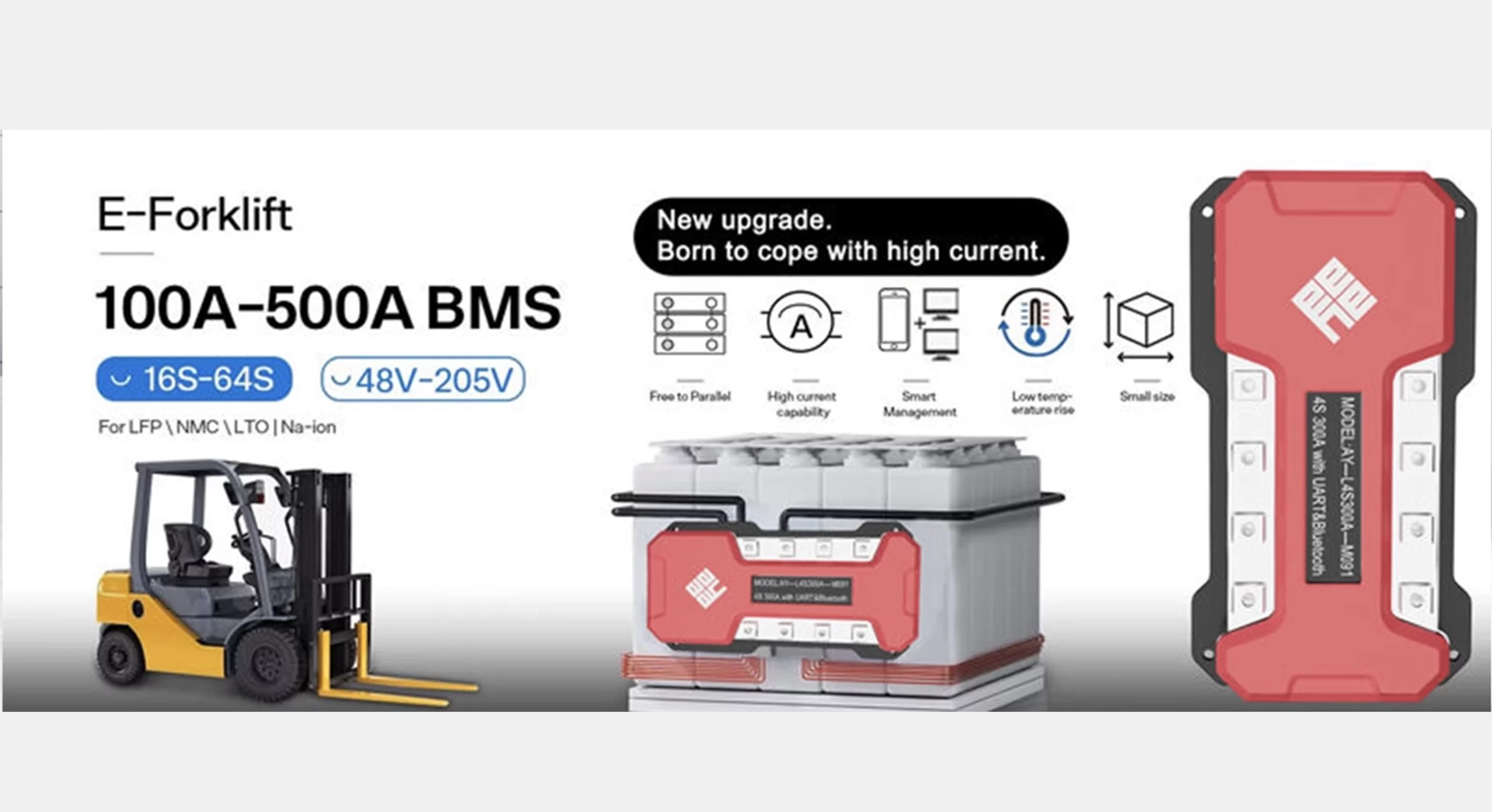
The core component of lithium-ion forklift battery technology is a Battery Management System (BMS).
Among its primary duties are:
Overcharge/Over-Discharge Protection: Prevents damage to cells, extending battery life.
Cell Balancing: Ensures even voltage distribution across all cells.
Temperature Monitoring: Protects against overheating or operation in unsafe conditions.
Safety Assurance: Minimizes risks of short circuits or thermal events, ensuring safe operation in busy warehouses.
The BMS enables lithium batteries to run effectively without operator intervention by automating these safety and maintenance tasks.
Maximizing Forklift Efficiency with Advanced Battery Technology
Industrial operations can be revolutionized by converting to lithium-ion forklift batteries.
Lithium technology facilitates more effective, secure, and fruitful warehouse operations with its increased energy density, longer lifespan, quicker charging, and integrated BMS protection.
Warehouse operators can minimize expenses and increase uptime by utilizing advanced BMS systems, such as those created by Ayaa Technology, which guarantee the best possible battery health and lifetime.
Optimizing Warehouse Operations Through Smarter Forklift Battery Management
The future of forklift power is represented by lithium-ion batteries with intelligent BMS technology, which offers longer operating times and less maintenance requirements.
In today’s hectic industrial settings, companies can accomplish safer, more effective, and more economical material handling by selecting the appropriate battery type, comprehending operational requirements, and utilizing smart battery management.
أسئلة متكررة
Q1:What kind of battery does a forklift use?
A1:Lead-Acid and Lithium-Ion (Li-Ion) batteries are the two primary types of forklift batteries; Thin Plate Pure Lead (TPPL) batteries are also a noteworthy alternative.
Q2:Are forklift batteries good for solar?
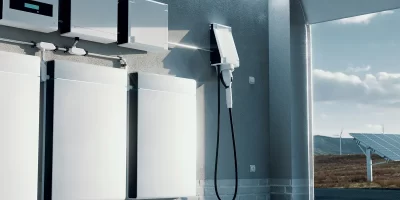
A2:The capacity of forklift batteries is a major benefit.
They have a large capacity and are made to run heavy equipment for extended periods of time.
They are hence appealing for solar systems.
Q3:How much is a lithium-ion forklift battery?
A3:Upfront Cost Range (2025):$17,000 – $20,000.
Q4:What is the life expectancy of a forklift battery?
A4:5 to 10 years.
Q5:Can I use a car battery for a forklift?
A5:To move a dead electric forklift, you can use a number of vehicle batteries.







 العربية
  English
  日本語
日本語  Deutsch
  한국어
한국어  Français
  Español
  Italiano
  Русский
  Português